






Care & how-to
Great Danes and Bloat: Risk, Warning Signs and Prevention
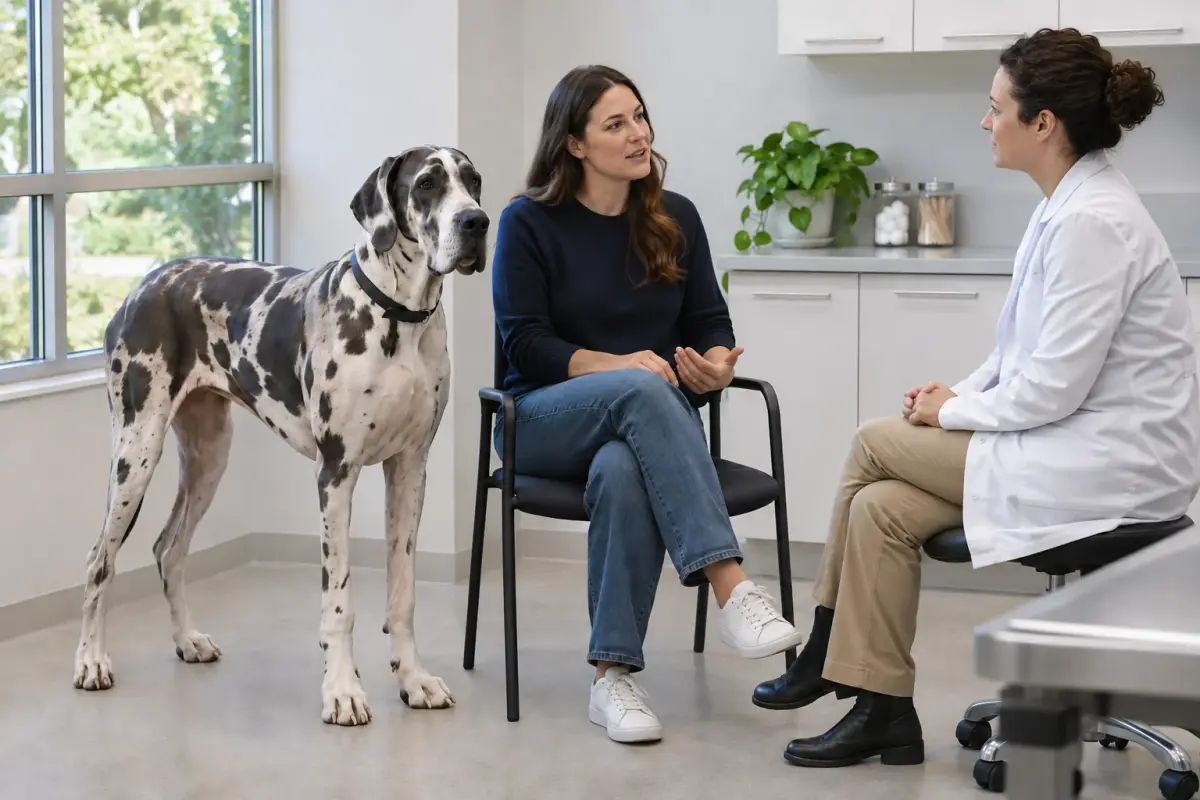
Great Danes are one of the breeds most at risk of bloat, a life-threatening emergency in which the stomach fills with gas and can twist. The American Kennel Club reports that Great Danes are 5 to 8 times more likely to bloat than dogs with a low height-to-width chest ratio. You cannot remove the risk, but you can lower it with feeding habits and a conversation with your vet about a preventive gastropexy.
By Matt GarnettUpdated November 14, 20264 min read2 sources
Why Great Danes bloat so often
Bloat, formally gastric dilatation-volvulus or GDV, happens when the stomach swells with gas and food and may then rotate, trapping blood and gas inside. Deep, narrow chests are the main anatomical risk factor, and the Great Dane is the textbook example. VCA Animal Hospitals also notes that dogs over 100 pounds have roughly a 20 percent lifetime risk, which puts most adult Danes squarely in that group.
Other risks stack on top of the build. Being male roughly doubles the odds, a parent, sibling or offspring that has bloated raises them, and so do fast eating, one big meal a day, thinness, and a fearful or anxious temperament. Age matters too, with middle-aged and older dogs affected more often.
Warning signs to know by heart
Typical signs are restlessness, pacing, heavy drooling, unproductive retching, a swollen or tight belly and labored breathing. VCA describes the swollen abdomen as most obvious on the left side, sometimes sounding hollow when tapped behind the last rib. A dog can also look simply uncomfortable and unable to settle.
Signs can escalate quickly to pale gums, weakness and collapse. The AKC warns a dog can go into shock within an hour or two. This is not a wait-and-see situation: call your vet or the nearest emergency vet immediately, and read our bloat emergency guide before you ever need it.
What to do if you suspect bloat
Phone the emergency clinic while you get your dog into the car so they can prepare, and drive straight there. Do not try home remedies, do not give medication, and do not wait to see whether the belly settles. Treatment involves stabilizing shock, relieving the gas and usually surgery, and the AKC states that bloat still kills about 30 percent of affected dogs even with intensive treatment.
Keep your regular vet's number and the closest 24-hour emergency hospital saved in your phone, and know the route. With a giant breed, minutes spent looking up an address can matter.
Feeding habits that lower the risk
The AKC reports that dogs fed one meal a day are twice as likely to bloat as dogs fed two, and fast eaters have five times the risk of slow eaters. Splitting the daily ration into two or three meals is the simplest change you can make, and it costs nothing. Our full guide on how to prevent bloat in dogs goes through the routine in more detail.
To slow a gulper down, a slow-feeder bowl with ridges or obstacles can help, and the AKC lists them as one way to slow eating. Our slow feeder dog bowls cover several designs. Feed in a calm spot, separate dogs at mealtimes if one eats nervously, and keep the routine consistent.
Stress, routine and exercise around meals
Many vets advise avoiding hard exercise for an hour or so around meals, so walk gently, let your Dane settle, and save the zoomies for later. Ask your own vet what timing suits your dog, since individual advice differs.
Stress counts as well. The AKC notes that fearful or unhappy dogs are more likely to bloat than relaxed ones, so predictable routines, calm mealtimes and plenty of rest all play a small part in the bigger picture.
Ask your vet about a preventive gastropexy
A gastropexy stitches the stomach to the body wall. VCA says it does not stop the stomach swelling, but it prevents the twisting in most cases, which is the part that turns bloat into a crisis. Without one, VCA reports recurrence after a first episode as high as 75 percent.
Some vets recommend a preventive gastropexy for high-risk breeds, often at the time of spay or neuter. Whether it suits your dog depends on age, health and family history, so raise it at your next visit. Dogs with a close relative that bloated should also not be used for breeding.
This page is general information, not veterinary advice, and it cannot replace an examination by the vet who knows your pet.
Common questions
Why are Great Danes so prone to bloat?
Their deep, narrow chests give the stomach room to swell and rotate. The American Kennel Club reports Great Danes are 5 to 8 times more likely to bloat than dogs with a low height-to-width ratio.
At what age do Great Danes get bloat?
Bloat can happen at any age, but risk rises in middle-aged and older dogs. A young Dane is not safe from it, so every owner should know the warning signs from the start.
Can a slow feeder bowl prevent bloat in a Great Dane?
A slow feeder cannot guarantee prevention, but fast eating is a known risk factor and slowing meals is one practical step. Pair it with two or three smaller meals a day and ask your vet about other options.
Does a raised food bowl help a Great Dane with bloat?
The research is conflicting, and the American Kennel Club makes no firm recommendation either way. Ask your vet whether a raised bowl suits your dog before changing how your Dane eats.
How fast does bloat kill a Great Dane?
Dogs can go into shock within an hour or two of the stomach twisting, so treatment cannot wait. If you suspect bloat, call your vet or an emergency vet immediately and head there.
Sources we checked
This guide is general information, not veterinary advice. If your pet is unwell or injured, contact your veterinarian.


