






Breeds
Great Pyrenees vs Golden Retriever
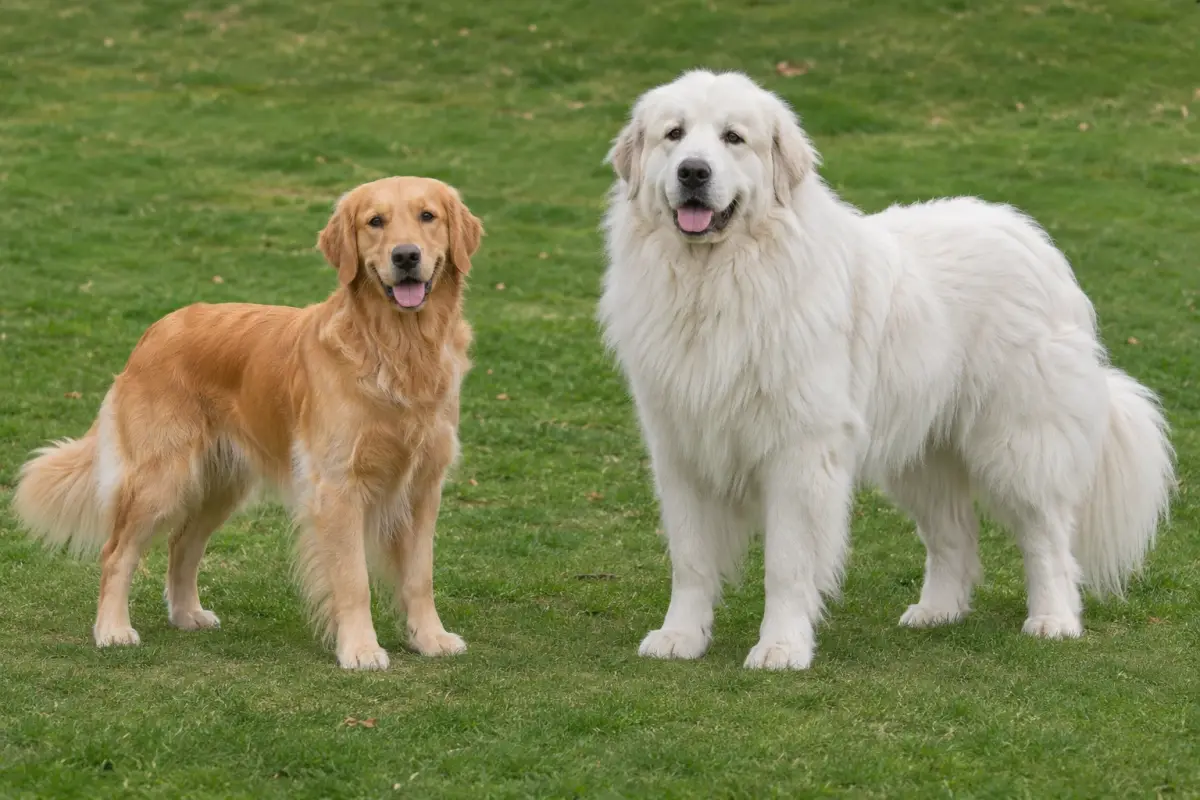
The Golden Retriever is a sporting dog bred to work closely with people, while the Great Pyrenees is an independent livestock guardian. That difference matters more than their shared reputation for devotion. A Golden is generally smaller; a Pyrenees brings more size and watchfulness. Choose based on the relationship and daily management you can support, not a photograph or a gentle description.
By Matt GarnettUpdated November 14, 20263 min read4 sources
The essentials side by side
Size: VCA lists Goldens around 55–75 pounds, while AKC gives Great Pyrenees females at 85 pounds and up and males at 100 pounds and up. Lifespan: the guides place both around 10–12 years. These are expectations for breeds, with considerable variation among individual dogs.
Activity: Goldens need regular physical and mental engagement; Pyrs also need daily activity despite a calmer appearance. Grooming: both need brushing and coat attention. Training: the Golden’s cooperative sporting background differs from the Pyr’s independent guarding style. Best fit depends on whether you want close teamwork or are prepared to manage a guardian.
Understand companionship versus independent watching
AKC describes Goldens working in retrieving, assistance, and other roles alongside people. VCA describes a dog that enjoys engagement and responds well to positive training. If you want to share regular training activities, discuss that goal with the person who knows the particular dog best.
The Pyrenees was developed to watch and protect livestock. VCA notes its independence and need for its own space. A dog that calmly observes the household may still be making its own decisions about what needs attention. Expecting identical responses from these two working backgrounds can create avoidable frustration.
Plan how the dog will handle visitors
The Great Pyrenees’ guardian role makes introductions and management around unfamiliar people especially relevant. Ask about reactions to deliveries, visitors entering the yard, and noisy family gatherings. Do not treat loyalty to familiar people as proof that every new person will receive the same welcome.
For a Golden, ask equally practical questions about excitement, jumping, settling, and handling. A friendly reputation is not a substitute for training. Meet the adult dog when possible and discuss how you will keep introductions calm, including safe supervision around children and other animals.
Compare the maintenance you will actually do
Both dogs have coats that need regular care. VCA describes the Pyr’s undercoat and the Golden’s dense coat and feathering. Look beyond the color: ask how often the individual is brushed, which areas tangle, and whether the dog cooperates with grooming and nail care. For the Pyrenees’ dense undercoat, an undercoat rake such as a double-sided undercoat rake is a common tool, and a large deshedding rake is another option for a Golden’s dense coat. Our guide to undercoat rakes explains how they differ.
Size affects everyday arrangements too. Check vehicle space (a dog ramp can help a heavy dog into a car), resting areas, and who can manage the dog on a leash. Plan for help during illness or an emergency. These practical questions can distinguish the two options more clearly than a claim that either is simply a good family dog.
Review health and choose the individual
Discuss available medical and screening records with your veterinarian, particularly before committing to a puppy. VCA identifies joint concerns in the Great Pyrenees. For either dog, ask what its history means for exercise, handling, and long-term care rather than assuming a breed average answers those questions.
A change in mobility, new pain, or a marked change in behavior deserves veterinary advice. A guardian becoming quieter or a retriever losing enthusiasm should not automatically be dismissed as temperament. Choose the dog whose needs you can meet throughout its life. When you are ready, browse dog ramps and undercoat rakes for the gear a big double-coated dog tends to need.
This page is general information, not veterinary advice, and it cannot replace an examination by the vet who knows your pet.
Common questions
Is a Great Pyrenees bigger than a Golden Retriever?
Usually, yes. The cited guides place Goldens around 55–75 pounds, while adult Pyrenees commonly start above that range. Individual size varies, so plan transport and handling around the actual dog.
Which breed is more independent?
The Great Pyrenees has an independent guardian background, whereas the Golden Retriever was developed for close working cooperation. These tendencies help frame expectations, but ask about the individual dog’s behavior and training.
Do both dogs need grooming?
Yes. Both have coats requiring regular brushing, and the Pyrenees’ undercoat and Golden’s feathering deserve attention. Review a realistic grooming routine and handling needs before deciding which coat you prefer.
Sources we checked
This guide is general information, not veterinary advice. If your pet is unwell or injured, contact your veterinarian.


