






Care & how-to
Fermented Chicken Feed: Benefits, Limits, and Safety
Fermented chicken feed is feed changed by microbial activity under controlled conditions; it is not simply dry feed soaked in water. NC State Extension describes potential nutritional benefits alongside spoilage and contamination risks. An appropriate complete ration remains the foundation of feeding. If you cannot confidently manage the process, seek poultry nutrition advice and use sound, correctly stored dry feed instead.
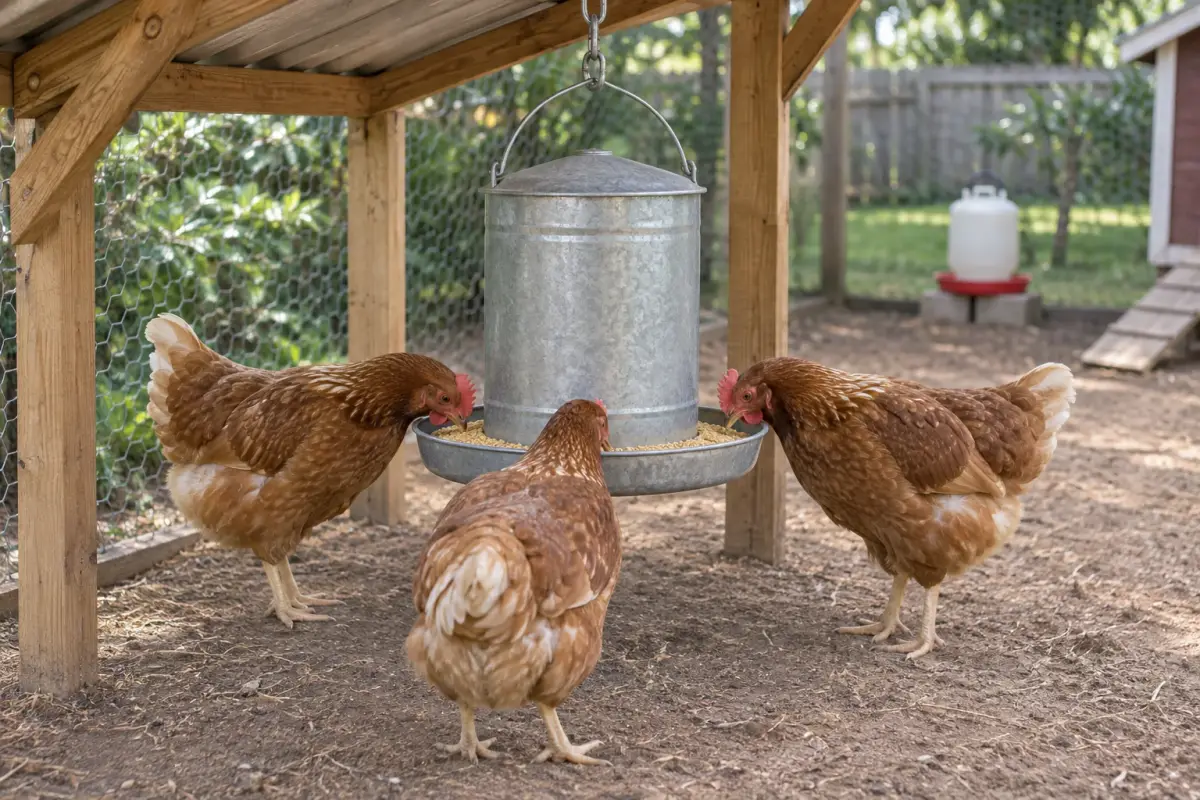
By Matt GarnettUpdated November 11, 20264 min read3 sources
Understand the process before considering a change
NC State explains that fermentation involves microorganisms producing acids and changing the feed environment. Wet texture alone does not demonstrate that the intended process has occurred. A bucket left standing with added water should not be assumed to have the same properties as a feed used under controlled conditions.
Keep that distinction when reading stories about another flock. Ask what material was used, how the process was controlled, and whether the result was evaluated rather than merely judged by appearance. This page explains the decision and its risks; a home recipe without those checks would not establish the safety of your own batch.
Treat claimed benefits as conditional
Fermentation is studied for effects on feed use, digestion, and intestinal microorganisms. Those possible benefits depend on the ingredient, processing conditions, and diet being assessed. A useful result from one controlled situation does not establish that every homemade wet mixture will improve a backyard flock’s health or egg production.
Avoid treating a feeding change as prevention or treatment for an illness. Record the question you are trying to answer before changing a routine that already works. If the concern is poor growth, reduced laying, or abnormal droppings, professional assessment is more useful than assuming the flock needs a fashionable feed preparation.
Account for spoilage and contamination
NC State warns that poorly managed fermentation can permit mold and mycotoxin problems, and that some harmful compounds cannot be identified reliably by sight or smell. An appealing odor or absence of visible mold therefore cannot establish that a batch is suitable. Keep questionable material away from the birds.
Review cleaning, storage, pest access, and the handling of leftovers before considering a wet feed routine. Utah State University advises removing moldy, rancid, or otherwise questionable feed. Do not mix suspect remains into a fresh supply or assume another period of standing will correct deterioration.
Keep the ration appropriate for the birds
A complete poultry ration balances several nutrients for the birds’ age and purpose. Adding grains or other materials changes the overall diet, even when the starting product was complete. Fermentation does not remove the need to consider that balance or turn an improvised mixture into an age-appropriate feed.
Bring the feed label and a full account of extras to a poultry nutrition adviser before making a major change. Include chicks, growing birds, and layers that share access. Do not attempt to repair an uncertain mixture with home supplement doses or transfer a study’s inclusion levels into a backyard feeding plan.
Estimate feed use from the actual flock
There is no single intake figure suitable for every chicken. Minnesota gives an example of a 6-pound hen consuming roughly 3 pounds of feed per week, while Utah State emphasizes variation with breed and conditions. Use such figures for initial purchasing estimates rather than as a reason to restrict a bird to an arbitrary allowance.
Monitor the amount supplied, what remains, wastage, access by other animals, and the birds’ condition. Keep clean water available. Wet and dry feed weights are not interchangeable because adding water changes the weight without adding equivalent nutrients. Ask for help interpreting consumption when preparation changes make old records difficult to compare.
Make daily feeding easy to inspect
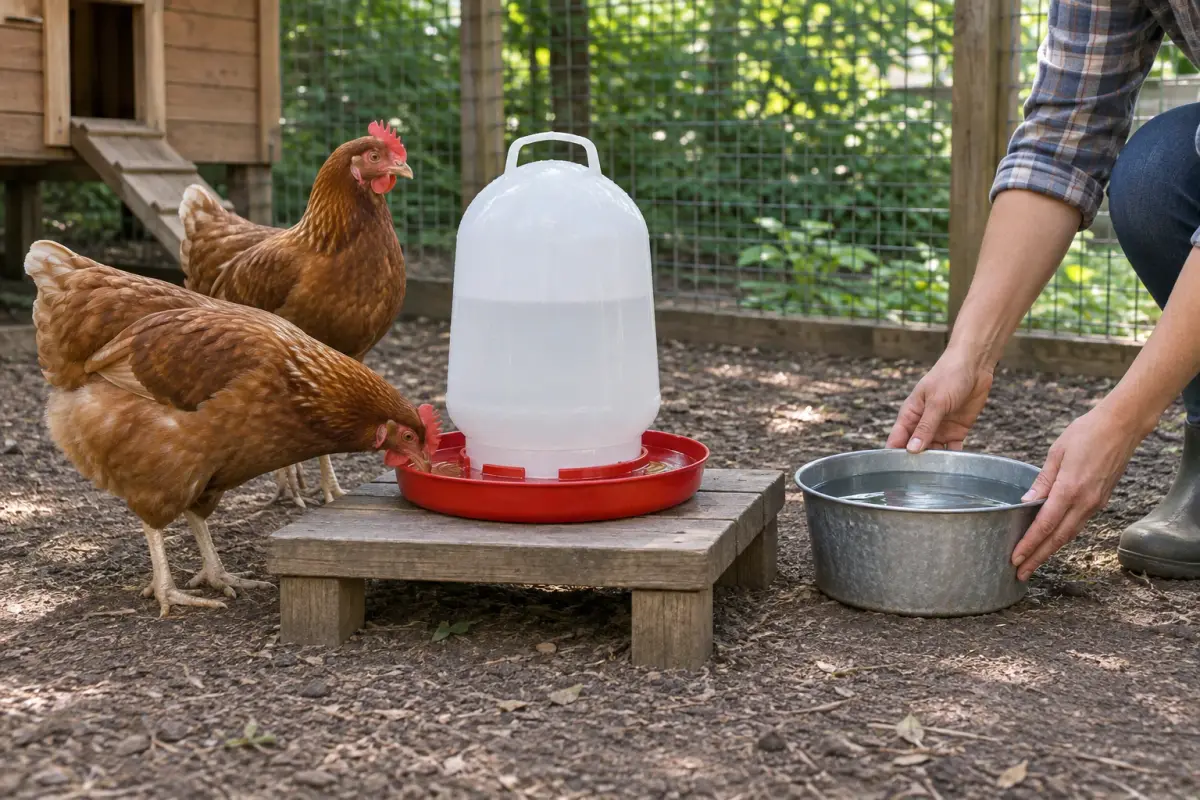
When planning feeding areas, compare the Chicken Coops and Chicken Runs collections against the space needed for access, cleaning, and protection from weather and wildlife. A system that is difficult to inspect can allow spilled or deteriorating food to remain unnoticed.
Contact a poultry veterinarian about persistent poor eating, unusual inactivity, loss of condition, or continuing abnormal droppings. Report the feed, preparation, timing, and number of affected birds. Collapse, marked breathing difficulty, or several suddenly sick birds requires urgent advice. Do not use another batch of fermented feed as a remedy while postponing assessment.
This page is general information, not veterinary advice, and it cannot replace advice from a veterinarian who treats poultry.
Common questions
What is fermented chicken feed?
It is feed changed by microbial activity under controlled conditions. It differs from simple soaking, and the suitability of a batch depends on more than a wet texture or a sour smell.
Is fermented feed always better than dry poultry feed?
No universal improvement is established for every preparation and flock. Consider the conditions behind any claimed benefit, retain an appropriate balanced ration, and seek professional advice before a major change.
How much feed does each chicken need?
Intake varies with the birds and conditions. Minnesota’s example is roughly 3 pounds weekly for a 6-pound hen. Monitor access, consumption, wastage, and condition rather than using that estimate as a restriction.
Can I tell that fermented feed is safe by smelling it?
Smell alone cannot establish safety. NC State warns that some harmful compounds associated with poorly managed fermentation may not be identifiable by sight or smell. Keep questionable material away from birds.
Sources we checked
This guide is general information, not veterinary advice. If your pet is unwell or injured, contact your veterinarian.


