






Buying guides
Do Cats Need a Water Fountain?
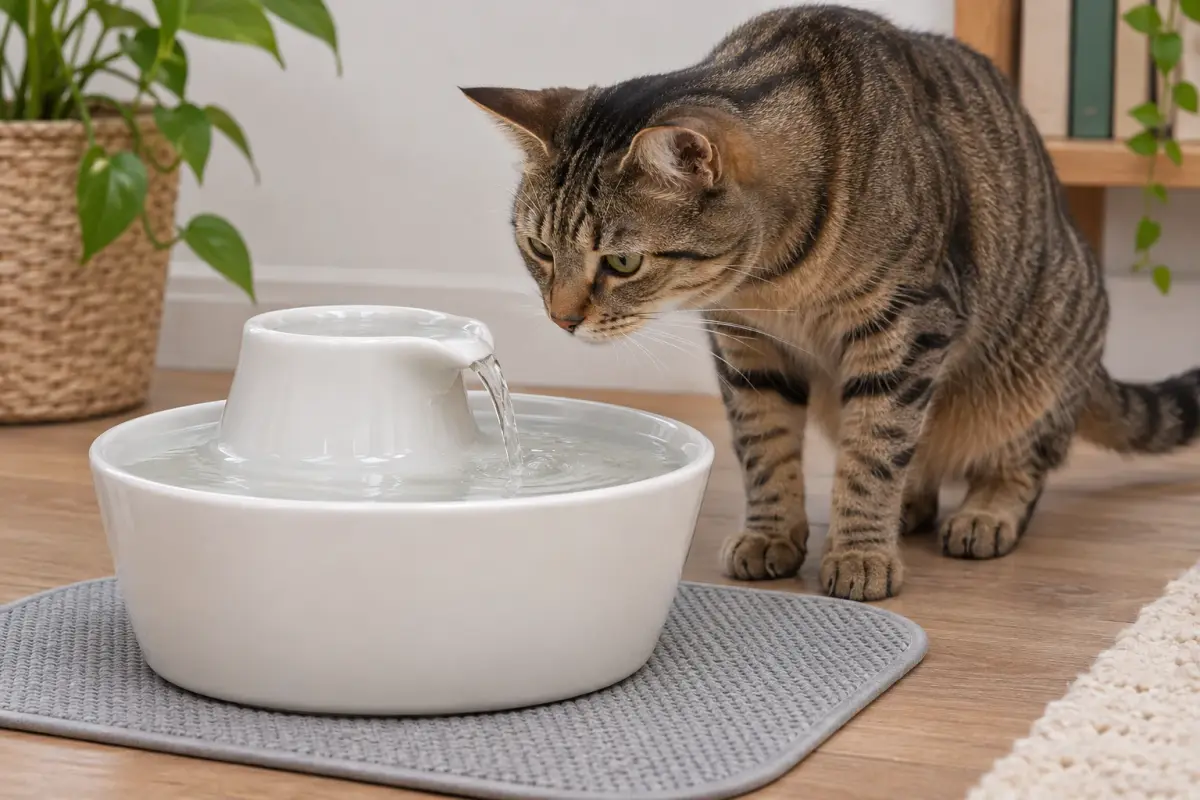
No, cats do not need a water fountain. A clean, wide bowl of fresh water, refilled daily, keeps most cats well hydrated. A fountain can help cats that drink little or are drawn to running water, and Cornell Feline Health Center and VCA both mention them as one way to encourage drinking. Fountains are safe when they are cleaned often and the cord is protected.
By Matt GarnettUpdated November 9, 20263 min read3 sources
Who benefits from a fountain
Cat water fountains are most worth trying for cats that eat mostly dry food and rarely drink, cats that wait by the tap or paw at running water, and cats whose vet has asked for more water intake, such as those with a history of urinary problems. VCA notes that a filtered fountain keeps water moving and fresh, which appeals to many cats.
Cornell's guidance is careful: fountains work for some cats, but preferences vary. Plenty of cats ignore them, and a few are startled by the sound. A cat that eats mostly wet food and already looks well hydrated may gain little from one.
Are cat water fountains safe?
Yes, with three conditions. First, they must be kept clean: a fountain that is not cleaned grows a slimy film, called biofilm, on the pump and basin, and stale water is no better than a dirty bowl. Second, filters must be changed on schedule. Third, the power cord should be out of reach or covered, because VCA warns that cats can bite through cord insulation and suffer burns or electrical injury.
Choose a fountain that is easy to take apart, made of stainless steel, ceramic or sturdy BPA-free plastic, and quiet. Avoid models with tiny parts a kitten could chew off. Check that the pump stops safely or sounds different when water runs low, so it does not run dry.
Fountain vs bowl: how to decide
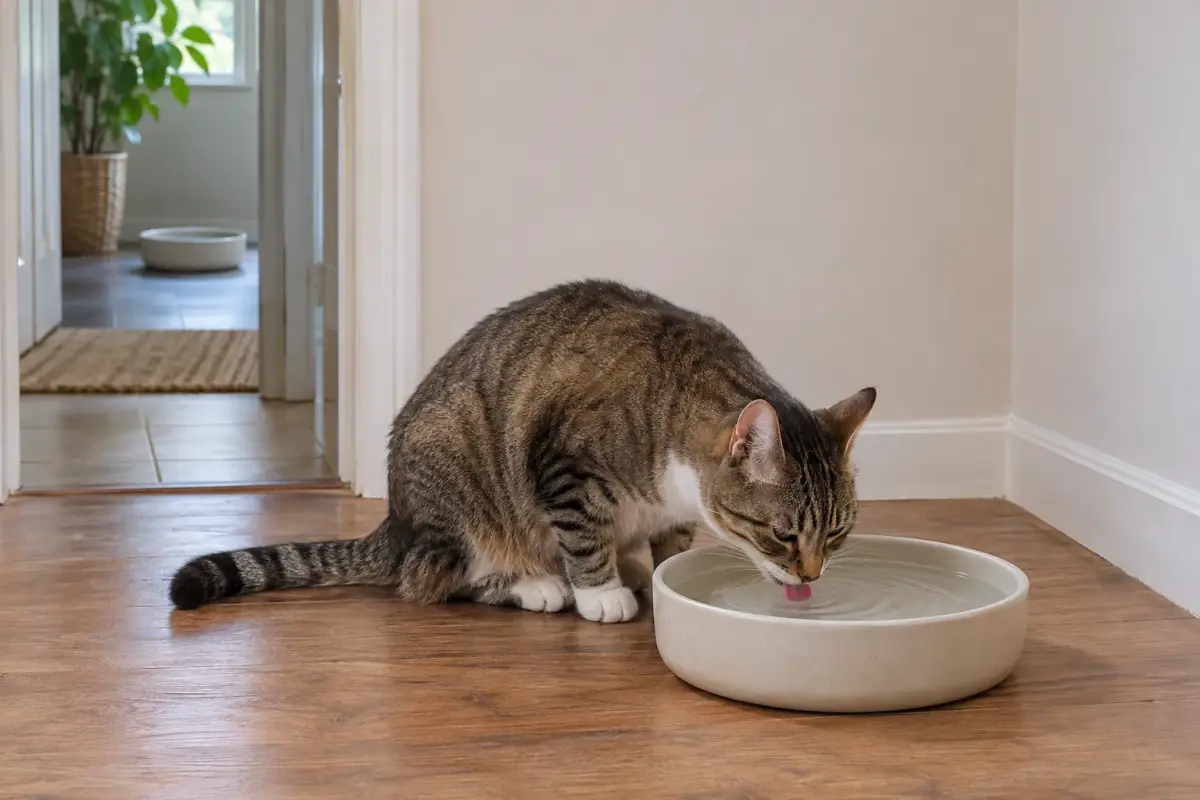
Try both rather than guessing. Put a fountain next to your cat's usual bowl, keep both clean and full, and check the levels each day for a couple of weeks. If the fountain level drops faster, your cat likes it. If not, a good cat bowl is the answer.
Whatever you choose, VCA recommends wide, shallow dishes of glass, metal or ceramic, filled to the top, washed daily and placed away from food and the litter box. Several water stations around the home often help more than any single device.
Introducing a fountain
Set the fountain up near your cat's usual water spot, not beside the litter box, and leave the old bowl in place. Some cats are wary of the hum or splash at first. Running it on its lowest flow for the first few days, or putting a treat beside it, can help.
Avoid moving all the water at once. A cat that is unsure of the fountain and finds its familiar bowl gone may simply drink less, which is the opposite of what you want.
Keeping it clean
VCA suggests cleaning the fountain filter weekly or as directed by the maker. In practice, most fountains need a full strip-down and wash every week or two, and topping up with fresh water daily. Hard water leaves mineral scale that needs regular removal. A fountain that is cleaned on a fixed day each week, such as litter change day, is far less likely to be forgotten than one cleaned only when it looks dirty.
Our step-by-step guide to cleaning a cat water fountain covers the pump, the tubes and how to deal with slime and scale without harsh chemicals. When a worn pump or basin means replacing the whole unit, browse our cat water fountains again.
When to call your vet
A fountain is a convenience, not a fix for illness. Call your vet if your cat has stopped drinking, seems lethargic, has dry or tacky gums, or has been vomiting or has diarrhea. Cornell lists these as signs of dehydration.
Also call if your cat suddenly drinks much more than usual. Increased thirst can signal kidney disease, diabetes or an overactive thyroid, and a fountain can hide the change because the level drops slowly from a large reservoir.
This page is general information, not veterinary advice, and it cannot replace an examination by the vet who knows your pet.
Common questions
Are cat water fountains worth it?
They are worth trying if your cat eats dry food, drinks little or loves running water. Put one beside the usual bowl for two weeks; if the fountain level drops faster, your cat prefers it.
Can a water fountain make a cat sick?
A clean fountain will not, but one left uncleaned can grow slime and bacteria. Wash it every week or two, change the filter on schedule and top up with fresh water every day.
Is a ceramic or plastic cat fountain better?
Ceramic and stainless steel are easier to keep clean and do not scratch the way plastic can, which helps prevent buildup. Some cats are more sensitive to plastic; whichever you choose, clean it often.
Sources we checked
This guide is general information, not veterinary advice. If your pet is unwell or injured, contact your veterinarian.


