






Care & how-to
Coccidiosis in Chickens: Prompt Assessment and Prevention
Coccidiosis can cause serious intestinal illness in chickens, including diarrhea, reduced appetite, weight loss, and sometimes death. Contact a poultry veterinarian promptly about a sick bird or concerning flock changes; bloody diarrhea, marked weakness, or sudden losses need urgent advice. Dropping color alone does not establish the diagnosis. Prevention and treatment depend on the birds’ history, conditions, and any vaccination or medicated-feed program already in place.
By Matt GarnettUpdated November 11, 20264 min read3 sources
Understand the parasite without diagnosing from droppings
Merck describes poultry coccidiosis as disease caused by protozoal parasites, usually Eimeria species affecting parts of the intestine. Clinical signs vary, and a flock may show reduced intake or poor growth as well as diarrhea. Blood can occur, but waiting for blood before asking for help can miss a developing problem.
Record the birds’ ages, the number affected, appetite, activity, and the timing of any losses. Photographs of droppings can be useful context, but they are not a complete diagnostic test. Tell the veterinarian about recent introductions and any feed or management change rather than assuming one color identifies a particular organism.
Get prompt help when birds are unwell
Call a poultry veterinarian promptly for persistent diarrhea, poor appetite, or unusual inactivity. Marked weakness, inability to stand or reach resources, bloody diarrhea, or sudden deaths warrants urgent advice. Merck describes potentially rapid disease progression and significant intestinal damage, so a prolonged trial of household remedies is inappropriate.
Ask how to protect affected birds and whether samples or a diagnostic investigation are needed. Follow instructions for handling and transport, and keep records of daily changes. Do not force fluids into a weak chicken, begin an improvised medicine plan, or wait until every bird has the same signs before seeking help.
Let testing be interpreted alongside the flock
Merck explains that finding oocysts and assessing the bird or flock belong together. The quantity seen does not directly establish the severity of clinical disease. A veterinarian may use fecal examination, history, and other findings, including a diagnostic examination after death when appropriate.
Ask how to collect and store any requested sample, and identify which bird or group it came from. Do not cut open a bird at home to compare organs with internet photographs. If a bird dies, contact the veterinarian about safe handling and possible laboratory examination before disposing of material that could help the investigation.
Review wet litter and routes of contamination
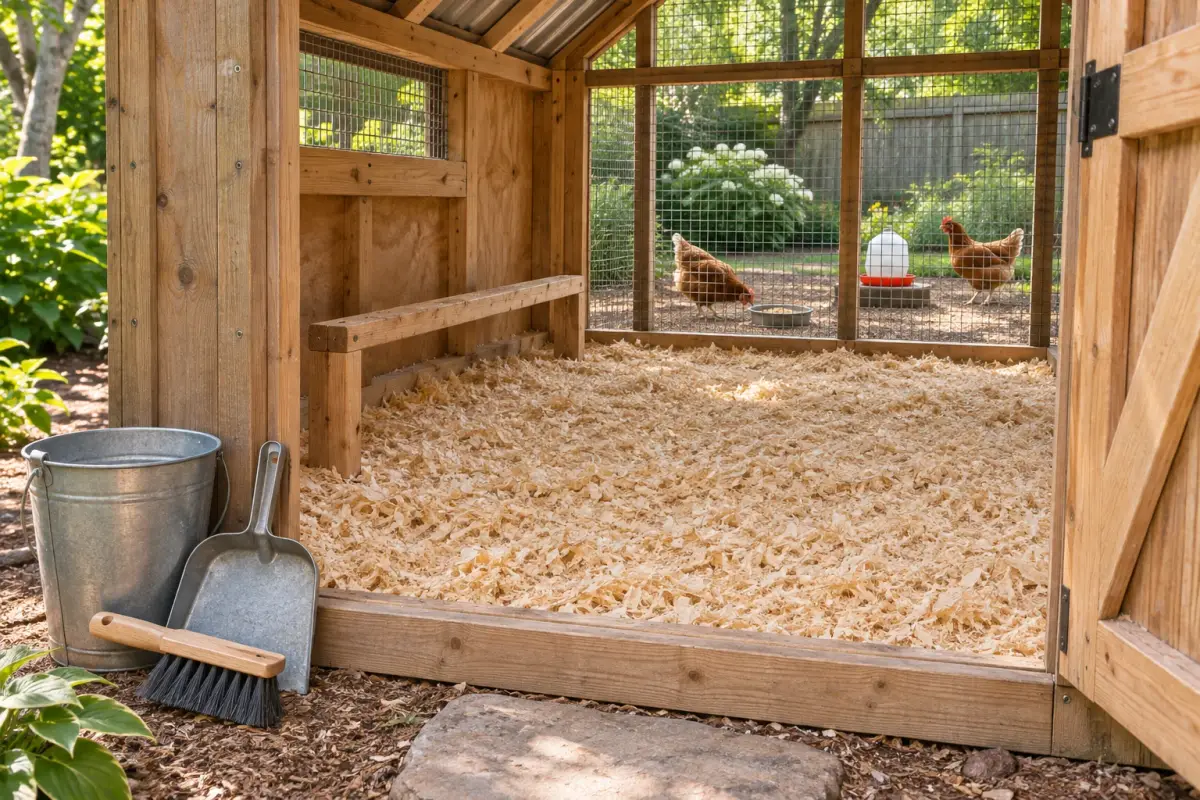
Merck describes oocysts shed in droppings and contamination of litter, water, feed, soil, and equipment. Moist, heavily soiled conditions can support a problem. Inspect leaks and wet areas and maintain litter appropriately, while recognizing that cleaning alone does not guarantee that infection has been eliminated.
Poultry extension biosecurity guidance emphasizes controlling movement of contaminated equipment and materials. Use a practical handling order and keep tools clean between groups. Ask for a flock-specific plan when several birds are affected rather than moving an unwell chicken to another household or sharing equipment while the cause remains uncertain.
Coordinate vaccination, feed, and treatment decisions
Merck discusses anticoccidial products and vaccination as prevention approaches. Its backyard poultry guidance warns that coccidiostats in feed can interfere with a coccidiosis vaccination program. Keep the actual feed label and vaccination record available and have a poultry veterinarian review them together.
Do not combine a vaccine, medicated feed, and a water product because each appears on a separate checklist. Product choice, timing, and whether eggs can be used after treatment need professional direction. Avoid copying a dose from another species or assuming an ordinary wormer treats every intestinal parasite.
Keep prevention practical and monitor recovery
Follow the agreed plan for feed, water, litter, and observation, and record whether birds regain normal activity and intake. Contact the clinic about further losses or failure to improve as expected. Preventing recurrence requires reviewing conditions and the group’s history, not simply repeating a product whenever droppings change.
Compare Chicken Coops and Chicken Runs against drainage, cleanable surfaces, suitable space, and access to essential resources. Any temporary separation still needs appropriate shelter and monitoring. Keep veterinary advice central when illness is present rather than treating a housing purchase as the treatment itself.
This page is general information, not veterinary advice, and it cannot replace advice from a veterinarian who treats poultry.
Common questions
Does bloody diarrhea prove a chicken has coccidiosis?
It is an urgent reason for veterinary advice, but it does not establish the diagnosis alone. The bird’s condition, flock history, and appropriate testing must be considered together rather than relying on a photograph.
Can chickens have coccidiosis without obvious blood?
Yes. Signs vary and can include poor intake, reduced growth, weight loss, or diarrhea. Do not wait for blood when birds are becoming weak or unwell; ask a poultry veterinarian promptly.
Should vaccinated chicks automatically receive medicated feed?
Have the actual vaccination and feed program reviewed together. Merck warns that coccidiostats can interfere with a coccidiosis vaccine program. Do not combine products or change the plan from separate internet checklists.
Will cleaning the coop alone treat a sick chicken?
No. Improving litter and hygiene supports prevention and management, but a sick bird still needs assessment and an appropriate treatment plan. Follow veterinary advice and report further losses or failure to improve.
Sources we checked
This guide is general information, not veterinary advice. If your pet is unwell or injured, contact your veterinarian.


