






Care & how-to
Can Chickens Go Out in the Rain?
Yes, chickens may encounter rain outdoors, but they need dependable access to weatherproof shelter and dry resting space. Rain should not be the only reason you inspect their housing: leaks, saturated bedding, and poor airflow can create continuing problems after the weather clears. Check the birds and their living area together, and bring concerns about breathing or illness to a veterinarian who treats poultry.
By Matt GarnettUpdated November 11, 20264 min read4 sources
Make dry shelter available before the weather changes
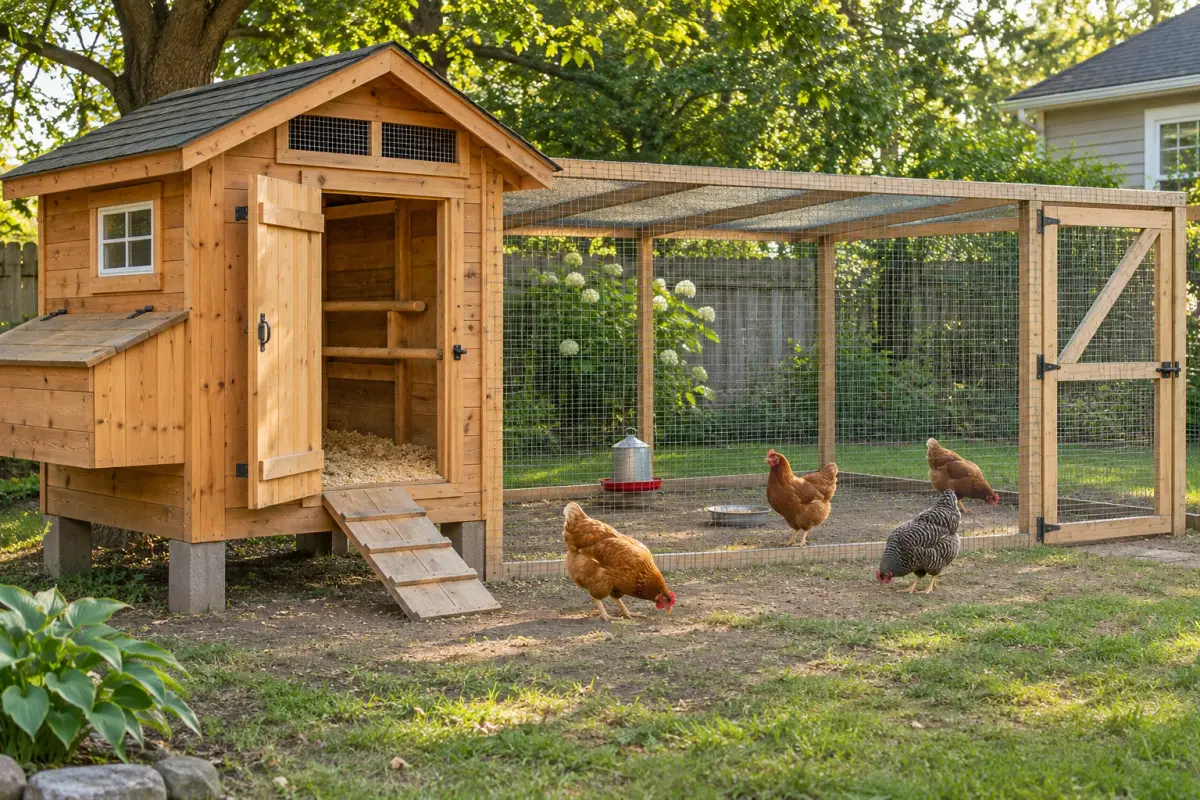
Utah State University identifies protection from rain and other bad weather as a basic purpose of poultry housing. A covered place should be accessible when birds need it, rather than requiring someone to notice a storm and improvise a shelter. Check that doors and access ramps can actually be used.
Look at the route between the outdoor area and the coop. Move stored tools or other obstacles that narrow the entrance. When comparing the Chicken Coops and Chicken Runs collections, consider weather protection and the layout together; appearance alone does not establish that a setup will keep the resting area dry.
Inspect bedding instead of judging only the roof
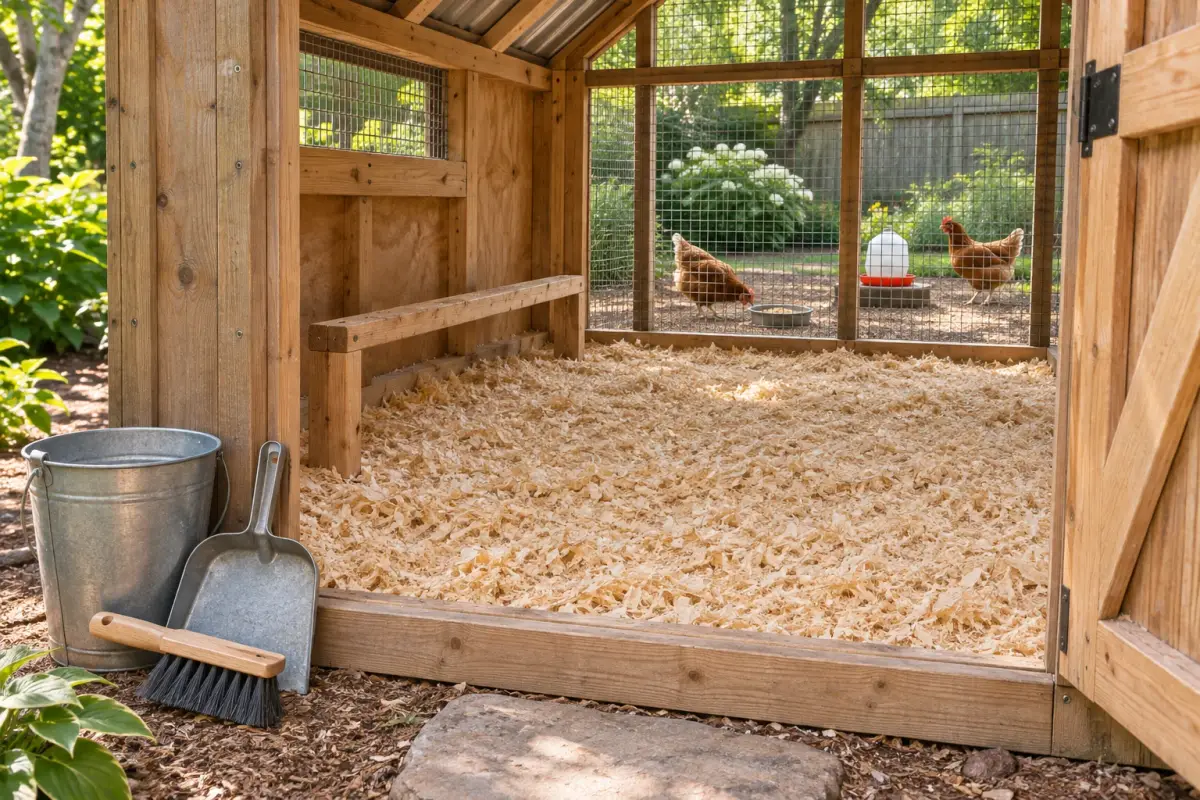
A roof can appear sound while water reaches bedding at a doorway or along a wall. Check the places birds stand and roost, including areas beneath drinkers. Wisconsin Extension advises removing obviously wet litter. Find the source of the moisture as well, or replacement material will simply become wet again.
Do not treat the absence of a large puddle as proof that the floor is dry. Look through the bedding where water may collect. Plan cleaning so that birds can still use a safe, protected space, and keep the tools needed for routine maintenance ready before prolonged wet weather arrives.
Keep fresh air moving through the coop
Closing every opening to keep rain out can create another problem. Utah State explains that ventilation allows stale air and moisture to leave poultry housing. The objective is protection from weather with appropriate air exchange, rather than a tightly sealed enclosure that holds damp air around the birds.
Check how rain enters before blocking a vent. A roof repair or a change to an exposed opening may be more useful than eliminating airflow. Consider the actual direction of wind and rain at your site. If the design is difficult to manage, ask a local poultry extension specialist for practical advice.
Understand why persistent dampness matters
Wisconsin Extension links wet litter with ammonia and notes that even relatively low levels can irritate birds. It also warns that damp conditions can increase respiratory disease problems. This is a reason to correct the environment promptly, without assuming that every bird exposed to rain will become sick.
Observe the flock while you check the housing. A bird behaving differently needs attention even if you have found and fixed a leak. Improving bedding or ventilation is a husbandry measure; it does not identify the cause of coughing, discharge, weakness, or reduced appetite and cannot replace veterinary assessment.
Know when a bird needs veterinary help
Cooperative Extension lists sneezing, coughing, unusual breathing sounds, gasping, and discharge around the eyes or nose among signs of respiratory illness in poultry. Call a poultry veterinarian when these signs appear, especially when more than one bird changes at the same time. Describe when the signs started and what changed in the housing.
Difficulty breathing, marked weakness, abnormal balance, or sudden deaths warrants urgent professional advice. Do not decide that the flock merely caught a cold from the rain. Keep a record of affected birds and follow the veterinarian’s instructions about handling, separation, and any diagnostic testing that may be needed.
Use the next dry spell to correct recurring problems
University of Minnesota Extension emphasizes good housing, clean water, and ongoing flock care. After wet weather, note where maintenance took longer than expected and which areas stayed damp. A short written list makes it easier to address a recurring problem rather than rediscovering it in the next storm.
Check that repairs still allow cleaning, feeding, and access to the protected area. If the flock includes chicks or birds already under veterinary care, ask about their particular requirements rather than assuming the same arrangement fits every age and condition.
When reviewing rain protection, compare the shelter and drainage arrangement as a whole. The Chicken Coops and Chicken Runs collections can help you consider both parts of that layout.
This page is general information, not veterinary advice, and it cannot replace advice from a veterinarian who treats poultry.
Common questions
Can chickens go outside when it is raining?
They need accessible shelter and a dry place to rest regardless of whether they go outside. Check the conditions and the birds themselves rather than treating every rainy day as the same situation.
Should I close all the coop vents during rain?
No. The coop still needs air exchange to remove moisture and stale air. Address where rain enters while preserving appropriate ventilation, and get advice if the building cannot provide both.
What should I do with wet chicken bedding?
Remove obviously wet litter and correct the leak, drinker problem, or other source of moisture. Check nearby material too; replacing only the visible surface does not resolve water that continues entering.
When should I call a vet after wet weather?
Call when birds develop breathing changes, nasal or eye discharge, unusual weakness, or reduced eating. Gasping, severe distress, or sudden deaths needs urgent advice rather than a wait for better weather.
Sources we checked
This guide is general information, not veterinary advice. If your pet is unwell or injured, contact your veterinarian.


