






Care & how-to
What Is a Chicken Tractor? How It Works and When to Use One
A chicken tractor is a bottomless, movable pen that you slide to fresh ground so hens can graze, scratch and fertilize it without roaming free. University of Missouri Extension describes moving one daily for good pasture management. It suits small flocks and mild weather, but it needs a solid roof, tight predator protection and a plan for nights and winter.
By Matt GarnettUpdated November 13, 20265 min read4 sources
How a chicken tractor works
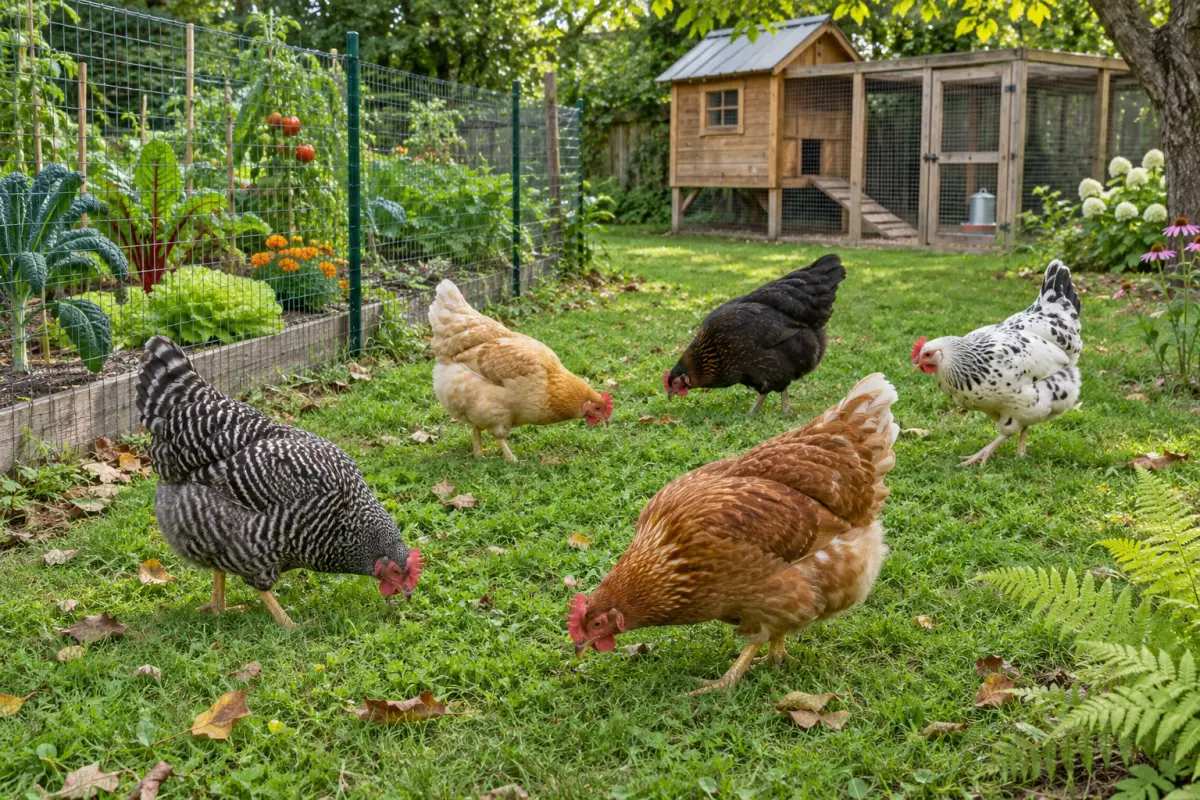
The name comes from the job, not the machine: the pen works the soil like a tractor. A chicken tractor is a lightweight frame, usually with a covered roost or nesting area and a wire-enclosed floor of open ground, that you drag or wheel to a new patch of lawn or garden bed. The hens eat grass, weeds and insects, scratch the soil and leave manure in a different place each time, so no single spot is stripped bare or fouled.
That mobility is the main difference from a fixed coop and run. A fixed run is a permanent footprint that tends to turn to bare dirt, while a tractor spreads the wear across the whole yard. The trade-off is effort: someone has to move it, usually every day, and the pen has to be light enough to shift yet strong enough to resist a determined predator. If you prefer a permanent setup, see our chicken runs collection and the guide to choosing a chicken run.
How often to move it
University of Missouri Extension's mobile laying hen budget states that the tractor is moved daily for optimal pasture management, and notes that twice-daily moves may be preferable under certain conditions. The reason is simple: the longer a flock sits on one patch, the more vegetation they eat down and the more manure builds up in one place.
In practice the right interval depends on how many hens are in the pen, how much grass you have and the weather. Move it before the ground is scraped bare or wet manure accumulates; in rain, shift it more often so birds are not standing in mud.
Size and space per hen
A tractor has to give hens real room, not just a place to stand. Penn State Extension's housing table allows 1.5 square feet per laying hen indoors and 8 square feet per hen in an outside run, and Oregon State Extension advises at least 3 square feet per bird when the flock has outdoor access, and 8 to 10 square feet per bird when it does not. A pen that is permanently the birds' whole world should be sized toward the upper figures.
Small flocks fit tractors best. Missouri Extension notes that entry-level tractors typically hold fewer than 100 hens, and the home-scale versions that suit a yard hold a handful. Crowding raises stress, feather pecking and the mess you are trying to avoid by moving the pen, so build for fewer birds than the pen's maximum rather than more.
Shelter, shade and ventilation
University of Missouri Extension says a well-designed tractor should have a solid roof for shade and shelter, as well as adequate ventilation. Hens overheat quickly in direct sun and a roofed corner gives them somewhere to retreat. Ventilation matters just as much, because University of Minnesota Extension says airflow prevents moisture and ammonia buildup.
Provide fresh water at all times, in a container that will not tip when you move the pen, and shade that moves with the pen. If you want a coop-style base for nights and eggs with a pen attached, compare a coop with an attached run or a standalone chicken coop before deciding whether a movable pen is enough on its own.
Predator protection is the hard part
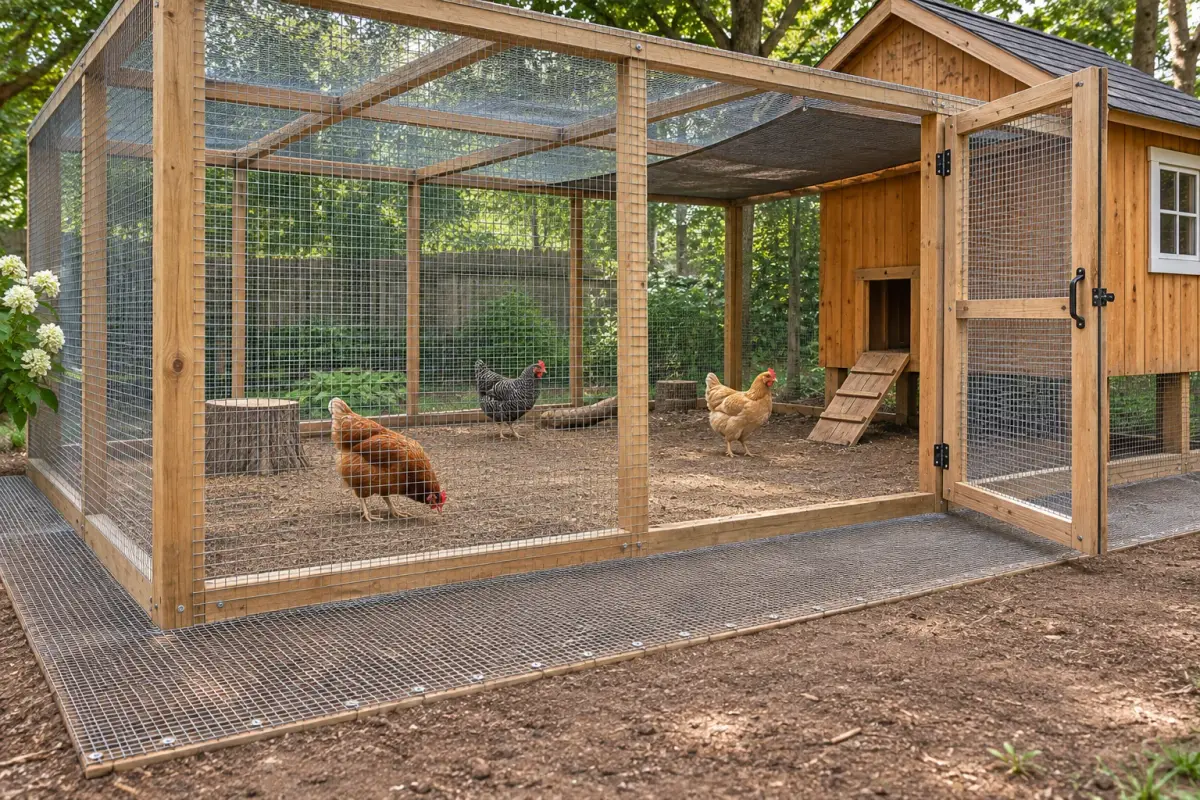
A tractor sits on open ground, so protection depends entirely on the pen itself. Penn State Extension says to fully enclose birds with fencing and covered runs, to cover outside runs with mesh wire or netting against hawks and owls, and to bury fence wire at least 12 inches deep and bend it outward about 6 inches when the run is fixed. Oregon State Extension adds that 1- by 2-inch mesh and netting or wire over the top of the run keep out many predators, and that birds should be closed in at night.
A bottomless pen with no apron can be dug under, so weigh the frame down, skirt the edges with wire laid outward or use a mesh floor you can lift. Check every corner and latch each day, because Missouri Extension's budget assumes a 7 percent annual death loss for pastured hens. Penn State is blunt that if a run is not predator-proof, the birds should be locked up before dark, which for a tractor means moving them into a secure coop at night.
Winter, mud and when a fixed run is better
A tractor works best on firm ground in mild weather. Missouri Extension notes that layers kept year-round need to be movable to sheltered areas with electrical access for supplemental heating, which tells you that a lightweight pen alone is not a winter home. University of Minnesota Extension says to provide supplemental heat only when coop temperatures fall below 35 degrees F, using heaters approved for chickens, so a fully exposed tractor is not the place for it.
Choose a tractor when you have a lawn or garden to work, a small flock and the time to move it daily. Choose a fixed coop and run when you have a larger flock, a sloped or wet site, a heavy predator load or a busy schedule. See our chicken coops collection and, for a fixed option, a covered run for a larger flock. This page is general information, not veterinary advice, and it cannot replace advice from a veterinarian who treats poultry.
Common questions
How often should you move a chicken tractor?
University of Missouri Extension says the tractor is moved daily for optimal pasture management, and that twice a day may suit some conditions. Move it sooner in wet weather or when the ground starts to look bare or fouled.
Is a chicken tractor safe from predators?
Only if it is built for it. Extension guidance calls for full enclosure, mesh or netting over the top, and securing the base against digging. Lock hens into a secure coop at night if the pen is not fully predator-proof.
How many chickens fit in a chicken tractor?
Penn State Extension allows 8 square feet per laying hen in a run and Oregon State suggests at least 3 square feet per bird with outdoor access. Home-scale tractors hold a handful, so size the pen to give hens more than the minimum.
Can chickens live in a chicken tractor all year?
It is difficult. Missouri Extension notes that year-round layers need to be moved to a sheltered area with electrical access for heating. Most keepers use a tractor for mild-weather foraging and keep a fixed coop for winter nights.
Do chicken tractors need a floor?
Usually not, since the point is access to the ground. The trade-off is that predators can dig under, so the edges need to be weighted or skirted with wire. A mesh floor is another option for some designs.
Sources we checked
This guide is general information, not veterinary advice. If your pet is unwell or injured, contact your veterinarian.


