






Care & how-to
Chicken Dust Bath: Support a Normal Flock Behavior
A suitable dust-bathing area lets chickens perform a normal behavior that helps maintain their skin and feathers. University extension describes birds actively seeking material for this purpose, including moving through the motions even when no suitable area is available. Provide accessible, appropriate material and maintain the area, but do not treat a dust bath as proof that parasites are controlled or as a substitute for veterinary assessment.
By Matt GarnettUpdated November 11, 20264 min read4 sources
Recognize dust bathing as normal behavior
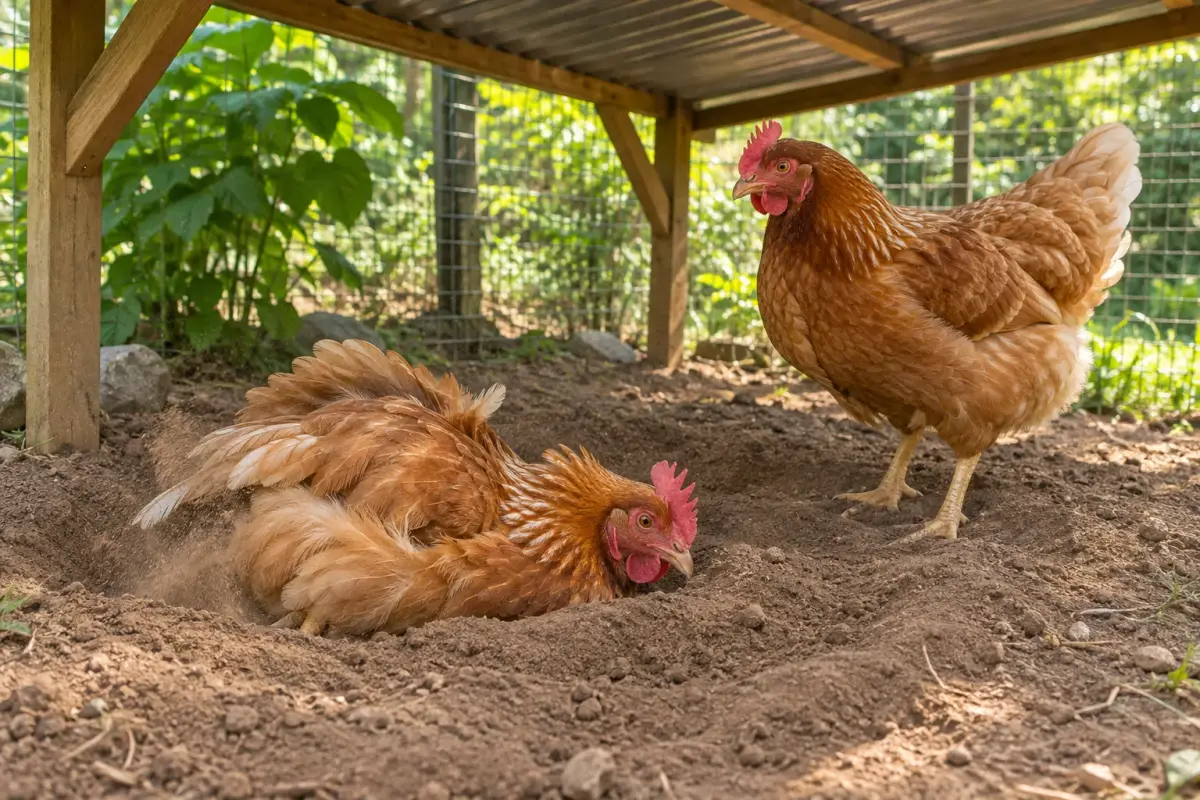
Poultry extension describes dust bathing as rolling and moving through loose material while cleaning skin and feathers and managing preening oil. A chicken may settle on its side and work material through the plumage as part of this behavior. Observe the sequence and the bird’s activity afterward rather than assuming every unusual-looking resting position means distress.
A bird that cannot rise, is struggling to breathe, or remains weak needs urgent advice, regardless of where it is lying. Normal dust bathing should be distinguished from illness by the whole situation. If you are unsure what you are seeing, record a short video without delaying a call about serious signs.
Provide a suitable place rather than adding a treatment mixture
In an Ask Extension response, poultry specialist Dr. Jacquie Jacob identifies access to a dust bath as a welfare benefit and suggests sand as a suitable material. This supports providing a usable area without requiring an elaborate recipe. Ask a poultry professional about material appropriate for your birds and local setup.
Do not add a pesticide, household powder, fireplace material, or a claimed natural remedy simply because a social-media recipe includes it. A dust-bathing area and a prescribed parasite treatment have different purposes. Product suitability and exposure need to be considered separately, including the birds’ ability to avoid an irritating or unsuitable mixture.
Choose a location that stays practical to use

Place the area where you can inspect it, maintain the material, and observe access without repeatedly disturbing birds. The broader poultry housing guidance emphasizes drainage and suitable conditions. Avoid a location where rain or a leaking water station repeatedly turns the intended loose material into a dirty wet patch.
Keep the area separate from stored feed and from a route used for waste handling. Check that its edges and nearby equipment do not create trapping or sharp-surface hazards. If a container is used, consider whether every intended bird can enter and leave comfortably rather than choosing only by how it looks in the run.
Watch access and maintain the material
A dust bath is useful only if birds can reach and use it. Observe whether dominant hens repeatedly exclude others or whether the chosen location is too exposed for some flock members. A management review may involve more than moving one tray; consider the layout, group behavior, and competing resources nearby.
Remove obvious contamination and review the area during normal cleaning. Replace unsuitable material rather than mixing fresh material into a persistently wet or fouled base. Keep a regular inspection routine so damage, contamination, or reduced use is noticed before the area becomes another neglected part of the enclosure.
Keep parasite checks and harmful pecking separate
The extension behavior article explicitly says access to a dust bath does not prevent feather pecking. Likewise, normal bathing is not evidence that every mite or louse problem is resolved. The parasite guide describes organisms with different habits, including mites that hide in housing rather than remaining on the bird all day.
Ask a poultry veterinarian or extension professional about suspected parasites, damaged feathers, irritated skin, or persistent restlessness. Do not decide that a bird is parasite-free because it uses the bath. Protect a hen being injured by other birds and address the flock conditions rather than expecting more bathing material to stop every problem.
Fit the bath into the complete care routine
The area should complement secure shelter, appropriate space, reliable water, balanced feed, and practical cleaning. Compare Chicken Coops and Chicken Runs against the daily routine of the actual flock. A bathing tray does not compensate for overcrowding, poor ventilation, or a place that cannot be kept in suitable condition.
Contact a poultry veterinarian about persistent skin changes, poor appetite, weakness, or a significant change in activity. Review new problems in context, including recent products added to the area. Keep changes simple enough to monitor and obtain advice before turning a normal behavior area into an unverified treatment station.
This page is general information, not veterinary advice, and it cannot replace advice from a veterinarian who treats poultry.
Common questions
Why do chickens take dust baths?
Dust bathing is a normal behavior that helps maintain skin and feathers and manage preening oil. University extension also describes it as a welfare opportunity that chickens actively seek when suitable material is available.
Does a chicken dust bath need a complicated mixture?
Not necessarily. The extension specialist suggests sand as a suitable material. Ask about the actual setup and avoid adding pesticides, household powders, or claimed remedies simply to copy a social-media recipe.
Does dust bathing prove chickens have no mites?
No. Bathing does not replace parasite checks or appropriate assessment. Some poultry mites hide in housing during the day, so a bird using the area does not establish that the flock is free of parasites.
Will a dust bath stop feather pecking?
The extension behavior article says access to a dust bath does not prevent feather pecking. Injured birds need protection and the flock’s resources, conditions, and interactions may need a separate professional review.
Sources we checked
This guide is general information, not veterinary advice. If your pet is unwell or injured, contact your veterinarian.


