






Care & how-to
Can Ducks and Chickens Live Together?
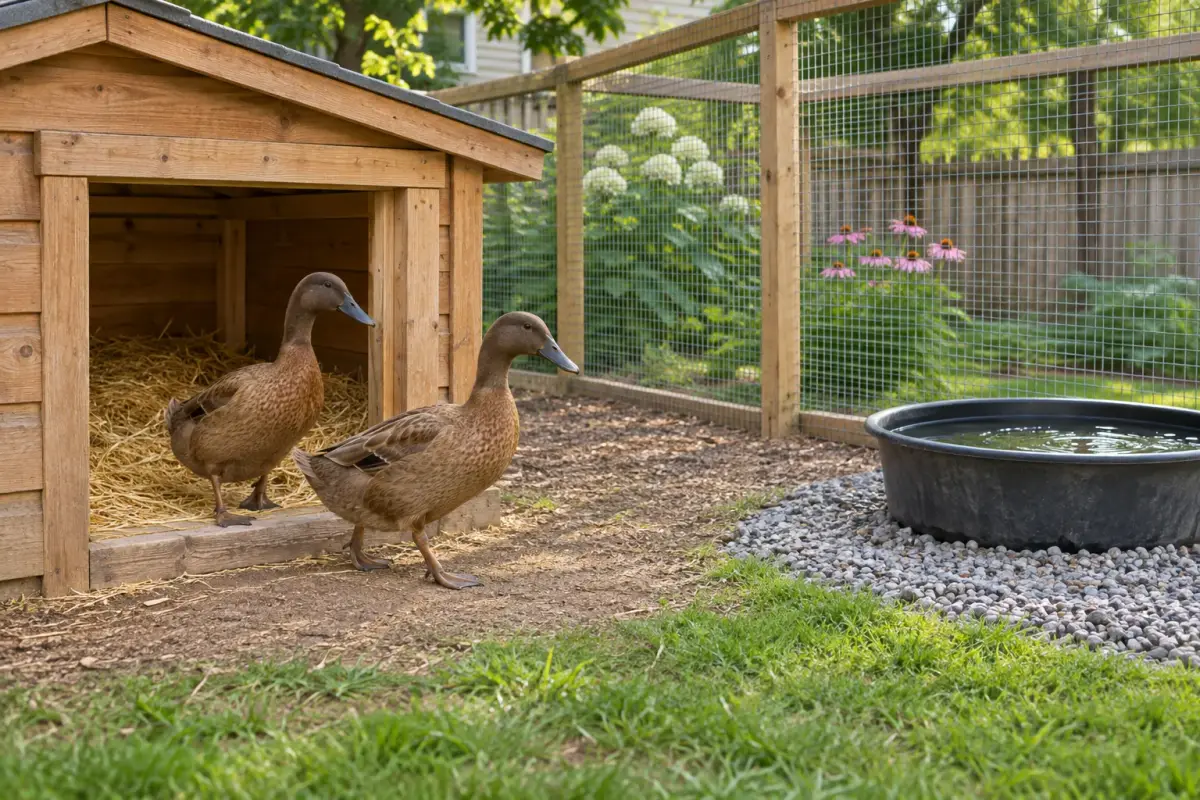
You can plan to keep ducks and chickens on one property, but a shared enclosure should not be the default. Merck recommends minimizing contact between different poultry species by keeping groups in separate locations. Their housing, feeding, moisture, and health needs differ. Review the arrangement with a poultry veterinarian or extension specialist before combining groups or adding another species to an existing flock.
By Matt GarnettUpdated November 11, 20264 min read4 sources
Separate the property question from the shared-coop question
Keeping two species at the same address is different from asking them to use the same resting area, feeding points, and floor. Merck’s backyard poultry overview emphasizes that species have distinct husbandry and health requirements, and that mixing groups can increase the chance of introducing disease.
Draw the proposed arrangement before bringing birds home. Mark separate housing and access routes, and identify how routine care would work without constantly moving equipment between groups. Confirm current local requirements for the actual address. The presence of enough yard area does not establish that the whole mixed-species plan is manageable.
Plan moisture management for waterfowl
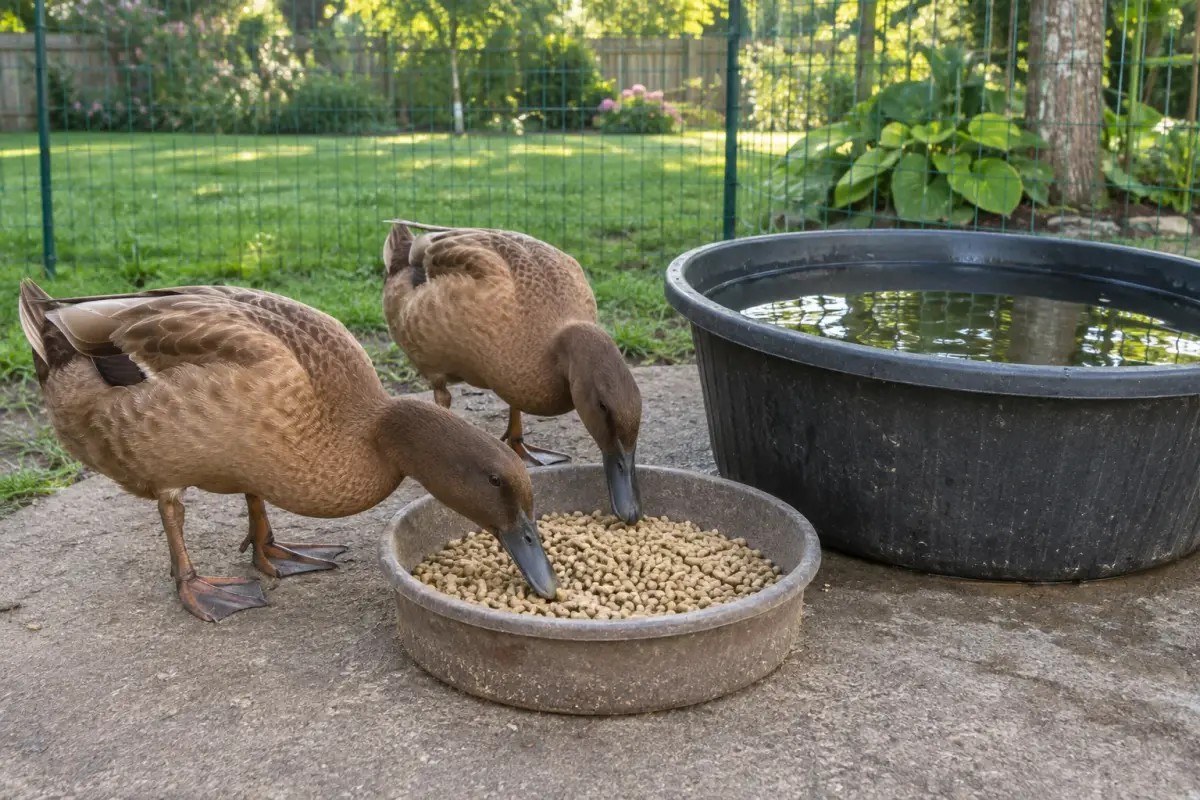
Cooperative Extension notes that waterfowl produce very wet droppings and need housing that manages the resulting moisture. Merck also describes wet litter as a contributor to foot and other welfare problems. Consider drainage and cleaning access rather than assuming a chicken arrangement will remain dry after ducks are added.
Check where drinking water spills and where birds rest. Keep the chickens’ dry resting area protected from persistent wetness. Review the setup in bad weather as well as on a dry day, and address leaks or inaccessible wet corners early instead of trying to solve every problem by adding more bedding.
Assess space for each group
Merck explains that bird size and activity influence housing requirements, and describes different space guidance for chickens and waterfowl. Do not use one total capacity label to decide how many of each species will fit. Consider the space available during periods when outdoor access is restricted.
Compare the Chicken Coops and Chicken Runs collections with the chicken group’s needs in mind, and assess the ducks’ separate arrangement on its own merits. Check doors, resting areas, feeding access, and cleaning routes. A structure described for one species is not automatically suitable for another.
Choose feeding arrangements for the actual birds
Feed selection depends on species, age, and purpose. Merck warns about diets that are inappropriate for life stage, including high-calcium layer diets for immature birds. A shared bowl is not necessarily a practical way to meet the needs of ducklings, chicks, and laying adults together.
Ask a poultry nutrition professional about the feed labels and which birds can reach each product. Include any medicated feed in that discussion rather than assuming the same product fits every group. Do not try to correct an uncertain arrangement with home vitamin or mineral doses while leaving access uncontrolled.
Keep disease prevention part of daily care
Minnesota Extension recommends separating different poultry species and age groups in its avian-influenza prevention guidance. Avoid contact with wild birds and keep shared equipment from becoming an unnoticed route between groups. New birds need a separate introduction and quarantine plan, rather than being added directly because they look healthy.
Discuss the required separation with a poultry veterinarian before arrival, including how to manage footwear, tools, and care routines. Keep a plan for housing an ill or injured bird without exposing the other group. Separation reduces opportunities for contact; it is not a guarantee against every infection.
Observe interactions and reassess early
Watch whether birds can eat, drink, and rest without being chased, trapped, or repeatedly displaced. Do not assume that getting along during one short encounter establishes a safe permanent arrangement. Keep the ability to separate groups available and ask a poultry professional to review persistent aggression or distress.
Contact a poultry veterinarian about injuries, poor eating, unusual inactivity, breathing changes, or persistent abnormal droppings. Several suddenly sick birds, collapse, or marked breathing difficulty requires urgent advice. Describe both species and any movement between groups so the assessment includes the whole property’s poultry arrangement.
This page is general information, not veterinary advice, and it cannot replace an examination by the vet who knows your pet.
Common questions
Can ducks and chickens live together?
Keeping both on one property requires planning, while shared housing should not be assumed appropriate. Merck recommends separate locations to minimize contact between different species, alongside attention to their distinct husbandry needs.
Why can adding ducks make bedding management harder?
Waterfowl produce very wet droppings, and their arrangement needs to manage moisture. Inspect spills, drainage, resting areas, and cleaning access rather than assuming the chicken group’s existing setup will remain dry.
Can ducklings, chicks, and adult layers share the same feed?
Do not assume one feed meets all those needs. Species, age, and laying status matter. Review product labels and access with a poultry nutrition professional rather than adding improvised supplements.
Does separating the groups eliminate disease risk?
No arrangement guarantees protection, but minimizing contact is part of disease prevention. Also consider wild birds, equipment, footwear, new arrivals, and a separate place for an ill bird needing veterinary assessment.
Sources we checked
This guide is general information, not veterinary advice. If your pet is unwell or injured, contact your veterinarian.


