






Care & how-to
Bumblefoot in Chickens: Signs, Causes and Treatment
A chicken with a swollen footpad, a sore, or persistent limping should be assessed by a poultry veterinarian. Bumblefoot is a name for footpad inflammation that can involve infection after injury, but a dark mark alone does not establish its depth or cause. Do not cut into the foot or pull out a scab. Seek urgent advice if the bird cannot stand, is very weak, or has a rapidly worsening injury.
By Matt GarnettUpdated November 11, 20264 min read3 sources
Recognize a foot problem without choosing the diagnosis
Merck describes swollen footpads and limping among common signs of bumblefoot in poultry. Injury can allow bacteria into the tissue beneath the skin, where inflammation and damaged tissue develop. The appearance on the surface does not tell an owner everything about what is happening deeper in the foot.
Record which foot is affected, when movement changed, and whether swelling or a wound is visible without forceful examination. A photograph can document a change, but it should not become a substitute for professional assessment. Other injuries and problems can also affect walking, so report observations rather than a presumed final diagnosis.
Avoid cutting, squeezing, and removing tissue at home
A foot lesion is not a routine object to dig out with household tools. Do not slice into the pad, squeeze swelling, or pull out a dark scab based on an online demonstration. These steps may damage tissue and leave pain or infection unaddressed while delaying an examination.
Ask the veterinarian what protection and cleaning are appropriate while waiting, and how the bird should be transported. Do not wrap a foot tightly or apply several products without instruction. If a dressing is recommended, obtain clear advice about fit, checks, and when it should be changed or removed.
Give the veterinarian the whole history
Merck explains that Staphylococcus organisms can be present normally but cause disease when protective barriers such as skin are compromised. That is different from diagnosing a specific bacterial infection from a photograph. The veterinarian may need to assess the lesion, general health, and whether further investigation is appropriate.
Bring details of previous foot problems, recent housing changes, sharp objects or rough surfaces, and every product already applied. Mention whether other birds are affected and whether the chicken is eating and drinking normally. Follow the treatment plan and discuss egg-use instructions rather than choosing antibiotics from a previous flock problem.
Provide a clean, accessible resting arrangement
Merck’s general poultry management guidance describes the importance of litter condition and avoiding persistent wetness. Keep the affected bird’s environment clean and make appropriate food and water easy to reach. Ask whether temporary separation is needed to prevent pecking, competition, or repeated injury while care is arranged.
Do not require a painful bird to negotiate a high roost or a cluttered route to essential resources. Watch that any temporary area remains secure, ventilated, and suitable for the weather. Separation should help the bird access care rather than become a place where reduced eating or worsening mobility is overlooked.
Review roosts and landing areas
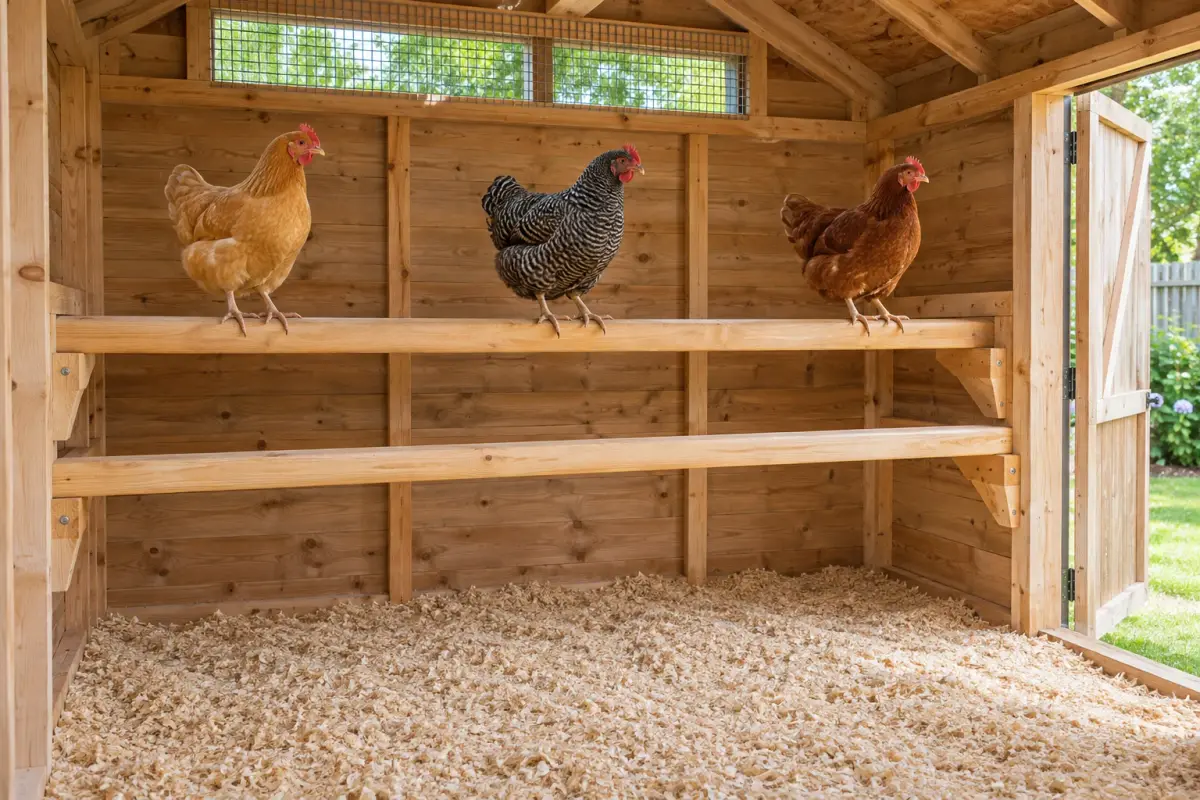
Poultry extension describes welfare tradeoffs in perch design, including injuries from misjudged landings. Check for sharp edges, unstable fittings, rough material, and obstacles beneath roosts. Consider the birds’ adult size and mobility rather than assuming a tall perch is suitable for every flock member.
Compare the Chicken Coops and Chicken Runs collections against safe access, drainage, and cleaning practicality. Repair an obvious hazard before birds use it again, but do not assume that correcting the environment has treated an existing foot lesion. Continue veterinary follow-up for the affected bird.
Know when a foot change needs urgent attention
Call a poultry veterinarian promptly about persistent limping, swelling, a sore, or reluctance to move. Seek urgent advice if the chicken cannot stand or reach resources, is markedly weak, has significant bleeding, or appears to be deteriorating quickly. Do not wait for a specific scab shape before deciding the problem is important.
Keep a short record of walking, appetite, swelling, and the response to prescribed care. Contact the clinic if the condition fails to improve as expected or returns. Foot care is a continuing assessment of comfort and function, rather than a single attempt to make the underside of the foot look clean.
This page is general information, not veterinary advice, and it cannot replace advice from a veterinarian who treats poultry.
Common questions
What does bumblefoot in chickens mean?
It refers to a footpad problem involving inflammation and sometimes infection after injury. Swelling and limping are common signs, but a veterinarian should determine the actual condition and depth of any lesion.
Should I pull a dark scab out of a chicken’s foot?
Do not remove tissue or cut into the foot at home. A surface mark does not reveal everything happening beneath it. Ask a poultry veterinarian about assessment and suitable protection while waiting.
Can changing bedding cure an existing foot lesion?
Improving wet or dirty conditions supports care and reduces avoidable exposure, but it does not establish that an existing lesion is treated. Continue the veterinarian’s plan and follow-up for the affected bird.
When is chicken limping urgent?
Inability to stand or reach resources, marked weakness, significant bleeding, or rapid deterioration needs urgent veterinary advice. Persistent limping, swelling, or a sore also deserves prompt assessment rather than prolonged observation.
Sources we checked
This guide is general information, not veterinary advice. If your pet is unwell or injured, contact your veterinarian.


