Buying guides
Best Travel Dog Bowls: How to Choose a Portable Water Bowl
The best travel dog bowl packs flat, holds enough water for your dog's size, and wipes clean in seconds. For most trips, a collapsible silicone bowl with a rim for hanging on a bag is the simplest choice; for big dogs or long hikes, pair a deeper bowl with a bottle. Browse our travel dog bowls once you know how you travel.
By Matt GarnettUpdated November 13, 20264 min read2 sources
What matters most in a travel dog bowl
Water access matters more than the bowl itself. The AKC advises bringing water from home, and VCA notes that water minerals vary by region and can upset a dog's stomach. A bowl is only useful if you actually offer water, so choose one you will happily pull out at every stop. VCA says to offer water at any rest stops you make during a drive.
After that, three features decide it: capacity, packability and how easily it wipes clean. Capacity should match your dog, since a tiny bowl frustrates a large dog and wastes your time refilling. Packability means it folds or collapses small enough to live in a car door or bag. Easy cleaning means no seams or crevices where slobber and food dry out.
Collapsible, fabric and hard travel bowls compared
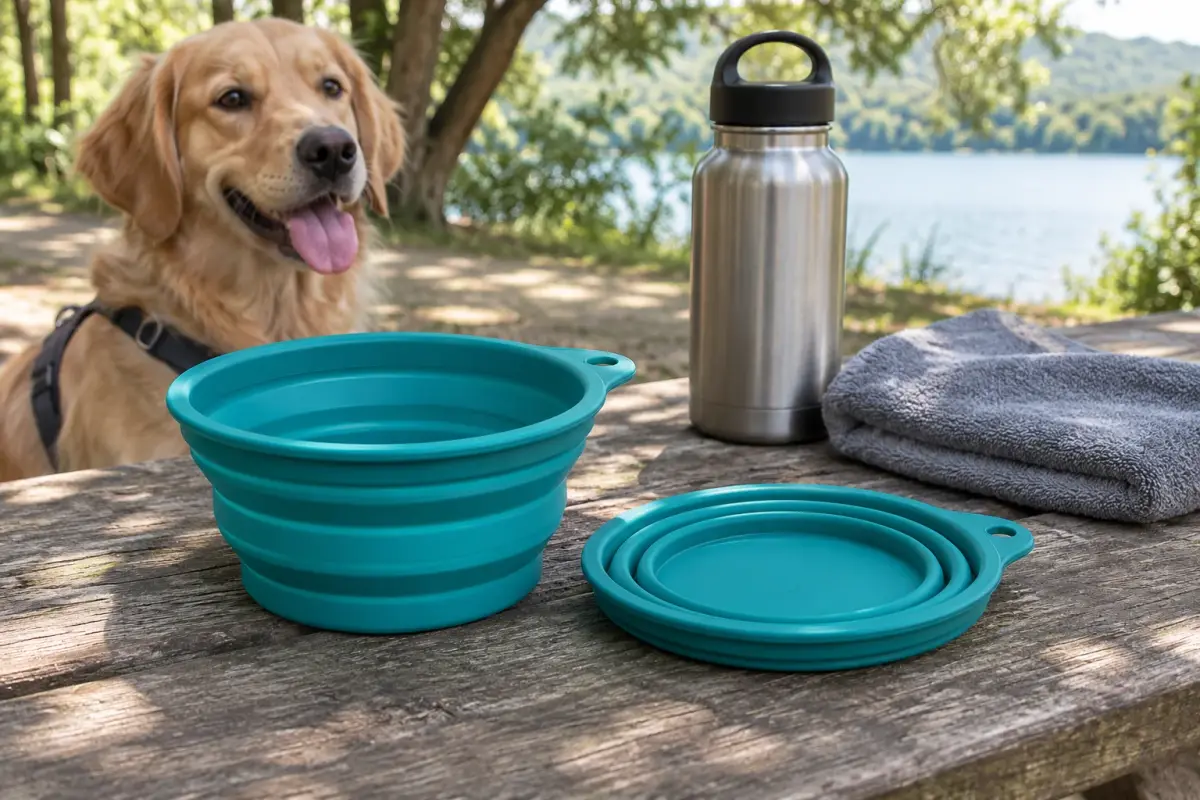
Silicone collapsibles are the most popular design. They fold flat, wipe clean and hold their shape when filled, like this foldable silicone travel bowl or this silicone folding pet bowl. Look for a thick wall that does not flop when you pour, and a rim you can clip to a bag.
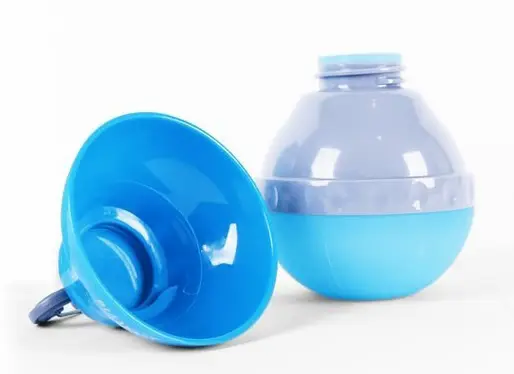
A double-layer outdoor bowl, such as this folding dog bowl with a double layer, gives more rigidity and often more depth for a large dog. A bottle-and-bowl combination, like these portable folding pet bottles, keeps water in the same unit you carry, which suits walks more than car trips. Hard bowls hold their shape and resist chewing but take space, so they suit the car better than the pocket.
Best travel bowl for each dog and trip
For a small dog, a compact collapsible holds a good drink and tucks into a jacket pocket. For a large dog, choose the deepest, widest collapsible you can find, or bring two, because a shallow bowl empties in a few laps. For a dog that drinks messily, a deeper bowl with a narrower mouth spills less in the car.
For road trips, use the dog's own dish where you can. VCA recommends the dog's own food and water dishes and says to make sure they are unbreakable. For hikes and walks, a light collapsible or a bottle combination keeps weight down. For stops where your dog is anxious, a familiar bowl that smells like home can make drinking easier. Our guide to a road trip with your dog covers packing and breaks in more detail.
What to avoid
Avoid very thin silicone that folds under the weight of water, bowls with no rim to grip, and anything with a strong smell that might put your dog off drinking. Avoid fabric bowls with a lining that cracks, since cracks hold bacteria and are hard to see. Avoid relying on lakes, rivers or puddles to keep your dog watered on a trail.
Avoid giving a different water on every stop if your dog has a sensitive stomach. VCA says to bring water from home because of those mineral differences. And avoid leaving your dog alone in the car while you refill anything. VCA says never to leave your dog alone in the car, since the interior can reach dangerous heat within a very short time.
Cleaning, care and lifespan
Rinse the bowl after each trip and wash it with hot, soapy water at the end of the day, then let it dry fully before folding it flat. A damp folded bowl develops a smell quickly. Silicone can usually be washed by hand easily; check the maker's note before using a dishwasher.
Check folds and seams for cracks or sticky residue, and replace a bowl that cracks or smells even after washing. Keep a spare in the car so you are not caught without one. Wash a travel bowl more often than a home bowl, since it spends time on rest-stop pavement and in bags.
Water on the road: when to call your vet
Offer a drink at each stop, and a small one more often if your dog is panting. The AKC advises allowing at least one hour after a meal before driving again, and VCA suggests skipping breakfast on travel day to cut the risk of nausea. Call your vet if your dog vomits repeatedly, refuses water for many hours, or seems weak or overheated.
Heavy panting, drooling, a bright red tongue or stumbling are signs of overheating and need urgent care. When you are ready to choose, browse our travel dog bowls and pick the size and fold style that suits your dog.
This page is general information, not veterinary advice, and it cannot replace an examination by the vet who knows your pet.
Travel bowl storage and serving formats
| Format | How it packs or serves | Check before choosing |
|---|---|---|
| Collapsible silicone | Folds into a flatter shape | Wall stiffness and rim |
| Double-layer folding | Additional layer supports the bowl | Folded size and usable depth |
| Bottle-and-bowl combination | Water and serving area travel together | Bottle capacity and access to clean both sections |
| Hard bowl | Keeps its shape when empty | Storage footprint and carrying space |
Common questions
What is the best type of travel bowl for a dog?
A collapsible silicone bowl suits most dogs because it folds flat, wipes clean and holds water. Large dogs may prefer a deeper double-layer design, and a bottle combination suits walks.
How much water should I bring for my dog on a trip?
Bring more than you think you need, and offer a drink at each rest stop. The AKC and VCA both advise bringing water from home, so pack enough for the whole trip.
Is it okay for my dog to drink from lakes and rivers?
It is best not to rely on natural water. The AKC warns against dogs depending on lake, river or ocean water, so carry your own water and offer it from your bowl.
How do I clean a collapsible dog bowl?
Rinse it after each use, wash with hot soapy water, and dry fully before folding. Check folds for residue, since trapped water and food cause smells and bacteria.
Can I leave a dog in the car with a bowl of water?
No. VCA says never to leave your dog alone in the car, because the interior can reach dangerous heat in a very short time, and a bowl of water does not prevent heat stroke.
Sources we checked
This guide is general information, not veterinary advice. If your pet is unwell or injured, contact your veterinarian.