






Buying guides
Best Portable Dog Water Bottle: How to Choose One
The best portable dog water bottle carries enough water for your dog's trip, lets it drink easily from a built-in trough or bowl, and locks shut so it does not leak in a bag. The AKC's guideline of roughly one ounce of water per pound of body weight per day helps you size it: a 50 lb dog on a long summer hike needs far more than a small bottle holds.
By Matt GarnettUpdated November 10, 20263 min read3 sources
What matters most: capacity
Work out how much your dog drinks. The AKC says dogs need roughly one ounce of water per pound of body weight each day, and more with heat and activity. On a two-hour walk in warm weather, a 50 lb dog may drink a good share of a day's water, so carry more than you think.
For short city walks, a 12 to 20 ounce bottle suits most small and medium dogs. For hikes, long car trips and large dogs, carry 25 ounces or more, or a travel water bottle for dogs plus a collapsible bowl and a refill.
Types compared
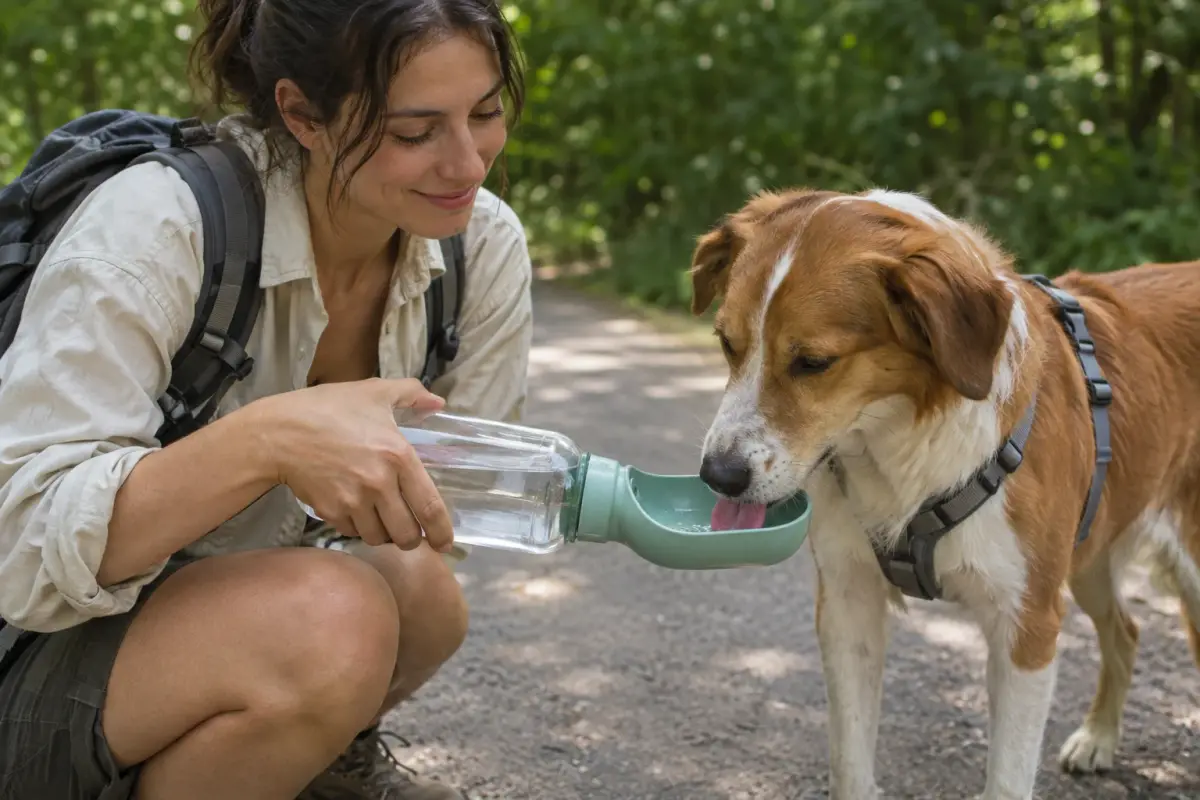
Trough bottles have a flip-out or squeeze-fed drinking tray; you squeeze water into the trough and let unused water drain back, which saves water. Bottles with an attached cup are similar. Collapsible silicone bowls fold flat and pair with your own bottle, giving a larger drinking surface for big dogs.
Insulated steel bottles keep water cool on hot days. Combination bottles carry water and a small kibble compartment for longer outings. Clip-on designs attach to a leash or backpack.
Best type for each use
For daily walks, a lightweight trough bottle with a one-hand lock. For hiking, an insulated bottle or two, plus a collapsible bowl; the AKC advises carrying water and offering it often when exercising dogs, because they handle heat and humidity less well than people.
For road trips, a large bottle and a non-spill travel bowl for the car. For big dogs, a wide bowl rather than a narrow trough, which large tongues find awkward.
What to avoid
Avoid bottles without a lock, which leak in bags, and troughs too narrow for your dog's muzzle. Avoid letting dogs drink from puddles, ponds and streams when you can offer clean water.
Avoid pushing on in heat. The AKC lists dehydration signs including panting, lethargy, dry sticky gums and thick saliva. Stop in shade, offer water, and call a vet if your dog does not recover quickly or shows heatstroke signs such as collapse or bright red gums.
Cleaning
Empty and rinse the bottle after each outing, and wash it with hot soapy water at least a few times a week, including the trough hinge and seal, where slime builds up. Dishwasher-safe parts make this easier.
Let all parts dry fully before reassembling. Wash your hands after handling pet bowls and supplies, as the CDC advises.
If you use a collapsible bowl, wash and dry it fully before folding it away, because damp silicone folded up grows mildew quickly.
Lifespan
Replace seals and valves when they leak, and the whole bottle if the plastic cracks or clouds. Steel bottles last for years.
Keep a spare dog water bottle in the car during warm months, so you never set off without water.
Choose a bottle made from food-safe materials, and check that any carry strap or clip is sturdy enough not to snap when you are miles from home.
This page is general information, not veterinary advice, and it cannot replace an examination by the vet who knows your pet.
Portable water-serving arrangements
| Format | Serving arrangement | What to verify |
|---|---|---|
| Trough bottle | A drinking tray attached to the bottle | Valve and return-water instructions |
| Bottle with cup | A separate or attached drinking cup | Cup attachment and usable capacity |
| Collapsible bowl plus bottle | A bowl paired with a separate water container | Bowl stability and carried volume |
| Insulated steel bottle | An insulated bottle body | Actual insulation and serving arrangement |
| Water-and-food combination | Separate compartments in one unit | Each compartment’s stated capacity |
| Clip-on | A carrying clip added to a bottle | Clip attachment and where it hangs |
Common questions
How much water should I bring for my dog on a walk?
Use the AKC's guide of roughly one ounce per pound per day and allow more for heat and exercise. For long or hot outings, carry extra and offer water often.
What is the best travel bowl for dogs?
A collapsible silicone bowl for walks and hikes, or a non-spill bowl for the car. Large dogs drink more comfortably from a wide bowl than a narrow trough.
Are dog water bottles with troughs good?
They are convenient and save water, since unused water drains back. Check the trough is wide enough for your dog's muzzle and that the bottle locks shut.
Can my dog drink from streams on hikes?
It is safer to offer clean water you carry. Natural water can contain parasites, bacteria or algae. If your dog becomes ill after drinking from a pond or stream, call your vet.
Sources we checked
This guide is general information, not veterinary advice. If your pet is unwell or injured, contact your veterinarian.


