Buying guides
Best Leather Dog Harness: Fit, Leather Type and Care
The best leather dog harness fits snugly with two fingers of room, has smooth edges that will not rub, and uses solid hardware. Leather is durable and long-lasting, but it needs care and a careful fit check. Choose a style that matches how your dog walks, then browse our leather dog harnesses in the right size.
By Matt GarnettUpdated November 14, 20264 min read3 sources
What matters most in a leather harness
Fit decides everything. The AKC says you should be able to fit two fingers under the straps with your dog standing or sitting, and that nothing should pinch or feel tight anywhere on the body. Leather is less forgiving than soft webbing, because stiff edges can rub where a fabric harness would flex. Check that your dog can extend the front legs forward and out to the side without restriction.
Then check the edges and hardware. Leather edges should be smooth and rounded, and any padding or lining should sit where the straps touch the skin. The AKC warns against a neck opening that sits around the throat; it should sit closer to the top of the sternum. Buckles, rings and stitching should look solid, because a failure there is the main way a harness lets a dog slip out.
Leather compared with nylon, mesh and faux leather
The AKC describes nylon as lightweight, durable and often budget-friendly, but breathes poorly and can trap heat and moisture. Mesh is breathable and light but less durable, with less padding and a higher risk of rubbing. It calls leather durable and long-lasting but more expensive, needing regular care to prevent drying and cracking.
Faux leather is a lighter-care alternative that imitates the look, though it may not wear the same way, so inspect it often. A set such as a faux leather dog harness and lead set is one example of that style. Real leather suits owners who like the look and will condition it; synthetic or nylon suits wet days and frequent swims. See our guide to the best dog harness for the wider comparison.
Harness styles in leather
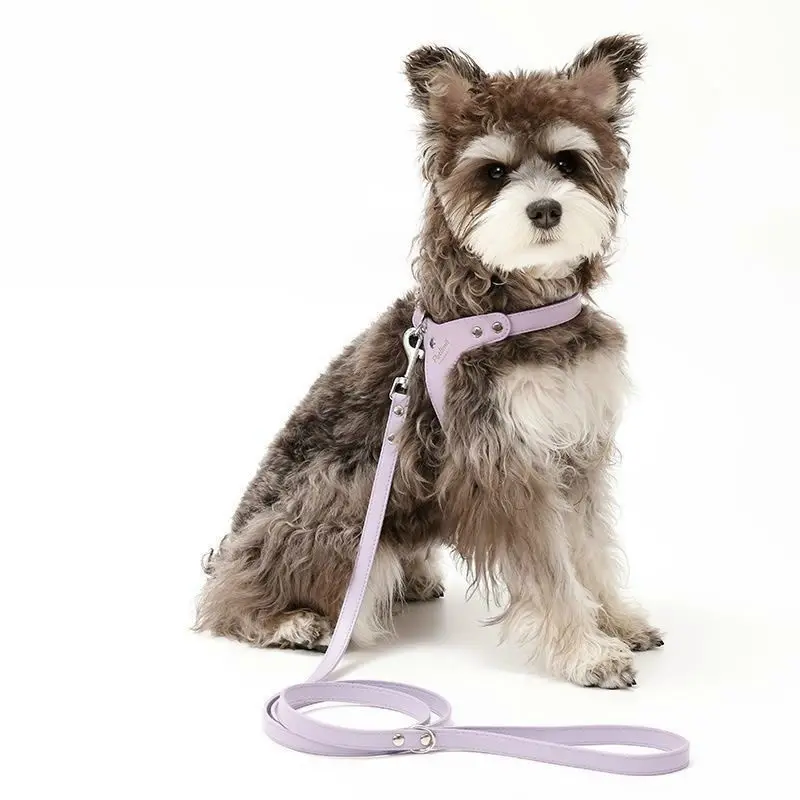
Most leather harnesses are back-clip or step-in styles, and some pair with a matching lead. The AKC says back-clip harnesses are recommended for well-trained dogs, with the clip between the shoulder blades, while a step-in harness avoids going over the head, which helps dogs sensitive about their head, ears or neck. A style like a soft leather dog harness and lead set suits a dog that walks politely and wants a coordinated look.
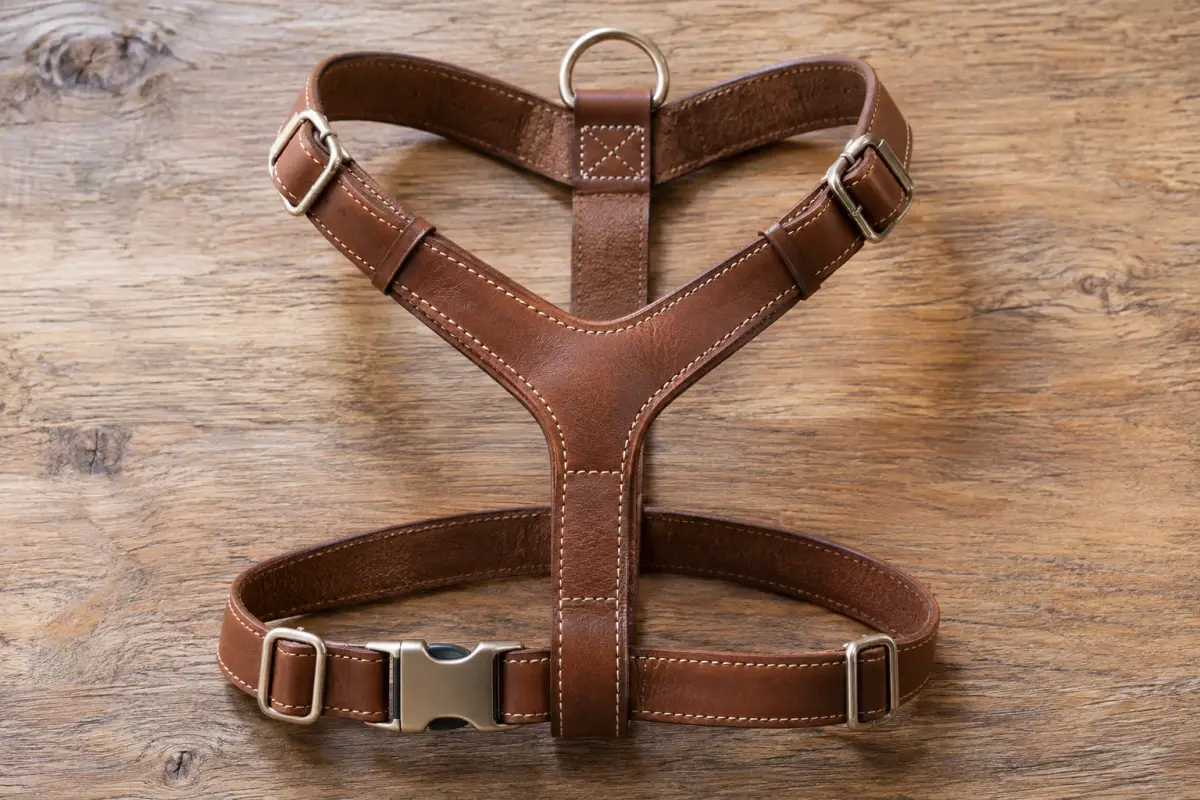
A genuine leather dog harness is the plain, durable option for owners who want a classic strap design. For dogs that pull hard, the AKC says front-clip or no-pull designs often help by redirecting forward movement, and leather versions are less common, so consider our no-pull dog harnesses if pulling is your main problem.
How to measure and test the fit
The AKC says to measure two spots: the base of the neck where it meets the shoulders, and the widest part of the chest, usually behind the front legs. Use a cloth tape or a string measured against a ruler, with your dog standing, and keep it snug but not tight. Check whether a product is sized by your dog's measurements or the harness's own dimensions, and if your dog falls between sizes, go up a size or choose an adjustable harness.
Once it is on, walk your dog around to confirm natural movement. Pull on the harness from several directions to test that the dog cannot slip out, and back the dog up to make sure the harness does not slide over the head. Start looser and tighten gradually, and recheck after grooming and after any weight change.
What to avoid
Avoid a girth strap that sits behind the rib cage toward the stomach or squeezes into the front legs at the elbows. Avoid stiff, new leather that has not been broken in on a dog with thin skin or a short coat, and watch for rubbing, pressure points and skin irritation. The AKC notes fleece-lined harnesses help thin-coated breeds such as Greyhounds.
Avoid leaving a leather harness on a wet dog for long. If it gets soaked, dry it naturally and condition it afterward. If your dog develops rubbed or raw skin, hair loss or a limp, stop using the harness and call your vet.
Care and when to replace it
The AKC says to wipe leather with a damp cloth, or use a mix of water, vinegar and baby soap to clean and condition it. Check closures, buckles and hardware regularly for cracks, fraying, loose stitching and worn areas, and replace the harness when any of these appear.
Puppies need regular adjustment or replacement as they grow, so a leather harness is better for an adult whose size has settled. Pair it with a leather dog leash for a matching set, or look at the wider dog harnesses range.
This page is general information, not veterinary advice, and it cannot replace an examination by the vet who knows your pet.
Harness body materials and care distinctions
| Material | Construction difference | What to verify |
|---|---|---|
| Leather | A leather strap or panel body | Exact leather declaration and conditioning directions |
| Nylon | Webbing or fabric body | Edges,stitching and cleaning directions |
| Mesh | Open-textured fabric panels | Panel placement and wear |
| Faux leather | A synthetic leather-look surface | Backing,lining and surface deterioration |
Common questions
Is a leather harness good for dogs?
It can be. Leather is durable and long-lasting, but it needs regular care to prevent drying and cracking, and a poor fit can cause rubbing. Check the fit carefully and inspect edges often.
How tight should a dog harness be?
Snug but comfortable. The AKC suggests two fingers should fit under the straps, and nothing should pinch. Your dog should move the front legs freely and not be able to back out.
How do I measure my dog for a harness?
Measure the base of the neck where it meets the shoulders and the widest part of the chest behind the front legs, with your dog standing. If between sizes, go up or choose an adjustable harness.
How do I clean a leather dog harness?
The AKC suggests wiping with a damp cloth, or using a mix of water, vinegar and baby soap to clean and condition it. Dry it naturally and check the stitching afterward.
Is a leather harness good for a dog that pulls?
Often not on its own. The AKC says front-clip and no-pull harnesses help dogs that pull by redirecting forward movement, and training is what solves it. Leather suits calm walkers best.
Sources we checked
This guide is general information, not veterinary advice. If your pet is unwell or injured, contact your veterinarian.