






Buying guides
Best Large Dog House: What Actually Matters
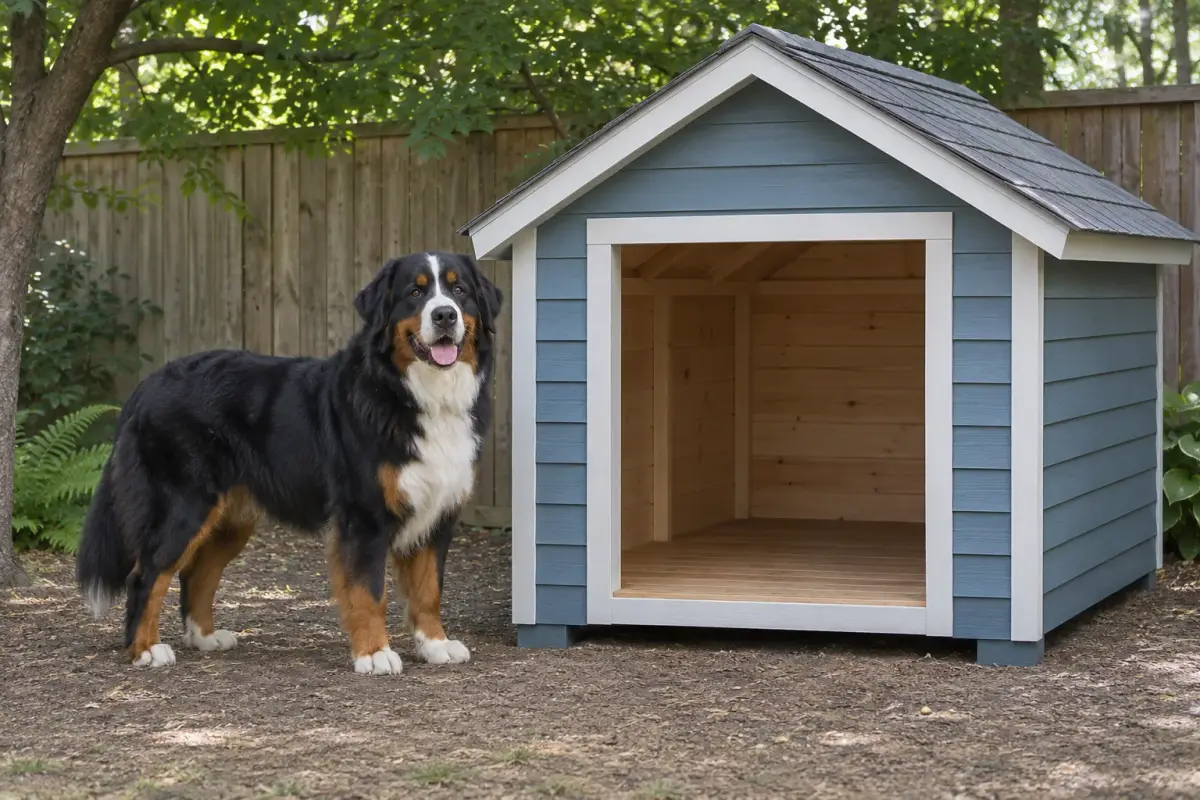
The best large dog house is a sturdy, well-ventilated shelter with a raised, dry floor, a roof that sheds rain, and room for your dog to stand, turn and lie down. A dog house is never a substitute for time indoors in extreme weather. Browse our large dog houses once you have measured your dog, and plan for shade, airflow and a door that faces away from the wind.
By Matt GarnettUpdated November 14, 20264 min read4 sources
What matters most in a large dog house
Size and airflow come first. The house should be roomy enough for a big dog to stand, turn around and lie down comfortably, but not so large that it becomes a cold, drafty box. There is no single safe dimension for every breed, so measure your own dog standing and lying, and compare the interior measurements, not the outside ones, with the maker's specifications.
Ventilation matters as much as space. VCA Animal Hospitals lists a poorly ventilated environment or a dog house among the settings where dogs can overheat even when the day does not feel especially hot. Look for vents or an open design, a roof overhang, and a raised floor that keeps the dog off wet ground. A raised wooden dog house is one example of that approach, and a house with air vents addresses airflow directly.
The main types compared
Wooden houses are the most common for large dogs. They are sturdy, can be raised on feet and take insulation well, but they need to be sealed against moisture and checked for splinters and loose fasteners. A basic wooden outdoor dog house suits a mild climate and a dog that spends only part of the day outside.
Plastic houses are light and easy to wash but can trap heat and are less steady in wind. Insulated or double-walled designs help in winter, and the AKC mentions foam board between interior and exterior walls as one insulation approach for kennels. Porch or deck designs give shade at the entrance. If cold weather is your main worry, see our guide to insulated dog houses and the wider dog houses range.
Best type for each situation
For hot climates, put airflow and shade first: vents, a light-colored roof and a spot out of direct sun. The AKC notes that shady shelter is especially important for dogs with very short or white hair, since they can sunburn easily. For cold climates, an insulated, draft-free house with a door that faces away from the wind keeps more warmth in, but it still does not make it safe to leave a dog out in extreme cold.
For a large double-coated dog, the AKC says breeds of this type can usually stay out for roughly 30 minutes to an hour in temperatures below freezing, and should not stay out for long above 90 degrees F. For a puppy, a senior dog or a dog with health problems, the AKC advises mostly indoor time with short, supervised outings. A dog house is a place to shelter during time outside, not a home.
Heat, cold and safety limits
No house can fix extreme weather. The ASPCA's guidance is that if it is too cold for you, it is probably too cold for your dog, so keep animals inside, and it warns that pets left outdoors can freeze, get lost or be injured. In heat, a dog without shade or water is at risk of heat stroke, per VCA, so always provide fresh water and shade, and watch for panting, shivering, shaking or extreme fatigue, as the AKC suggests.
Be careful with any heat source. The AKC says kennel heaters must be properly ventilated to the outside, with no flammable materials nearby, and that heat lamps and cords must be kept out of a dog's reach. Never improvise with a space heater or a lamp. If you are unsure whether your dog's setup is safe, ask your vet.
What to avoid
Avoid a house with no ventilation, a floor that sits on bare ground, a door that opens into the prevailing wind, and sharp or loose hardware inside. Avoid a house sized for a smaller dog: a large dog that cannot turn around will not use it, and one that cannot stretch out will not rest properly.
Do not chain or tether a dog to its house, and check local rules, because the AKC notes many laws limit tethering and confinement in extreme temperatures. Do not rely on a house to replace exercise, company or water. The AKC also points out that loneliness can lead to boredom, digging and escape attempts.
Setup, care and when to replace it
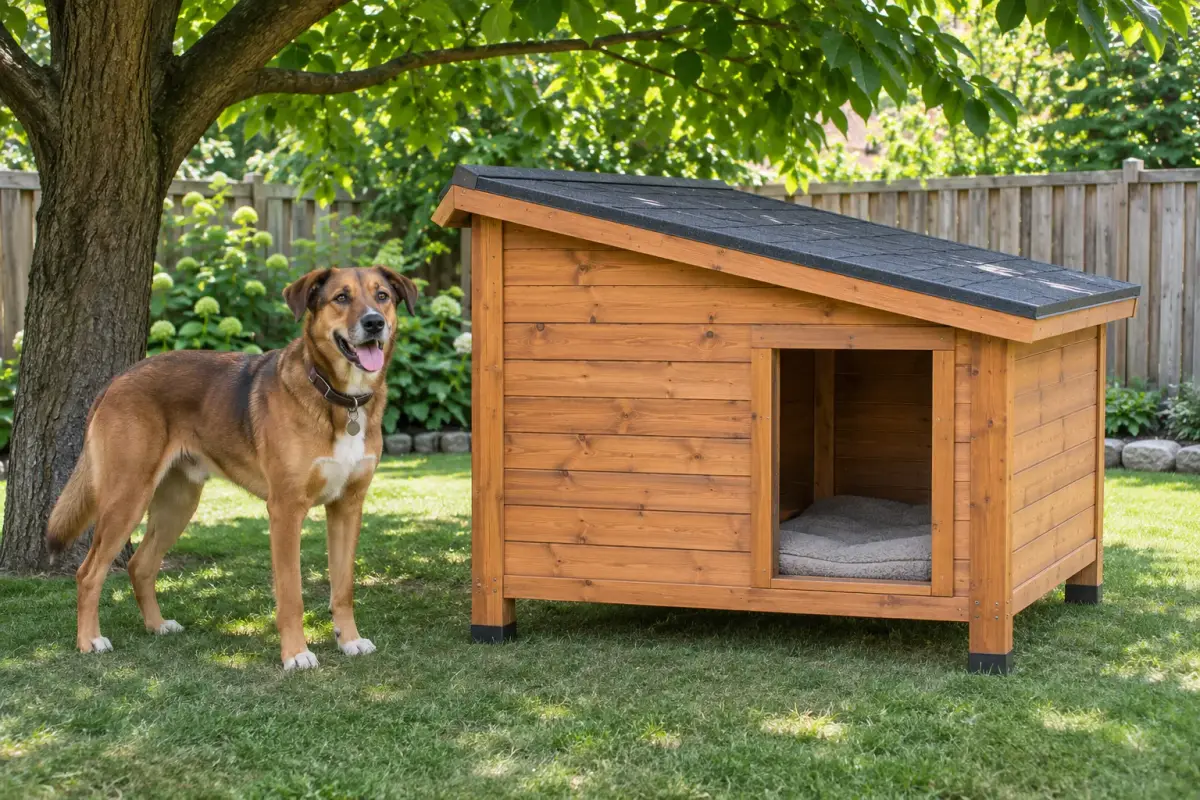
Place the house on level ground, in shade in summer and out of the wind in winter, and keep the entrance clear. Wipe the interior regularly, replace damp bedding, and check the roof, floor and fasteners at the start of each season. Replace any house with rot, splintered edges or a sagging roof.
Check how your dog uses the house over a few weeks: if it never goes in, the size, position or airflow may be wrong. When you are ready, compare options in our large dog house range. This page is general information, not veterinary advice, and it cannot replace an examination by the vet who knows your pet.
Outdoor dog-house construction choices
| Construction | What changes physically | Inspect before choosing |
|---|---|---|
| Wood | Panels and fasteners on a rigid frame | Finish,raised base and accessible joints |
| Plastic | Molded panels or shell | Vent openings,base and fixing instructions |
| Double-walled or insulated | Additional layers around the enclosure | Which walls,roof and floor have those layers |
| Porch or deck | An extension outside the entrance | Separate inside and porch measurements |
Common questions
How big should a dog house be for a large dog?
Big enough for your dog to stand, turn around and lie down comfortably, but not so large that it cannot hold warmth. Measure your dog standing and lying and compare with the interior measurements.
Can a large dog live outside in a dog house?
A dog house offers shelter during time outdoors, but it is not a substitute for time indoors in extreme heat or cold. The AKC advises that many dogs, especially puppies, seniors and dogs with health problems, should mostly stay inside.
Do large dog houses need ventilation?
Yes. VCA lists a poorly ventilated dog house among the settings where dogs can overheat, so look for vents or an open design, a roof overhang and a raised floor for airflow underneath.
Is it safe to heat a dog house?
Only with great care. The AKC says kennel heaters need ventilation to the outside and no flammable materials nearby, and heat lamps and cords must be kept out of a dog's reach. Ask your vet before using any heat source.
Sources we checked
This guide is general information, not veterinary advice. If your pet is unwell or injured, contact your veterinarian.


