






Buying guides
Choosing the Best Indoor Cat for Your Home
The best indoor cat is an individual whose temperament, activity, grooming, and social needs fit your home. Calm breeds such as British Shorthairs, Ragdolls, and Persians can be worth considering, but a breed name does not make a cat content without suitable care. Compare the actual cat and prepare the home before deciding which companion is right for you.
By Matt GarnettUpdated November 10, 20264 min read4 sources
Compare three different kinds of calm companion
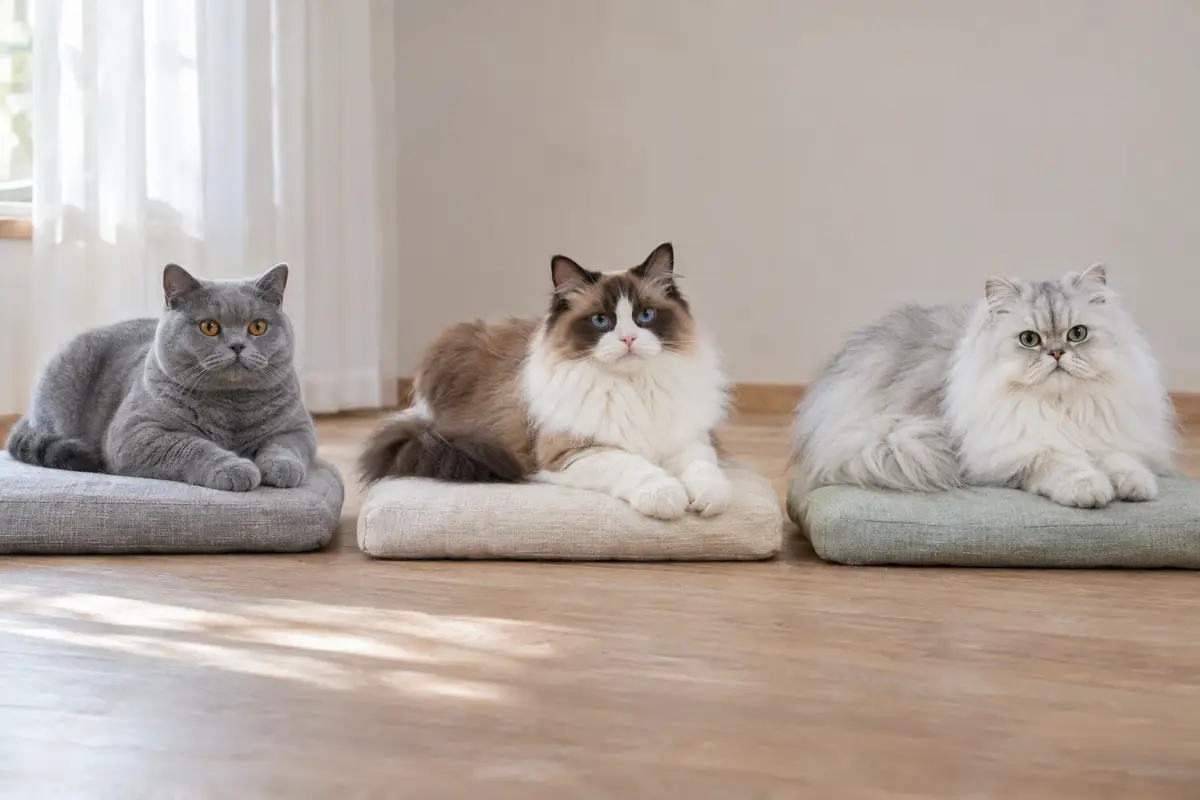
CFA describes the British Shorthair as a sturdy, short-coated cat with a calm, quiet personality. The Ragdoll is a larger, affectionate cat with a semi-long coat. The Persian combines a stocky build and a long, full coat with a generally quiet disposition.
Those descriptions offer starting points, not a ranking. A short coat, a large body, and a placid reputation each have different practical implications. Ask how the individual cat plays, rests, greets familiar people, and responds to handling. Your household needs to suit the whole cat, not just one appealing characteristic.
Consider a British Shorthair if you respect its space
CFA notes that British Shorthairs enjoy people but may prefer keeping their feet on the floor rather than being carried. That can suit someone who enjoys quiet company without expecting every interaction to involve lifting the cat or placing it on a lap.
A family should discuss how children will interact with the cat and where it can withdraw from loud activity. The breed’s dense short coat also needs attention to shedding and routine grooming with a cat brush. Meet an adult if possible and ask about its own preferences rather than assuming all calm cats want the same kind of affection.
Consider a Ragdoll with room for a larger cat
CFA describes Ragdolls as affectionate and moderately active, with a large frame that matures slowly. Think about comfortable resting places, a carrier, and sturdy equipment, such as a cat tree built for large cats, that suits the full-grown animal. A gentle temperament is not a reason to overlook physical size.
Its semi-long coat still needs regular combing to find loose hair and tangles. CFA also advises care when introducing a trusting Ragdoll to existing animals. Choose gradual introductions and attention to the individual cats involved rather than assuming a breed’s pleasant reputation will resolve compatibility on its own.
Consider a Persian only with a grooming commitment
CFA emphasizes that a Persian’s full coat requires serious, regular grooming. If you enjoy caring for a long coat and can maintain the routine with a cat comb, that may fit your priorities. If grooming is something you hope to avoid, a quiet personality does not cancel that obligation.
Ask about combing, eye-area care, and the individual cat’s handling tolerance before committing. Discuss any breathing or eye concerns with your veterinarian and review available medical records. A cat’s appearance should never be the only reason for choosing care you may find difficult to sustain.
Meet the individual before you decide
Use a breed description to prepare for a meeting, then pay attention to the cat in front of you. Ask the caregiver what it does when the home is quiet, when visitors arrive, and when someone starts a grooming routine. For an adult, a clear account of familiar habits may be more useful than a prediction based on ancestry. For a kitten, discuss the support it will need as it develops and grows.
Describe your own home honestly, including noise, children, other animals, and time away. Ask which needs are already well understood and which remain uncertain. Do not force an introduction or lift a reluctant cat to test whether it matches a placid reputation. Take time to consider whether your expectations fit the animal’s observed preferences. The choice becomes more practical when you can picture the actual resting places, handling routine, and daily interaction you will provide rather than an idealized image of a breed.
Prepare an indoor life that offers choices
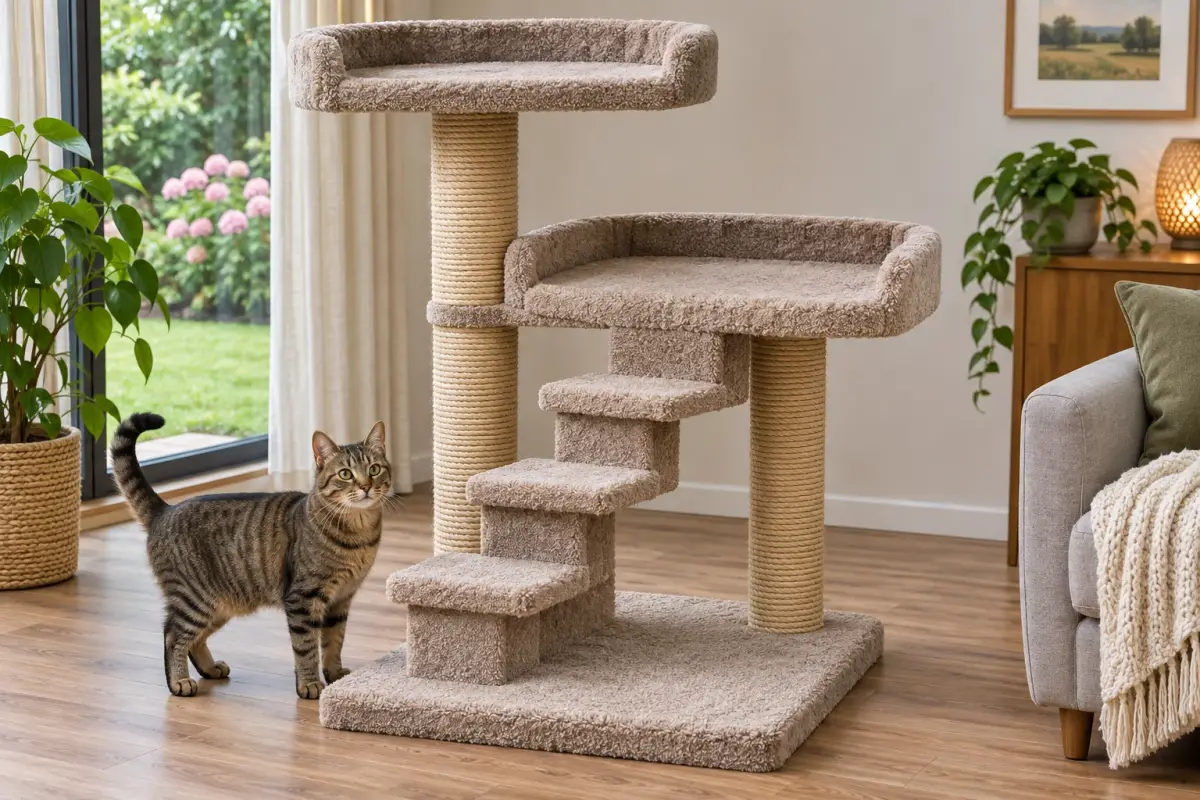
VCA explains that indoor cats benefit from physical activity, mental stimulation, and social interaction. Provide suitable resting places such as a window-mounted cat perch, scratching opportunities such as a multi-level cat tree, and play rather than assuming a calm cat needs little to do. Make sure it can move through the home without being chased or cornered.
Review long-term care with your veterinarian, including the individual cat’s age and health rather than an expected lifespan attached to a breed name. Seek advice about new hiding, appetite changes, pain, or other unexplained behavior changes. A suitable indoor home keeps responding as its cat’s needs change.
This page is general information, not veterinary advice, and it cannot replace an examination by the vet who knows your pet.
Common questions
Which breed is the best indoor cat?
There is no single breed that fits every home. Compare the individual cat’s temperament, health, activity, grooming, and social needs with the environment and care your household can provide.
Does a calm indoor cat still need play?
Yes. VCA explains that indoor cats need activity, mental stimulation, and social interaction. Provide suitable play and resting choices while respecting the individual cat’s preferences rather than assuming quiet behavior means no needs.
Is a Persian the easiest indoor cat because it is quiet?
A quiet disposition does not remove grooming work. CFA stresses the commitment required by a Persian’s long coat. Ask about combing and handling before deciding whether that care fits your household.
Sources we checked
This guide is general information, not veterinary advice. If your pet is unwell or injured, contact your veterinarian.


