






Buying guides
Best Harness for Yorkshire Terriers: How to Choose One That Fits
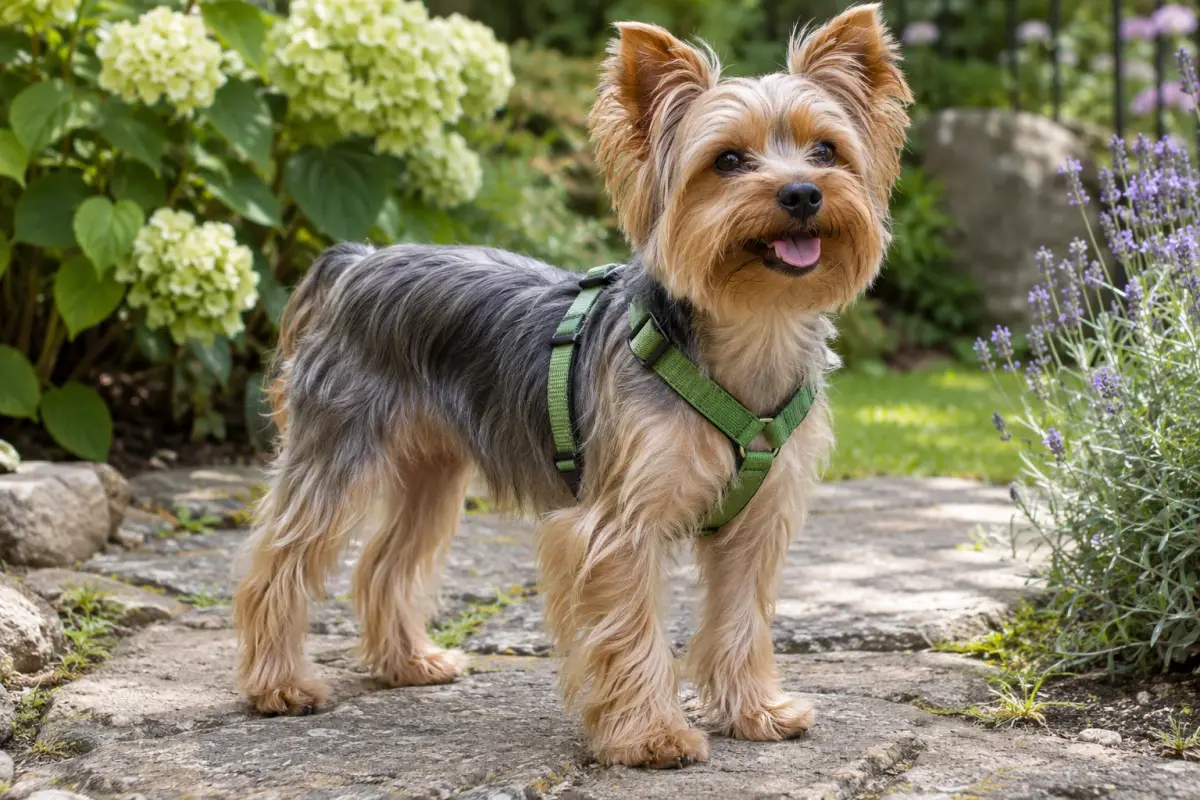
The best harness for a Yorkshire terrier is a light, adjustable one that takes all pressure off the neck and fits closely enough that a feisty, quick dog cannot back out of it. VCA lists Yorkshire terriers among the toy breeds prone to tracheal collapse and advises a harness rather than a collar. Browse our harnesses for Yorkshire terriers after measuring.
By Matt GarnettUpdated November 14, 20264 min read3 sources
Why a harness is the safer choice for a Yorkie
VCA names Yorkshire terriers among the toy breeds in which tracheal collapse is seen, a weakening of the windpipe that causes a persistent, dry, honking cough. Its advice is to use a harness rather than a collar, since collar pressure on the trachea can trigger coughing. The AKC also lists a harness instead of a collar among its management tips for a collapsed trachea.
Many Yorkies never develop it, but a dog this small can be jerked off its feet by a collar and leash in a second. A chest harness turns that pull into pressure across the body instead of the throat. Keep a light collar for ID tags if you like, and keep the leash off it.
What matters most in the fit
The AKC says to take two measurements: the neck where it meets the shoulders, and the widest part of the chest behind the front legs. A cloth tape works, as does string held against a ruler. Choose the size from those figures and the maker's chart instead of from weight, since very small dogs vary widely in build.
Begin slightly loose and tighten gradually. Check that the shoulders and legs move naturally, that the harness cannot slide over the head when your dog backs up, and that nothing rubs. The AKC describes the Yorkie as a feisty terrier, and a feisty dog that spots a squirrel will test every strap, so the back-up test is worth doing before you leave the house.
Silky coat, slipping and breakage
The AKC describes the Yorkshire terrier coat as dainty, glossy and floor length. Long, fine hair can hide the body and lets a loose strap slide, so press the straps down to the skin when you check the fit. Dogs with thick coats may need tighter adjustment, according to the AKC, and a silky coat can behave the same way.
Rough webbing and stiff stitching can snag and break fine hair, usually behind the front legs. Choose soft, smooth straps, brush before each fitting, and recheck the fit after every grooming appointment, as the AKC advises. A Yorkie in a short trim needs a tighter setting than the same dog in full coat. See padded dog harnesses for softer-edged styles.
Harness types compared
A Y-front or simple strap harness is light and leaves the neck clear. The AKC says step-in designs avoid going over the head and are harder to escape when they fit properly, which suits a dog that wriggles. Mesh is breathable but offers little padding, and nylon is durable but warmer. A plain adjustable pet harness is the kind of design to look for.
Chest-strap sets and harness-and-leash combinations save matching two pieces. A harness with leash or a rope-style harness and leash set are examples, though the leash should be light enough for a toy dog. Browse small dog harnesses to compare more shapes.
Cough, breathing and when to see a vet
VCA lists a harsh, dry goose-honk cough that gets worse with excitement, heat and humidity, after eating or drinking, and with neck pressure. The AKC says any breathing difficulty is a medical emergency, and fainting or bluish gums should be treated the same way, so go to a vet immediately.
A new cough while your dog wears a harness is a reason for a vet visit, not just a different harness. VCA says weight management helps reduce the severity of symptoms, so recheck the fit as weight changes. Keep walks short and cool in warm weather and avoid letting the dog bark and strain at the end of the leash.
What to avoid, and how to care for it
Avoid clipping the leash to a collar, straps across the front of the throat, heavy buckles, retractable leads, and sizing by weight alone. Avoid leaving a harness on all day, because straps rub fine hair and skin.
Replace the harness when stitching frays or a buckle cracks. A failed buckle on a busy street is how a small, quick dog gets loose. For the wider choice read our guide to harnesses for small dogs, see how to put on a dog harness, and browse all harnesses for Yorkshire terriers.
This page is general information, not veterinary advice, and it cannot replace an examination by the vet who knows your pet.
Small-harness shapes and set components
| Layout | Physical arrangement | What to verify |
|---|---|---|
| Y-front or strap | Separate straps frame the chest | Neck/chest ranges and shoulder clearance |
| Step-in | Front feet enter before the body closes | Leg openings and buckle placement |
| Mesh body | Mesh forms some of the panel | Panel edges and actual lining |
| Harness-and-leash set | A harness paired with a separate line | Included pieces and connector sizes |
Common questions
Should a Yorkshire terrier wear a collar or a harness?
Walk with a harness. VCA lists Yorkshire terriers among the toy breeds prone to tracheal collapse and advises a harness rather than a collar. A light collar can still hold ID tags if the leash stays off it.
What size harness does a Yorkie need?
Measure the neck where it meets the shoulders and the widest part of the chest, then use the maker's chart. Press the straps down through the coat to check the fit against the body, not the hair.
Is a step-in harness good for a Yorkie?
It often is. The AKC says step-in designs avoid going over the head and are harder to escape when they fit properly, which helps with a wriggly dog. Check the shoulders move freely and nothing rubs.
How do I stop my Yorkie slipping out of a harness?
Fit it snug at the chest, tighten gradually, and do the back-up test: step back and see if it slides over the head. Recheck after grooming. Our how to put on a dog harness guide shows the steps.
Sources we checked
This guide is general information, not veterinary advice. If your pet is unwell or injured, contact your veterinarian.


