






Buying guides
Best Harness for Pomeranians: How to Choose One That Fits
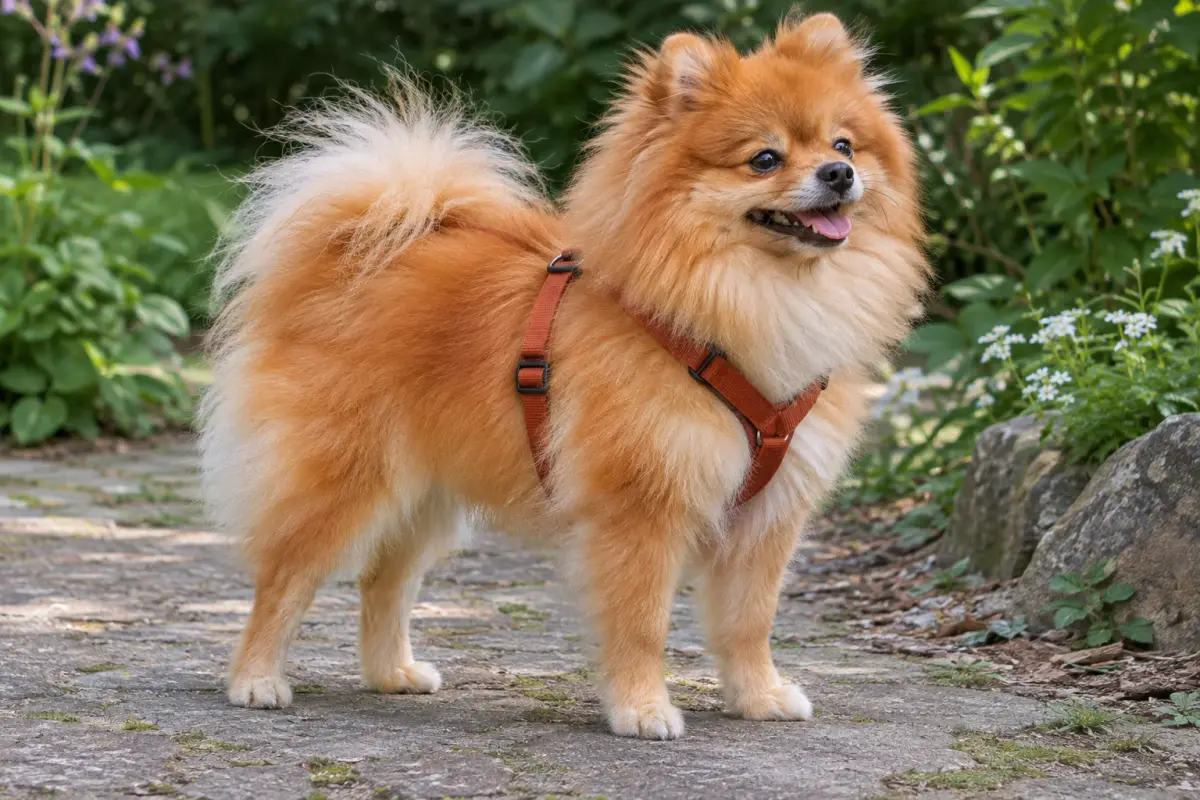
The best harness for a Pomeranian is a lightweight, adjustable one that keeps all pressure off the neck, fits snugly through the chest despite the fluffy coat, and cannot slide over the head. VCA advises a harness rather than a collar for toy breeds prone to tracheal collapse, and Pomeranians are on its list. Browse our harnesses for Pomeranians once you have your measurements.
By Matt GarnettUpdated November 14, 20265 min read3 sources
Why a harness suits a Pomeranian's windpipe
Pomeranians are one of the toy breeds VCA names as prone to tracheal collapse, a condition where the windpipe weakens and causes a persistent, dry, honking cough. VCA's advice for affected dogs is plain: use a harness rather than a collar, because pressure on the neck can trigger coughing. The AKC gives the same tip, listing a harness instead of a collar among its management steps for dogs with this problem.
Not every Pomeranian develops it, and nobody can tell at purchase which dog will. Clipping the leash to a chest harness from the first walk means a sudden lunge at a squirrel or a leaf does not land on the throat. A light collar can still carry ID tags, as long as the leash never attaches to it.
What matters most in the fit
Pomeranians are tiny, so strap width and hardware weight matter more than they do on a bigger dog. The AKC says to take two measurements: the neck where it meets the shoulders, and the widest part of the chest behind the front legs, using a cloth tape or a piece of string held against a ruler. Choose the size from those figures and the maker's chart rather than from weight alone.
Start slightly loose and tighten gradually. The AKC's checks are worth repeating at home: the dog should move its shoulders and legs naturally, the harness should not slide over the head when the dog backs up, and there should be no rubbing or pressure points. Look for adjustment at both the neck and the chest, small light buckles, and a D-ring that sits on the back instead of dragging at the throat.
Coat, fluff and matting
The AKC calls the Pomeranian coat glorious, and it makes a harness hard to judge by eye. The AKC notes that dogs with thick or fluffy coats may need tighter adjustment to stop a harness slipping, so press the straps down through the fur to the body to check the fit instead of trusting how it looks on top.
Straps also rub fur into mats, most often behind the front legs. Choose smooth, soft webbing, brush the coat before every fitting, and take the harness off when you are home. The AKC advises rechecking the fit after grooming, which matters for a breed that can go from a full coat to a short trim in one appointment. Softer-edged styles are collected under padded dog harnesses.
Harness types compared
The AKC describes the main styles. Step-in harnesses avoid going over the head, which helps a dog that dislikes handling around its ears and neck, and the AKC says they are harder to escape when they fit properly. Over-the-head styles are quick to put on but can flatten a full ruff. Mesh is breathable but thin, while nylon is durable and less breathable. A plain adjustable pet harness is the kind of design to look for in this group.
Padded vest styles spread pressure over a wider area but add warmth and bulk under a thick coat. Harness-and-leash combinations, such as this dog harness and leash set, save matching two items, though the leash should be light enough for a dog this small. Front-clip and no-pull designs are rarely needed for a tiny dog; if yours does pull, see our no-pull dog harnesses.
Cough, heat and when to see a vet
Know what a problem looks like. VCA lists a harsh, dry, goose-honk cough that gets worse with excitement, heat and humidity, and right after eating or drinking. The AKC says any breathing difficulty is a medical emergency, as are fainting or bluish gums, so go to a vet immediately if you see them.
A new cough while your dog wears a harness is a reason to book a vet visit, not just to change the harness. Keep walks short in warm weather and avoid the hottest part of the day. VCA also says weight management helps reduce the severity of symptoms, so recheck the fit whenever your dog's weight changes.
What to avoid, and how to care for it
Avoid attaching a leash to a collar, heavy buckles, thick padded vests in summer, and any strap that crosses the front of the throat. Avoid sizing by weight alone, since a Pomeranian's coat can add inches to a careless tape measure. Avoid retractable leads that let a tiny dog hit the end at speed.
Avoid leaving a harness on all day, because straps trap fur and rub skin. Replace it when stitching frays or a buckle cracks, since a failed buckle on a busy street is how small dogs get loose. For the wider choice, read our guide to harnesses for small dogs or browse small dog harnesses, and see how to put on a dog harness for fitting steps.
This page is general information, not veterinary advice, and it cannot replace an examination by the vet who knows your pet.
Harness entry,body and set contents
| Feature | Physical arrangement | Verify separately |
|---|---|---|
| Step-in | Legs enter openings before fastening | Leg openings and closures |
| Over-the-head | A neck opening passes over the head | Opening and fitted range |
| Padded vest | Broad panels with additional layers | Panel edges and adjustment |
| Mesh | An open-weave panel or lining | Actual layers and finish |
| Harness-and-leash set | Both items only when expressly included | Selected option's contents and each item size |
Common questions
Should a Pomeranian wear a collar or a harness?
Walk with a harness. VCA advises using a harness rather than a collar for toy breeds prone to tracheal collapse, and Pomeranians are among them. A light collar can still hold ID tags if the leash stays off it.
What size harness does a Pomeranian need?
Measure the neck where it meets the shoulders and the widest part of the chest, then use the maker's size chart. Press the straps down through the coat to check the fit against the body, not the fluff.
Is a step-in harness good for a Pomeranian?
It can be. The AKC notes step-in designs avoid going over the head and are harder to escape when they fit properly, which suits a dog that dislikes things pulled over its ruff. Check the shoulders move freely.
How do I get my Pomeranian used to a harness?
Let the dog sniff it, reward calm behavior, and fit it for short spells indoors first. Our guide on how to put on a dog harness walks through step-in and over-the-head styles.
Sources we checked
This guide is general information, not veterinary advice. If your pet is unwell or injured, contact your veterinarian.


