






Buying guides
Best Harness for German Shepherds: What Actually Matters
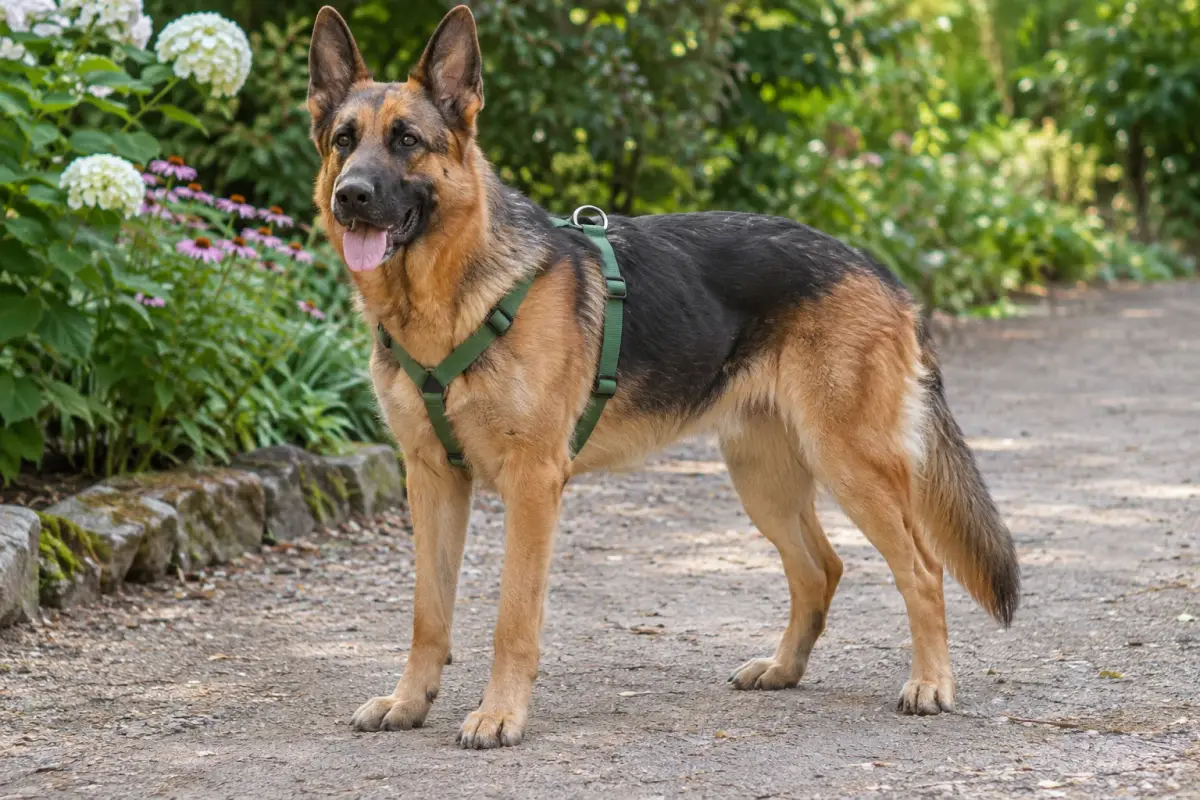
The best harness for a German Shepherd is a well-fitted, padded, adjustable harness with sturdy hardware that suits how your dog walks. VCA lists adults at 22 to 26 inches tall and 75 to 95 pounds, so strength matters, and AKC advises that a harness on a large dog should fit two fingers between the straps and the skin.
By Matt GarnettUpdated November 13, 20265 min read3 sources
Why German Shepherds need a harness chosen for size
VCA Hospitals lists adult German Shepherds at 22 to 26 inches tall and 75 to 95 pounds, and the AKC describes the breed as a large, agile, muscular dog. A dog that size can load a leash hard when something catches its eye, so thin straps, lightweight clips and flimsy stitching are the first things to rule out. Start with our dog harnesses and filter by the large end of the size range.
A German Shepherd puppy will not stay the size it is today, so treat any adjustable harness as temporary and re-check the fit often. Measure your dog's chest girth with a soft tape and compare it with the manufacturer's chart rather than with the dog's weight, because two dogs of the same weight can have very different builds.
Fit: the check that matters most
The AKC says a harness fits if you can slip two fingers between your dog's skin and the harness for large breeds, and one finger for small dogs. Looser than that and a strong dog can back out of it, and tighter makes it uncomfortable, especially in hot weather. Check the fit with the dog standing and again after it has moved around for a minute.
Look at the shoulders and the armpits as well. A good harness leaves the shoulders free to move and does not rub behind the front legs. Because VCA rates German Shepherd shedding at the top of its scale, a lot of loose coat gathers under straps, so a smooth lining that does not trap hair helps. If your dog shows stiffness or discomfort when the harness goes on, see your vet before you assume the harness is the cause.
Harness styles compared for a strong dog
The AKC describes back-attachment harnesses, front-clip harnesses and no-pull harnesses, where pressure lands on the chest instead of the neck. For a strong German Shepherd that pulls, a front-attachment design gives you leverage, and our guide to the best no-pull harness for large dogs goes through the options. You can also browse no-pull dog harnesses directly.
Vest-style harnesses spread pressure across a wider area and often include a top handle, which is useful for steadying a big dog on stairs or at curbs. A tactical-style vest harness is built along those lines, with a handle and plenty of adjustment points. Neither style is automatically better; the right one is the one that fits your dog and that you can handle comfortably.
Hardware, straps and materials
Strength is the point of a harness for a dog this size, so look at the hardware first. Metal buckles and D-rings, bar-tacked or box-stitched seams, and webbing wide enough not to dig in are all signs of a harness built for load. Plastic clips on a large dog's harness are worth a second look.
Adjustability matters too. A harness with several adjustment points, such as a reflective adjustable K9 harness, lets you fine-tune the chest and neck for a deep-chested build. Reflective trim is useful for evening walks. Padding on the chest panel helps with comfort, but it can hold heat, so watch your dog in warm weather.
Training, walking and when a harness is not enough
A harness is a tool, not training. Even the best no-pull design only makes pulling less effective, and the AKC notes that harnesses can discourage pulling, while real loose-leash walking comes from rewarding your dog for staying beside you. Use positive methods and short, regular sessions, because German Shepherds need daily activity and mental work, as VCA notes.
If you are still unsure about the basics, our guide to putting on a dog harness walks through the steps, and harness vs collar explains why many owners of large dogs use both, a collar for ID tags and a harness for walking. If your dog suddenly starts pulling, limping or resisting the harness, a vet visit should come before any gear change.
Sizing across the stages of a German Shepherd's life
Puppies grow fast, so buy a budget-friendly adjustable harness for the first months and plan on replacing it. Check the fit weekly during rapid growth. Many owners move up two or three sizes by adulthood, and a harness that was snug a month ago can be too tight now.
Adults need a harness that matches their build, and seniors may need extra padding or a handle to help with stairs or getting into the car. If your German Shepherd is carrying extra weight or recovering from an injury, ask your vet about how to walk and support your dog. For more on the breed, read our German Shepherd breed guide, and for coat care see do German Shepherds shed. When you are ready to compare, browse our dog harnesses again with your dog's chest measurement in hand.
Attachment positions and harness panels
| Feature | Physical distinction | Check separately |
|---|---|---|
| Back attachment | Ring on the upper body | Ring position and back-panel fit |
| Front attachment | Ring at the chest | Chest placement and strap route |
| Vest-style panel | A wider fabric body | Panel edges and leg openings |
| Top handle | A handhold above the back | Stitching and the maker’s stated uses |
| Multiple adjustment points | Separate straps or slides | Actual neck and chest ranges |
Common questions
What size harness does a German Shepherd need?
Most adult German Shepherds fall in the large size range, but chest girth decides the size, not weight alone. VCA lists adults at 75 to 95 pounds. Measure the chest with a soft tape and compare it with the maker's chart.
Is a harness better than a collar for a German Shepherd?
For walking, many owners prefer a harness because it spreads pressure across the chest instead of the neck. The AKC notes that collars put pressure on the throat when a dog tugs. A collar is still useful for ID tags.
How tight should a harness be on a German Shepherd?
The AKC says a harness on a large breed should fit two fingers between the straps and the skin. If a dog can back out of it, it is too loose. If it rubs or restricts the shoulders, it is too tight.
Will a no-pull harness stop my German Shepherd from pulling?
It can make pulling less effective, since pressure lands on the chest instead of the neck. It does not teach loose-leash walking by itself. Pair it with positive reward-based training and regular short practice.
How often should I check a puppy's harness fit?
Check at least weekly while your puppy is growing quickly, and any time the straps look tight or the harness leaves marks. Growing dogs can outgrow a harness within weeks, so expect to resize or replace it.
Sources we checked
This guide is general information, not veterinary advice. If your pet is unwell or injured, contact your veterinarian.


