






Buying guides
Best Harness for a Cane Corso: What Actually Matters
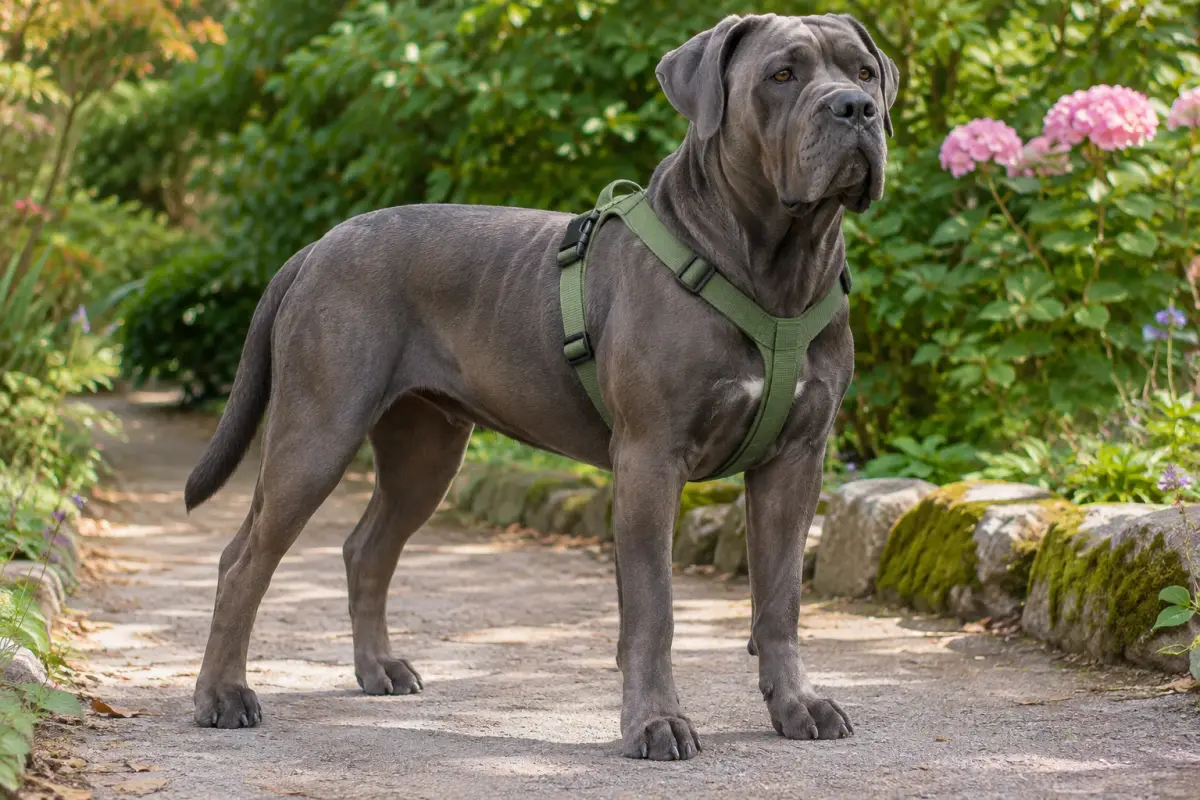
The best harness for a Cane Corso is wide, padded and strongly built, with sturdy hardware and a front or dual clip for control. Measure the chest rather than guessing from weight, and recheck the fit as your dog grows. Browse our harnesses for Cane Corsos with those features in mind.
By Matt GarnettUpdated November 14, 20264 min read3 sources
Why a harness suits this breed
The AKC describes the Cane Corso as smart, trainable and of noble bearing, an assertive, confident protector with roots in ancient Rome. That confidence comes with power, and a strong dog on a narrow collar puts all of that force through the neck. VCA Hospitals notes that a body harness places minimal pressure on delicate tissue, which makes it the gentler choice for a dog that pulls.
A harness does not train a dog, but it lets you manage a strong dog safely while training does the real work. The AKC suggests no-pull style harnesses for dogs that are stronger than their handler. If you already use a well-fitted collar for ID tags, keep it for that and clip the leash to the harness.
Harness types compared
A back-clip harness attaches the leash between the shoulder blades. The AKC recommends it for well-trained dogs, since it gives the least steering. A front-clip harness attaches at the chest and turns a pulling dog sideways, which helps with control but makes clipping on slightly less convenient. A dual-clip design has both, so you can start on the front clip and move to the back as your dog improves.
For this breed a dual-clip or front-clip design is the practical starting point, and a simple adjustable option such as the dog collar harness for large dog training or the dog harness and leash set shows the shape to look for. Step-in styles are harder for escape artists to slip, but check that the fastening is strong enough for a heavy dog. Compare front-clip options in our front clip dog harnesses.
Strength, stitching and hardware
With a heavy, strong dog, hardware is the first thing to inspect. Look for metal rings and buckles that are solid rather than hollow, with stitching that is dense and boxed where straps carry load. The AKC advises checking buckles, hardware and stitching regularly for cracks, fraying or wear, so build that into your routine, especially if your dog lunges.
Webbing width matters too. A wider strap spreads pressure over more of the chest and shoulder than a thin one. Avoid styles with thin cord, light plastic clips or decorative trims on load-bearing parts, because a single failure can end a walk or a dog escaping into traffic.
Material and padding
Nylon is lightweight and durable but can trap heat and moisture. Leather is long-lasting but needs conditioning. Mesh is breathable but less durable and less padded, so chafing is more likely and it is not the right choice for a heavy puller. Neoprene is padded but can hold heat and moisture. For a large, powerful dog, padded nylon webbing is usually the sensible middle ground.
Padding should sit under the chest and behind the front legs, where the straps rub. Check behind the elbows after every walk for redness or rubbing. If you walk at night, reflective stitching or an LED-lit design helps drivers and cyclists see your dog, as with the LED luminous large dog chest strap.
Measuring and fitting
The AKC says to measure the widest part of the rib cage, usually just behind the front legs, with the tape snug but not tight, and to measure the neck at its base. If your dog falls between sizes, size up and use the adjustable straps. Brands size differently, so match your measurements to each maker's chart.
For the fit check, the AKC suggests you should just be able to squeeze two fingers under the strap without discomfort. Then walk your dog to see whether the shoulders and legs move naturally, and back your dog up gently to confirm the harness will not slide over the head. A growing Cane Corso puppy needs regular refitting, and our dog harness and collar size guide explains the measuring steps.
Fit mistakes and what to watch
The most common errors are a harness that is too loose, which lets a dog back out of it, and one that is too tight, which restricts the shoulders. VCA also notes some front-clip designs sit over the shoulder joints and limit movement, so choose a shape that leaves the front legs free. Never use a harness as a way to jerk or correct a dog.
Supervise your dog in any harness and remove it when you cannot watch. If you notice limping, rubbing, hair loss or sore spots, or your dog suddenly resists the harness, check the fit first and then talk to your vet. For an overview of the whole range see our best dog harness guide, and for other strong breeds read our best harness for large dogs.
This page is general information, not veterinary advice, and it cannot replace an examination by the vet who knows your pet.
Harness attachment points
| Layout | Ring position | Verify before choosing |
|---|---|---|
| Back clip | On the upper back | Stitching and fitted range |
| Front clip | At the chest | Chest-ring position and strap path |
| Dual clip | Front and back rings | Both attachments and permitted leash arrangements |
| Step-in entry | Leg openings entered before closure | Opening size and fastenings |
Common questions
What type of harness is best for a Cane Corso that pulls?
A front-clip or dual-clip harness gives more control than a back-clip, because it turns a pulling dog sideways. Choose strong hardware and a wide, padded chest panel.
How do I measure a Cane Corso for a harness?
Measure the widest part of the rib cage just behind the front legs, and the neck at its base. If between sizes, size up and use the adjustable straps.
Is a harness better than a collar for a Cane Corso?
For walking, a harness spreads pressure across the chest instead of the neck, which VCA describes as gentler. Keep a flat collar for ID tags and attach the leash to the harness.
How tight should a Cane Corso harness be?
You should just be able to squeeze two fingers under the straps without discomfort. It must be snug enough that your dog cannot back out of it, yet leave the shoulders free.
How often should I check my dog's harness?
Check buckles, hardware and stitching regularly for cracks or fraying, and recheck the fit after grooming or weight changes. Puppies need refitting often as they grow.
Sources we checked
This guide is general information, not veterinary advice. If your pet is unwell or injured, contact your veterinarian.


