






Buying guides
Best Harness for Australian Shepherds: How to Choose and Fit One
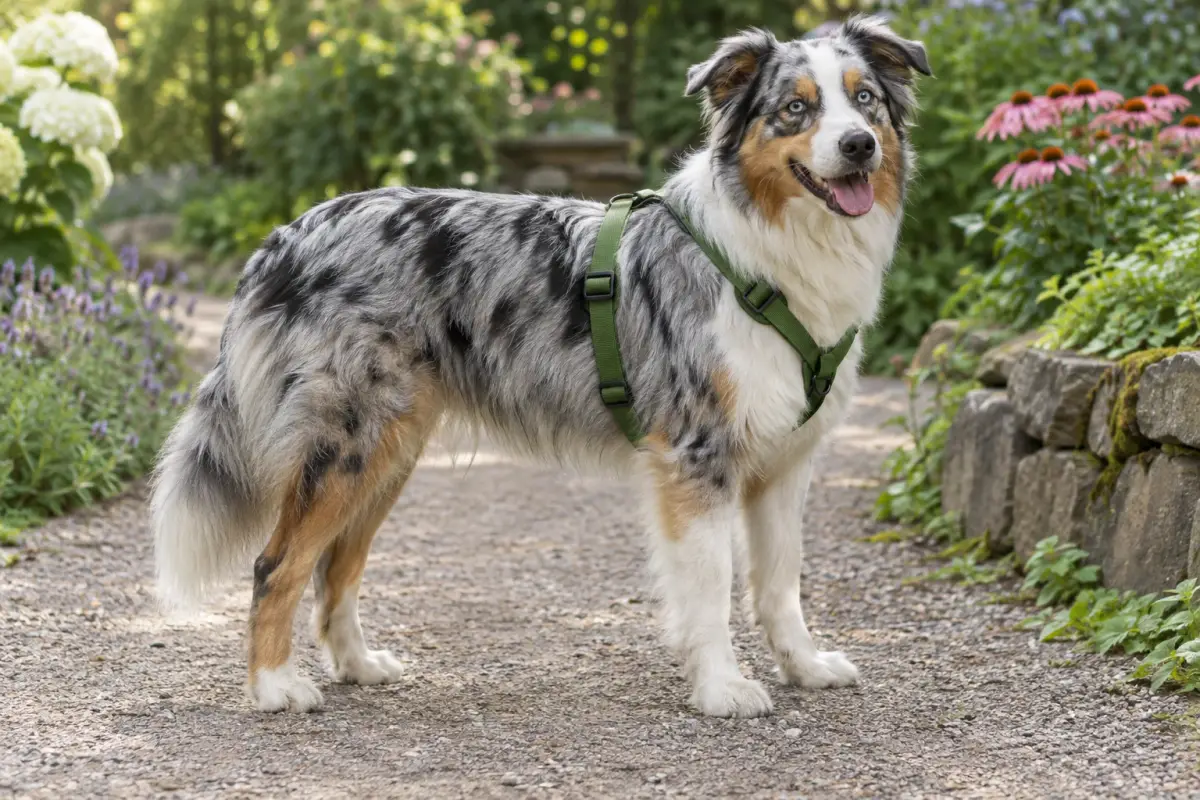
The best harness for an Australian Shepherd is a padded, adjustable, well-fitted design in breathable material, with a front clip or dual clip if your dog pulls. Aussies weigh 40 to 65 pounds and carry a medium double coat, so fit around the chest and shoulders matters most. Measure the chest at its widest point, then check the fit again when the coat changes.
By Matt GarnettUpdated November 14, 20264 min read2 sources
What matters most for an Aussie
VCA Hospitals describes the Australian Shepherd as 18 to 23 inches tall and 40 to 65 pounds, with a medium-length double coat and a high energy level. That puts most Aussies in the medium-to-large harness range, and the breed's athletic, energetic build means a harness has to stay put through fast turns, hikes and play. Look for adjustable chest and neck straps, solid buckles and enough padding to prevent rubbing.
Because the coat is dense, a harness can look looser than it is. The AKC notes that thick or fluffy coats may need tighter adjustments to keep a harness from slipping, so judge the fit against your dog's body rather than the fur. Start with the size chart, but trust the tape measure over the breed label, since Aussies vary widely in size within the standard.
How to measure and fit
The AKC says to measure the neck at its base, where it meets the shoulders, and the chest at its widest point, usually just behind the front legs, using a cloth tape or a string held against a ruler. Start with a looser setting and tighten gradually. The AKC advice is that you should be able to squeeze two fingers underneath, but not so tight it is uncomfortable.
Once it is on, walk your dog indoors or in the yard and watch the shoulders and legs for natural, unrestricted movement. Gently pull the harness from several directions to confirm your dog cannot back out, and back the dog up to be sure it does not slide over the head. Recheck after grooming, a coat blow or any weight change, and watch for rubbing or pressure points.
Front clip, back clip or dual clip
Aussies are strong, driven and quick, and many pull on leash when excited. The AKC explains that a front-clip harness helps redirect a dog that pulls, while a back-clip is easy to use but best for well-trained dogs. A dual-clip harness lets you start with the front clip while your dog is learning and switch to the back as walking improves. Browse our no-pull dog harnesses if pulling is the issue.
A harness manages pulling but does not teach loose-leash walking, so pair it with short, rewarding training sessions. Our guide to the best no-pull dog harness goes into how front-clip and no-pull designs differ, and the AKC also notes that a no-pull harness tightens slightly when the dog pulls.
Material, padding and visibility
Material changes comfort for a double-coated dog. The AKC lists nylon as light and durable but less breathable, mesh as cool in warm weather but less padded and so more likely to chafe, and neoprene as padded and good for swimming but able to hold heat and moisture. For an Aussie that runs and hikes, a padded nylon design with breathable panels is a sensible middle ground.
Reflective stitching or added reflective tape helps on early-morning and evening walks, and the AKC recommends it for low light. Our reflective and waterproof dog harnesses are worth a look for trail dogs. Check buckles, stitching and clips often, and clear trapped hair from any Velcro before each outing.
Harness styles compared
Over-the-head harnesses are common and many dogs accept them, while step-in harnesses suit dogs that dislike things pulled over the head and, according to the AKC, are harder for escape artists to slip out of when fitted properly. A step-in or a dual-clip harness can be a good fit for a sensitive or wriggly Aussie. Browse all of our dog harnesses, or the harnesses for Australian Shepherds we have grouped for this breed.
For a plain, adjustable option, a dog harness and leash set pairs the two in one purchase, and a simple pet harness suits a dog that wears it mainly for casual walks. Compare the adjustment points and material rather than the looks, and see our general guide to the best harness for medium dogs.
Herding energy, safety and when to ask your vet
VCA notes that Aussie herding instincts can show up as nipping or trying to control movement, and that the breed needs significant daily exercise. A secure harness lets you keep control around bikes, joggers and children. Never leave a harness on an unsupervised dog, and retire one with frayed webbing or cracked hardware.
VCA lists hip and elbow dysplasia among the breed's predispositions. If your dog limps, resists the harness going on, or shows skin irritation or hair loss where the straps sit, see your vet. This page is general information, not veterinary advice, and it cannot replace an examination by the vet who knows your pet.
Harness entry and ring checks
| Layout | Physical difference | Check on the exact harness |
|---|---|---|
| Over-the-head | Neck opening passes over the head | Opening and neck adjustment |
| Step-in | Legs enter before the harness closes | Leg openings and closure placement |
| Dual clip | Leash rings at front and back | Both attachment points and permitted leash use |
| Harness-and-leash set | A listing that expressly includes both | Included pieces and each item specification |
Common questions
What size harness does an Australian Shepherd need?
Most Aussies weigh 40 to 65 pounds, so many need a medium or large. Go by the chest measurement at the widest point behind the front legs and the neck base, not by the breed label.
Is a front-clip harness good for an Australian Shepherd?
It can be, because the AKC says a front clip helps redirect a dog that pulls. Many Aussies pull when excited, so a front or dual-clip design is a sensible starting point alongside leash training.
How tight should a harness be on a double-coated dog?
You should be able to squeeze two fingers underneath without discomfort. Thick coats may need tighter adjustment to prevent slipping, so check the fit against the body and recheck after the coat changes.
Is a harness better than a collar for an Aussie?
A harness spreads pressure across the chest instead of the neck and is easier to keep on a strong, energetic dog. Many owners use a collar for ID tags and a harness for walks.
Can an Australian Shepherd wear a harness all day?
It is best not to. Remove it when your dog is unsupervised or resting, since straps can rub, trap hair and moisture and snag on furniture or crates.
Sources we checked
This guide is general information, not veterinary advice. If your pet is unwell or injured, contact your veterinarian.


