






Buying guides
Best Food for Goldendoodles: What to Look For
The best food for a goldendoodle depends first on how big it will be. Goldendoodles range from small minis to standards over 70 lb, so choose a complete and balanced food sized for your dog's expected adult weight: a large-breed puppy formula for standards, a small or medium formula for minis. After that, look for an AAFCO statement, a maker that meets the WSAVA's questions, and portions that keep your dog lean.
By Matt GarnettUpdated November 13, 20264 min read3 sources
Start with size, not breed
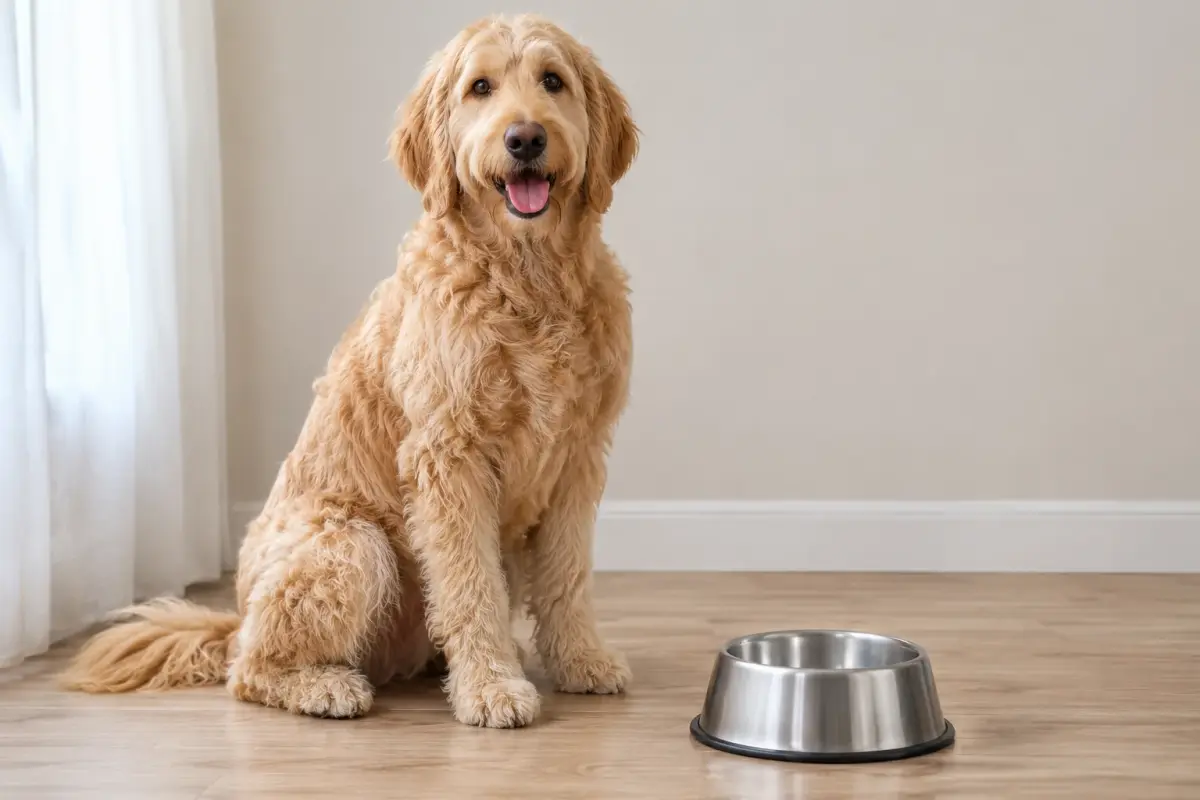
Goldendoodle is a cross of golden retriever and poodle, and the size depends on the poodle parent. A mini may weigh 15 to 35 lb, a medium 35 to 50 lb and a standard 50 to 90 lb, so two goldendoodles can need very different foods. Ask your breeder or vet for a realistic adult weight estimate.
That estimate decides the puppy food. VCA explains that large and giant breed puppies need tightly controlled calcium and phosphorus, because puppies cannot regulate calcium absorption as adults do. For a doodle expected to top 70 lb, choose a food formulated for growth including large-size dogs. Whatever the size, a measured routine helps, and a slow feeder bowl for large dogs suits a standard doodle that eats fast.
What to check on the label
Look for the AAFCO nutritional adequacy statement saying the food is complete and balanced for growth or for adult maintenance. If it is for all life stages, check whether it covers large-size dogs. Foods for intermittent or supplemental feeding are not a full diet.
The WSAVA's guidance on choosing a food suggests looking past the ingredient list, which it says can be misleading, to the company itself: does it employ a qualified nutritionist, who formulates the food, and what quality control does it do? A manufacturer that answers clearly is a better sign than any marketing word on the front.
Coat, skin and digestion claims
Doodle owners often look for food that helps the coat. A complete diet with adequate fats supports normal skin and coat, but no food will change the coat type your dog inherited, and a dull or itchy coat can have many causes besides diet, including parasites, allergies and grooming problems.
Sensitive stomachs are also common complaints. Before changing foods repeatedly, ask your vet; frequent switching can itself upset digestion. If your vet suspects a food allergy, they can guide a proper elimination diet, which takes weeks and needs strict discipline to give a clear answer.
Weight control
Both parent breeds love food, and an overweight doodle carries extra strain on joints. VCA notes overweight dogs face higher risks of osteoarthritis, diabetes and heart disease. Feel the ribs: they should be easy to feel under a thin layer, like the back of your hand. A thick coat hides weight gain, so check by touch rather than by eye.
Measure meals with a cup or scale, use the bag's guideline for your dog's ideal weight as a start, and adjust. Keep treats to about 10 percent of daily calories, and use part of the daily kibble for training. A treat pouch such as this training snack bag keeps those pieces handy, and for a doodle that finishes a bowl in seconds, a puzzle feeder like this spinning slow-food toy can turn part of the daily kibble into a meal-time task.
Grain-free and other diet trends
Grain-free diets have no proven advantage for dogs without a diagnosed grain allergy. The FDA has investigated a possible link between some diets, many grain-free and high in peas, lentils or potatoes, and dilated cardiomyopathy; it says causation is not established and the investigation is open. It also notes golden retrievers may be predisposed to taurine deficiency.
Raw and homemade diets are harder to balance and, for raw, carry bacterial risks for the household. If you prefer homemade, work with a board-certified veterinary nutritionist rather than an online recipe.
Changing food and when to call your vet
Change foods over about a week, gradually increasing the new food. For puppies, ask your vet when to move to adult food; VCA notes large breeds may need puppy food for up to two years, while minis switch much earlier.
Call your vet for repeated vomiting or diarrhea, blood in stool, a sudden change in appetite, or ongoing itching and ear infections. These are worth a proper diagnosis rather than another bag of food.
This page is general information, not veterinary advice, and it cannot replace an examination by the vet who knows your pet.
Common questions
What kind of food is best for a goldendoodle puppy?
A complete and balanced puppy food matched to expected adult size. Standard doodles likely to exceed 70 lb should eat a food formulated for growth including large-size dogs, while minis can eat a standard or small-breed puppy food.
Do goldendoodles need special food for their coat?
No special food is needed. A complete diet supports normal skin and coat. Coat problems often come from grooming, allergies or parasites, so ask your vet if the coat looks dull, greasy or itchy.
Is grain-free food good for goldendoodles?
There is no proven benefit without a diagnosed grain allergy, and the FDA has been investigating a possible link between some grain-free diets and heart disease. Talk to your vet before choosing one.
How much should I feed my goldendoodle?
It depends on size, age, activity and the food's calories. Start with the bag guideline for your dog's ideal weight, measure portions and adjust so the ribs are easy to feel. Your vet can give a daily calorie target.
Sources we checked
This guide is general information, not veterinary advice. If your pet is unwell or injured, contact your veterinarian.


