






Buying guides
Best Food for Dachshunds: What to Look For
The best food for a Dachshund is a complete and balanced diet for its life stage, with an AAFCO nutritional adequacy statement on the bag, fed in amounts that keep your dog lean. Weight control matters more than any ingredient: the AKC notes an overweight Dachshund is prone to diabetes, joint problems and possibly back problems. Choose small kibble for miniatures, and ask your vet to help set the right calories.
By Matt GarnettUpdated November 13, 20265 min read3 sources
What matters most for a Dachshund
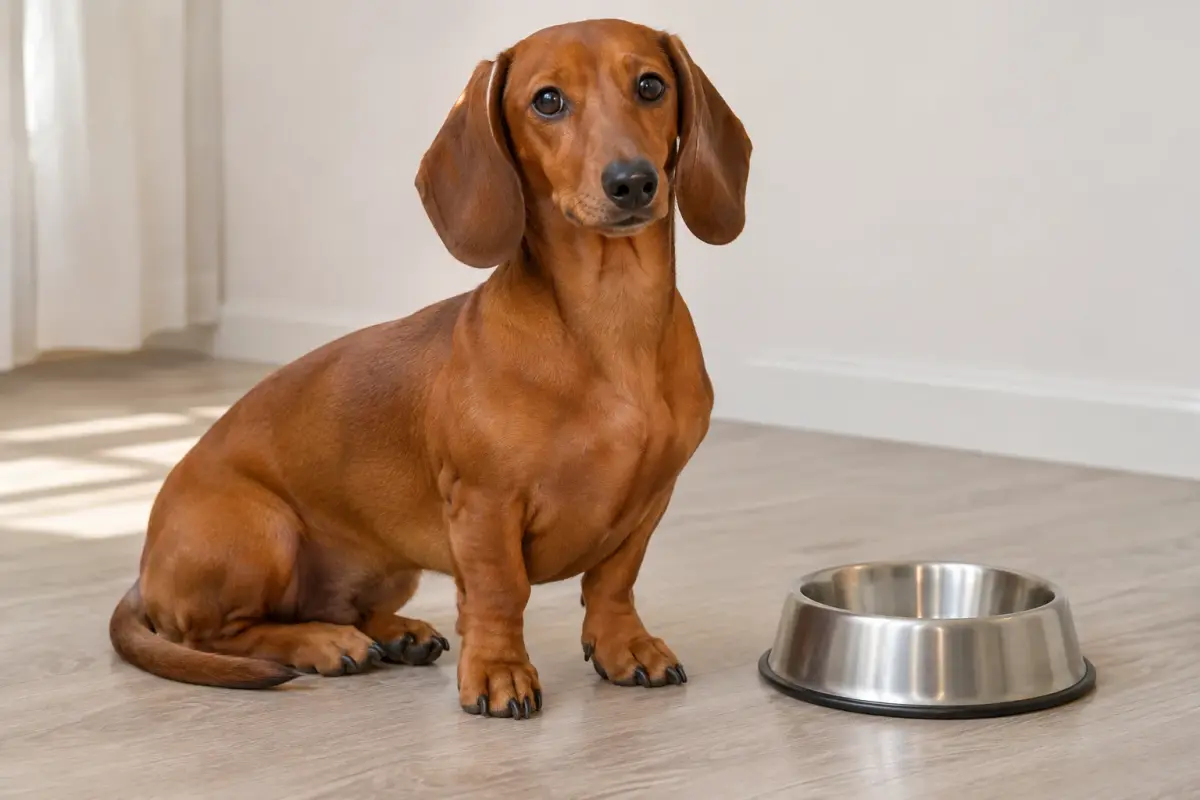
Dachshunds are small dogs with long backs. The AKC lists standard Dachshunds at 16 to 32 pounds and miniatures at 11 pounds and under, with a life expectancy of 12 to 16 years. Its health notes single out weight: an overweight Dachshund is prone to many of the same problems as overweight people, including diabetes, joint problems, low stamina and possibly back problems. So the most important thing a food can do for this breed is make it easy to keep your dog slim.
That points to three things to look for. First, a complete and balanced food for your dog's life stage. Second, calorie information you can actually use to portion meals. Third, a kibble size that suits your dog's mouth. Everything else on the bag, including the photographs and words like premium, matters far less. For a food-loving dog, a slow feeder dog bowl such as the anti-gulp slow feeder bowl makes the same measured portion last longer.
How to read the label
Look for the nutritional adequacy statement, usually in small print near the guaranteed analysis. It should say the food is complete and balanced for a life stage, such as growth, adult maintenance or all life stages, according to AAFCO nutrient profiles or feeding trials. The WSAVA's guidelines on selecting pet foods point out that foods labeled for intermittent or supplemental feeding should only be a small part of the diet.
Next, find the calories, listed as kcal per cup and per kilogram of food. In the US this is required on the label, and it is the number that lets you portion accurately. The WSAVA also notes that unregulated words such as holistic and premium say little about nutrition, and that the ingredient list tells you nothing about the quality of the ingredients.
Questions to ask the maker
The WSAVA suggests asking pet food companies a few direct questions. Do they employ a qualified nutritionist, meaning someone with a PhD in animal nutrition or board certification in veterinary nutrition? Who formulates the diets? What quality control do they run on ingredients and finished food? Do they publish or support research? A company that answers clearly is a better bet than one that answers with marketing.
These questions apply to every format, whether dry, canned, fresh or freeze-dried. A Dachshund does well on any complete and balanced format that suits your household, and you do not need a breed-labeled bag. A breed-specific food can be convenient, but the adequacy statement and calories matter more than the breed on the front.
Best format for each Dachshund
For a miniature Dachshund, choose a small-breed kibble or a soft food, because tiny pieces are easier for small jaws. For a standard Dachshund, regular or small-breed kibble both work. For a puppy, use a food labeled for growth or for all life stages until your vet suggests switching, usually around the end of the first year for a small breed.
For a Dachshund that gains weight easily, a lower-calorie adult or weight-management food, measured with a kitchen scale rather than a scoop, makes portioning easier. A puzzle feeder can add effort to meals without adding calories. For a senior, ask your vet whether a senior formula suits your dog, since senior foods are not standardized and vary widely in calories and nutrients.
What to avoid
Avoid free-feeding, where a bowl is always full, because it makes weight gain likely in a breed that loves food. A slow feeder bowl for small dogs and a treat pouch such as this training snack bag for counted training treats help replace the always-full bowl. Avoid treats adding up to more than about a tenth of daily calories. Avoid table scraps and fatty foods. Avoid choosing a diet only because it is grain-free; the FDA has investigated reports of a heart condition in dogs eating certain diets high in peas, lentils and potatoes, so talk to your vet before choosing one.
Avoid switching foods suddenly. Change over about a week, mixing increasing amounts of the new food into the old, to reduce stomach upsets. If your Dachshund has vomiting, diarrhea, itchy skin or weight changes on a food, ask your vet before trying another.
Keeping a Dachshund lean
Weigh your Dachshund monthly and learn to body condition score: you should be able to feel the ribs easily under a thin layer of fat and see a waist from above. Use the feeding guide on the bag only as a starting point and adjust by your dog's actual weight and shape. Your vet can give you a target weight and a daily calorie figure.
Lean Dachshunds move more easily and put less strain on their backs. Keep exercise steady, use ramps rather than letting your dog leap off furniture, and count training treats as part of the day's food. If your dog's back seems painful, or it is reluctant to move, call your vet the same day.
This page is general information, not veterinary advice, and it cannot replace an examination by the vet who knows your pet.
Common questions
Do Dachshunds need a breed-specific dog food?
No. A Dachshund does well on any complete and balanced food for its life stage that keeps it lean. A breed-labeled food is fine if it suits your dog, but the AAFCO statement and calories matter more.
How do I keep my Dachshund at a healthy weight?
Measure meals, count treats, weigh your dog monthly and check that you can feel ribs and see a waist. Ask your vet for a target weight and a daily calorie figure.
Is grain-free food good for Dachshunds?
There is no general need for it. The FDA has investigated a possible link between certain grain-free diets and heart disease in dogs, so talk to your vet before choosing one.
What kibble size is best for a miniature Dachshund?
Small-breed kibble with small pieces is easiest for miniature jaws. Soft or canned food is another option. Whatever the format, choose a complete and balanced diet.
Sources we checked
This guide is general information, not veterinary advice. If your pet is unwell or injured, contact your veterinarian.


