






Buying guides
Best Food for Bulldogs: What to Look For
The best food for a Bulldog is a complete and balanced diet for its life stage, measured to keep the dog lean, in a kibble shape a flat face can pick up. Extra weight makes breathing harder for a short-nosed breed, so calorie control matters more than any ingredient claim. Look for an AAFCO adequacy statement and calories per cup, feed from a wide shallow bowl (see slow-feeder bowls for flat-faced dogs), and let your vet set the target weight.
By Matt GarnettUpdated November 9, 20264 min read3 sources
What matters most for a Bulldog
The AKC lists the Bulldog at 14 to 15 inches tall, about 50 pounds for males and 40 pounds for females, with a life expectancy of 8 to 10 years. Its health notes explain that, because of their short-nosed build, Bulldogs frequently have breathing difficulties, and mention cherry eye and skin infections that are managed by cleaning the skin folds. A heavy, low-slung dog that already breathes with some effort benefits greatly from staying slim.
So a Bulldog food should do three things well. It should be complete and balanced for your dog's life stage, it should give clear calorie information so you can portion meals, and it should come in a size and shape that a broad, flat jaw can pick up without gulping air. Everything else on the bag is secondary.
How to read the label
Check the nutritional adequacy statement for the words complete and balanced and a life stage: growth, adult maintenance or all life stages, under AAFCO nutrient profiles or feeding trials. The WSAVA's guidelines on selecting pet foods point out that products for intermittent or supplemental feeding are not meant to be the main diet, and that the ingredient list says nothing about ingredient quality.
Use the calories per cup with your vet's target weight to set a daily amount, and weigh portions for the first few weeks. The WSAVA also suggests asking the maker whether it employs a qualified nutritionist, who formulates its diets and what quality control it runs, which tells you more than marketing words such as premium or natural.
Kibble shape and feeding a flat face
Bulldogs have wide, undershot jaws, and many find small round kibble hard to pick up. Larger, flatter or specially shaped pieces are often easier to grip and encourage chewing rather than gulping. Some Bulldogs do better on a soft or wet food, or a mix. Watch your dog eat: if it struggles, drops food or coughs after meals, try a different shape.
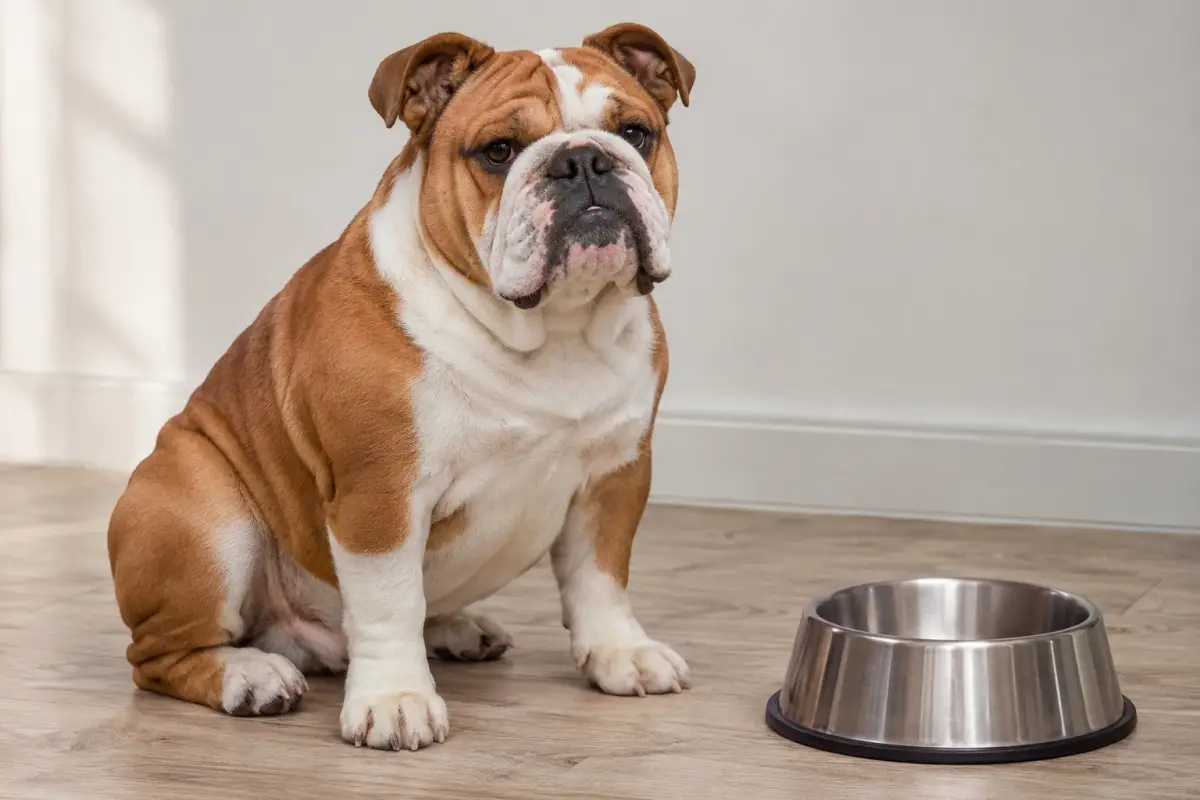
A wide, shallow bowl, or one tilted slightly toward the dog, lets a flat face reach food without pressing the nose into the rim. Fast eaters swallow air, which a slow-feeder bowl with shallow ridges can reduce (see how to slow down a dog eating). Wipe the face folds after meals, since food caught in the wrinkles is one reason the skin there becomes sore. A related breed guide: best food for French bulldogs.
Best format for each Bulldog
For a Bulldog puppy, choose a food for growth or all life stages and split the day into several meals as your vet advises. For an adult, a complete adult food in a shape your dog can manage, measured carefully, suits most dogs. For a Bulldog that gains weight easily, a lower-calorie or weight-management formula lets you feed a satisfying volume for fewer calories.
For a Bulldog with itchy skin or ears, do not assume food is the cause; skin folds and allergies to things in the environment are common in the breed, and your vet can investigate properly, sometimes with a supervised elimination diet. For a senior, ask your vet whether a senior formula is appropriate, since they vary widely.
What to avoid
Avoid free-feeding and generous table scraps, which push weight up quickly. Avoid big meals right before exercise and in hot weather, when a Bulldog already struggles to cool down. Keep treats small and counted. Avoid choosing a diet for a grain-free label alone, since the FDA has investigated a possible link between certain such diets and heart disease.
Change foods gradually over about a week. Bulldogs can be prone to gas and soft stools after sudden changes. If your dog has persistent vomiting, diarrhea, regurgitation after meals or labored breathing, call your vet rather than changing foods again, because those signs need an examination.
Keeping a Bulldog lean
Weigh your Bulldog monthly and check its shape: you should be able to feel the ribs under a thin layer of fat, and see a slight tuck at the belly from the side. On a stocky breed, the waist is subtle, so your vet's body condition score at checkups is a useful guide. Adjust portions in small steps.
Short walks in the cool parts of the day, and indoor play, keep a Bulldog fit without overheating. Count chews and training treats in the daily total. A Bulldog that is lean breathes more easily, moves more comfortably and tolerates warm weather better, which is the real goal of choosing its food well. Browse our slow-feeder bowls for flat-faced dogs for mealtimes.
This page is general information, not veterinary advice, and it cannot replace an examination by the vet who knows your pet.
Common questions
What kibble shape is best for a Bulldog?
Many Bulldogs do better with larger, flatter or specially shaped kibble that a wide, undershot jaw can grip. Watch your dog eat and switch shape if it drops food or gulps.
How much should a Bulldog weigh?
The AKC lists about 50 pounds for males and 40 pounds for females. Your dog's ideal weight depends on its frame, so ask your vet for a target at each checkup.
Can food help a Bulldog's itchy skin?
Sometimes, but food is only one possible cause. Skin folds, environmental allergies and infections are common in the breed, so have your vet investigate before changing diets.
Should Bulldogs eat from a slow feeder?
A shallow slow-feeder can help a Bulldog that gulps food and swallows air. Choose one with low ridges so a flat face can still reach the food comfortably.
Sources we checked
This guide is general information, not veterinary advice. If your pet is unwell or injured, contact your veterinarian.


