






Buying guides
Best Food for Bernese Mountain Dogs: What to Look For
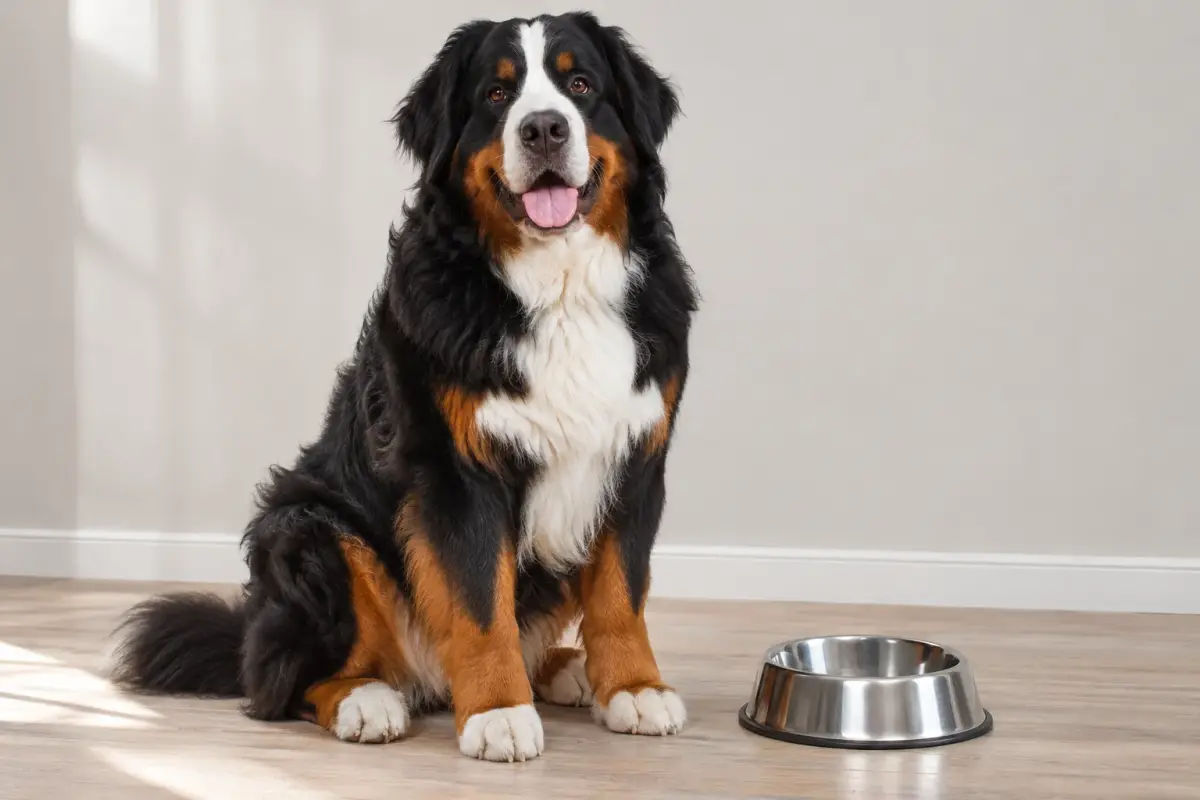
The best food for a Bernese Mountain Dog is a complete and balanced AAFCO diet sized for a giant breed: a large or giant-breed growth food for puppies that keeps growth slow and steady, and measured adult meals that keep a heavy dog lean. Split food into two or more meals, feed from the floor and keep hard exercise away from mealtimes.
By Matt GarnettUpdated November 13, 20263 min read3 sources
What matters most for a Berner
Size drives every decision. VCA Animal Hospitals lists Bernese Mountain Dogs at 70 to 120 pounds and 23 to 28 inches tall, with a lifespan of 6 to 9 years. In a dog this big, extra weight puts real strain on hips, elbows and knees, so lean body condition is one of the few things an owner fully controls. Daily play also burns calories, and there are dog toys for Bernese Mountain Dogs listed separately.
VCA notes Berners tend to stay at a healthy weight or run slightly heavy, and recommends a balanced diet with calories cut back if weight climbs. Whatever food you choose should carry an AAFCO statement that it is complete and balanced for the dog's life stage, and you should weigh portions rather than scooping.
Feeding a Bernese puppy
Bernese puppies grow from a few pounds to over 70 in about a year, and that pace is where diet matters most. VCA notes that a large-breed growth food slows the growth rate without reducing final adult size and may decrease the incidence or severity of hip dysplasia. Look for an AAFCO statement covering growth of large-size dogs.
VCA's guidance on large and giant breeds adds that puppies should not get calcium supplements or extra foods during growth, that giant breeds may need a growth diet until about 24 months, and that puppies are safer kept slightly lean. Ask your vet for a growth curve, since standard charts may not fit giant breeds.
Meals, bowls and bloat
Large, deep-chested dogs carry a higher risk of gastric dilatation-volvulus, a twisting of the stomach that is an emergency. VCA lists feeding one meal a day, eating very fast, using elevated bowls and stress among risk factors, and suggests at least three small meals a day for adults, a slow-down bowl or puzzle feeder, and no intense exercise right before or after eating.
Know the signs: a swollen or tight belly, retching without bringing anything up, drooling, pacing and distress. A dog showing them needs an emergency vet immediately, not a wait-and-see night. Ask your vet whether a preventive gastropexy makes sense for your dog.
Adult and senior Berners
Adult large-breed foods often have larger kibble, which encourages chewing. Many include omega-3 fatty acids and other joint-oriented ingredients; these are not a substitute for keeping the dog lean, and any separate supplement is a conversation for your vet. Compare foods on calories per cup, because a small difference adds up quickly in a dog eating several cups a day.
Berners age early, and by six or seven many need fewer calories and gentler exercise; gentle games suit them as they slow down, and the dog toys for Bernese Mountain Dogs are a place to start. Weighing up the breed itself? See Bernese Mountain Dog vs Saint Bernard. Weigh your dog monthly. Unexplained weight loss, reduced appetite or new stiffness in a senior are reasons for a vet visit rather than a switch of food.
What to avoid
Avoid free feeding, one big meal a day, raised bowls unless your vet advises one, adult food for a growing puppy, and added calcium during growth. Avoid fatty table scraps and cooked bones. Buzzwords such as premium or holistic do not describe nutrition.
The WSAVA Global Nutrition Committee suggests asking any food maker whether it employs a qualified nutritionist, who formulates its diets and what quality control it runs. Ask your vet before trying grain-free or exotic-protein diets.
This page is general information, not veterinary advice, and it cannot replace an examination by the vet who knows your pet.
Common questions
What is the best food for a Bernese Mountain Dog?
A complete and balanced AAFCO diet for your dog's life stage, fed by weight in two or three meals. Puppies need a large or giant-breed growth food. Ask your vet to set a target weight.
How long should a Bernese puppy eat puppy food?
Giant breeds often stay on growth food until about 18 to 24 months. Your vet can judge when growth has finished and the switch to adult food makes sense.
Should a Bernese Mountain Dog eat from a raised bowl?
Elevated bowls are listed by VCA among risk factors for bloat in large breeds. Feed from the floor unless your vet recommends a raised bowl for a specific medical reason.
How many meals a day should a Berner eat?
At least two, and VCA suggests three small meals for adult giant breeds and four for puppies, which helps reduce bloat risk compared with one large meal.
Sources we checked
This guide is general information, not veterinary advice. If your pet is unwell or injured, contact your veterinarian.


