






Breeds
Bernese Mountain Dog vs Saint Bernard
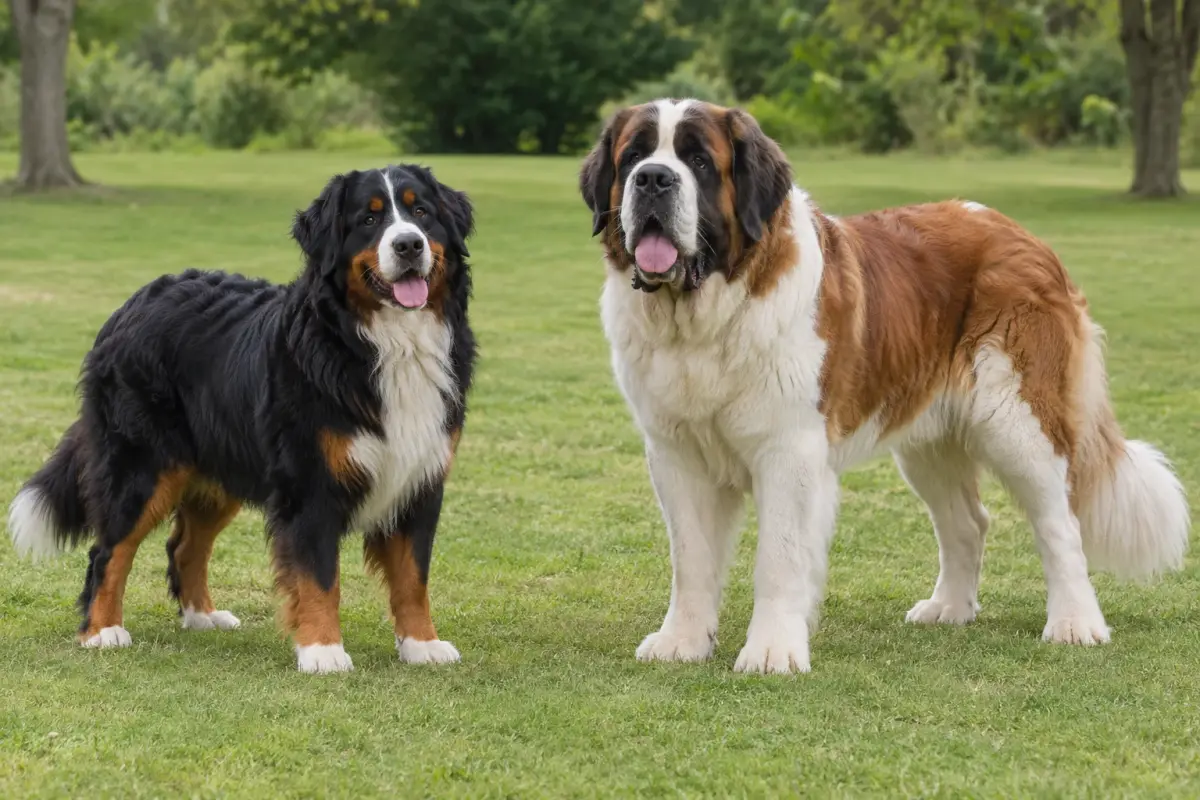
The Saint Bernard is generally the heavier giant, while the Bernese Mountain Dog is a somewhat smaller farm-dog breed with a long, shedding coat. Both can be calm companions but still need training, activity, and substantial practical care. Choose by adult handling needs, grooming, drool tolerance, and the individual dog’s behavior rather than a gentle-giant reputation alone.
By Matt GarnettUpdated November 14, 20263 min read4 sources
The differences in one practical comparison
VCA gives Bernese Mountain Dogs a 70–120-pound weight guide and Saint Bernards a 120–200-pound guide. Its broad lifespan guides are 6–9 years and 8–10 years respectively. These ranges help frame planning, but they cannot predict an individual’s build, health, or longevity.
Both need daily activity and teaching despite a calm household reputation, and dog toys picked for a Bernese Mountain Dog, such as a plush squeaky toy, can give that activity some structure. The Berner’s moderately long coat sheds heavily; Saints may have smooth or longer coats and can bring considerable drool. Best fit depends on which practical care you can sustain and how the individual behaves. Neither is physically a small responsibility, even when resting quietly.
Make adult size a real handling question
AKC describes the Bernese Mountain Dog as powerful and the Saint Bernard as a giant. Think beyond floor space to transportation, getting help with care, and managing a dog that cannot easily be lifted. Meet an adult and discuss how its current caregiver handles ordinary tasks.
Imagine a wet walk, a veterinary appointment, or a period when movement becomes difficult. Who can help, and does your vehicle accommodate the dog comfortably? Ask about the individual’s mobility and handling tolerance. A calm temperament does not make physical needs disappear, so those arrangements should be part of your decision before choosing either breed. A sturdy harness sized for a Bernese Mountain Dog and a bed made for giant breeds are practical items to plan for with either dog.
Plan coats, drool, and activity in changing weather
VCA describes more frequent Berner brushing during shedding and routine brushing for both Saint coat types. Ask for a grooming demonstration and find out how the dog accepts it, and keep dog brushes suited to a thick coat on hand. For a Saint, consider drool as an everyday housekeeping issue as well as coat hair.
Both breeds need regular movement, but VCA cautions that they do not cope well with warm conditions. Discuss suitable activity for the individual’s age and health with your veterinarian and adapt to the weather. A mountain background is not a reason to assume a dog can safely share every outing you plan. Comfort and practical care should shape the routine.
Choose with records and long-term care in mind
A Berner may appeal if you enjoy a somewhat lighter large companion and can manage its coat and social needs. A Saint may appeal if you are prepared for greater adult weight and drool. Neither is automatically healthier, easier, or the right choice for every family.
Have your veterinarian review available medical records and discuss preventive care. Broad lifespan guides are not a basis for predicting which individual will live longer. Seek advice about unexplained changes in appetite, movement, comfort, or behavior. Choose for the everyday and future support your household can provide, including help when a large dog needs additional care. When you are ready, browse beds for giant breeds or toys for Bernese Mountain Dogs.
This page is general information, not veterinary advice, and it cannot replace an examination by the vet who knows your pet.
Common questions
Which breed is usually heavier?
VCA lists Saint Bernards at 120–200 pounds and Bernese Mountain Dogs at 70–120 pounds. Individuals vary, so check adult size and practical handling needs before deciding which fits your household.
Do all Saint Bernards have long coats?
No. VCA describes both smooth and longer-coated Saints. Ask about the individual coat, shedding, and grooming routine, and consider drool as a separate part of everyday care.
Does a gentle-giant reputation replace training around children?
No. Breed descriptions cannot establish an individual’s behavior in every situation. Review history, use humane training, and arrange appropriate supervision and handling around children with either large dog.
Sources we checked
This guide is general information, not veterinary advice. If your pet is unwell or injured, contact your veterinarian.


