






Buying guides
Best Food for Bernedoodles: What to Look For
The best food for a Bernedoodle depends on its expected adult size. A standard Bernedoodle, crossed from a Bernese Mountain Dog and a Standard Poodle, can reach large-breed size and needs a puppy food for the growth of large dogs; a mini needs small or medium-breed food. Whatever the size, choose a complete and balanced diet with an AAFCO statement, feed measured meals and keep your dog lean.
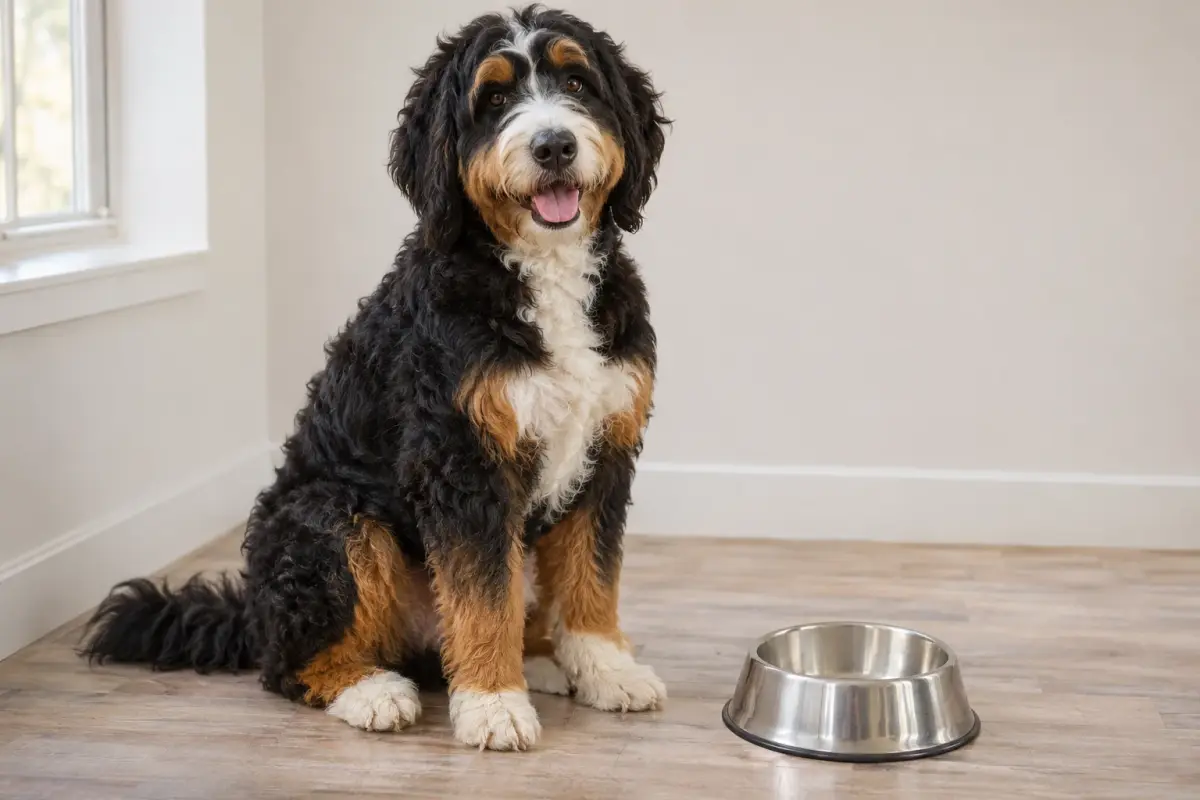
By Matt GarnettUpdated November 10, 20264 min read3 sources
What matters most: expected adult size
Bernedoodles are a cross, so size varies widely. The AKC lists the Bernese Mountain Dog at 70 to 115 pounds and the Standard Poodle at roughly 40 to 70 pounds, while mini and tiny Bernedoodles come from Miniature or Toy Poodle crosses and stay far smaller. Ask your breeder for the parents' weights; that is the best guide to which food your puppy needs. A fast-growing Bernedoodle puppy that gulps its measured meals may also do better with a slow feeder dog bowl.
For a standard Bernedoodle expected to exceed about 70 pounds, a large-breed growth food matters, because large puppies that grow too fast or get too much calcium are at higher risk of bone and joint problems. For a mini, a small- or medium-breed food in suitable kibble is better.
How to read the label
For a standard puppy, look for an AAFCO adequacy statement saying the food is complete and balanced for growth, including growth of large-size dogs. For adults, complete and balanced for adult maintenance. The WSAVA's guidelines on selecting pet foods add that intermittent or supplemental products should not be the main diet.
Check the calories per cup and use them with your vet's target weight. The WSAVA suggests asking whether the maker employs a qualified nutritionist, who formulates its diets and what quality control it runs, and cautions that terms such as premium and holistic are not regulated.
Health notes that shape feeding
Both parent breeds bring health considerations. The AKC lists hip and elbow dysplasia, bloat and other conditions among Bernese Mountain Dog health issues, and hip dysplasia among conditions seen in Poodles. A doodle does not inherit everything, but lean growth helps developing joints, and bloat-aware habits are sensible for a large, deep-chested dog.
Feed two or more meals a day, use a ceramic slow feeder bowl for a fast eater and keep exercise calm for a while before and after meals. Learn the signs of bloat, a swollen belly with unproductive retching, restlessness and drooling, and call your vet or an emergency vet immediately if you see them.
Best format for each Bernedoodle
For a standard puppy, a large-breed puppy food fed in three or four measured meals, moving to two meals as your vet advises. For a mini puppy, a small- or medium-breed growth food. For adults, a complete adult food sized to your dog's mouth. Wet, dry and fresh formats all work if complete and balanced.
For a less active adult, a lower-calorie formula helps keep weight steady. For a dog with itchy skin or ear problems, common in doodles, have your vet investigate before changing diets. Ask your vet when to switch from puppy to adult food, often later for large dogs.
What to avoid
Avoid adult or small-breed puppy foods for a standard Bernedoodle puppy, and avoid adding calcium or other supplements unless your vet advises it. Avoid free-feeding and one large daily meal for a big dog. Avoid choosing a food only because it is grain-free; the FDA has investigated a possible link between certain such diets and heart disease.
Change foods gradually over about a week. If your Bernedoodle limps, seems sore, gains weight fast or has persistent digestive upsets, ask your vet rather than changing foods again.
Keeping a Bernedoodle lean
A doodle coat hides the body (regular combing with a dog brush keeps mats from hiding it further), so feel rather than look: ribs easy to feel under a light layer of fat, and a waist behind them. Weigh monthly, especially during growth, and keep large puppies lean rather than chunky.
Daily walks and play keep a Bernedoodle fit, but avoid long runs and repetitive jumping in large puppies until your vet says the joints are mature. Your vet can give a target weight and calorie figure at each checkup, which is more reliable than a bag chart.
This page is general information, not veterinary advice, and it cannot replace an examination by the vet who knows your pet.
Common questions
Should a Bernedoodle puppy eat large-breed puppy food?
A standard Bernedoodle expected to be large should. Choose a food labeled for growth including large-size dogs. A mini Bernedoodle usually needs a small- or medium-breed puppy food.
How big will my Bernedoodle get?
It depends on the parents. Standards can reach large-breed size, while minis and tinies stay much smaller. Ask your breeder for the parents' weights. Your vet can estimate adult size as your puppy grows.
Is grain-free food good for Bernedoodles?
There is no general need for it, and the FDA has investigated a possible link between some grain-free diets and heart disease. Talk to your vet first.
How many meals a day should a Bernedoodle eat?
Puppies three or four, as your vet advises, and adults two measured meals, which is also a sensible habit to lower bloat risk in large dogs.
Sources we checked
This guide is general information, not veterinary advice. If your pet is unwell or injured, contact your veterinarian.


