






Buying guides
Easiest-to-Clean Cat Water Fountains: What to Look For
The easiest cat water fountain to clean has a smooth, non-porous basin such as stainless steel or glazed ceramic, very few separate parts, and openings wide enough to reach every surface with a brush. Those three things decide whether you will actually wash it. Below is how to judge each one, what to avoid, and a cleaning routine you can keep up.
By Matt GarnettUpdated November 14, 20264 min read2 sources
Why cleaning ease matters more than any other feature
A fountain only helps if it stays clean. Cats pride themselves on cleanliness, and PetMD notes that dust, fur or bacteria in a bowl can make a cat avoid it, which is the opposite of what you bought a fountain for. The same article says it is important to keep fountains clean so they keep providing fresh water.
That makes cleaning ease a drinking-water issue, not a convenience feature. A fountain that takes ten minutes and a screwdriver to strip down tends to get washed monthly, while one that comes apart in under a minute gets washed weekly or better. Before you compare noise levels or capacity, compare how much work each design asks of you. Our easy-to-clean cat water fountains are the ones built around easy upkeep, and the full cat water fountain range covers every style.
Material: smooth and non-porous wins
VCA Animal Hospitals explains that plastic dishes have an irregular surface or scratches that make them more prone to bacterial contamination, and suggests smooth, non-porous dishes like glass or stainless steel instead. It is written about food and water dishes and chin acne in cats, and it is careful to say no proven cause has been identified, so treat it as a sensible precaution rather than a guarantee.
For a fountain, this points to a stainless steel or glazed ceramic basin, since that is the surface your cat's chin touches and the one where residue builds. Stainless steel is light, hard to chip and wipes clean quickly. Glazed ceramic is heavier and steadier, but a chip in the glaze can create the same rough spot you were trying to avoid, so retire it if it chips. You can browse stainless steel cat fountains and ceramic cat fountains separately.
Count the parts and the hard-to-reach places
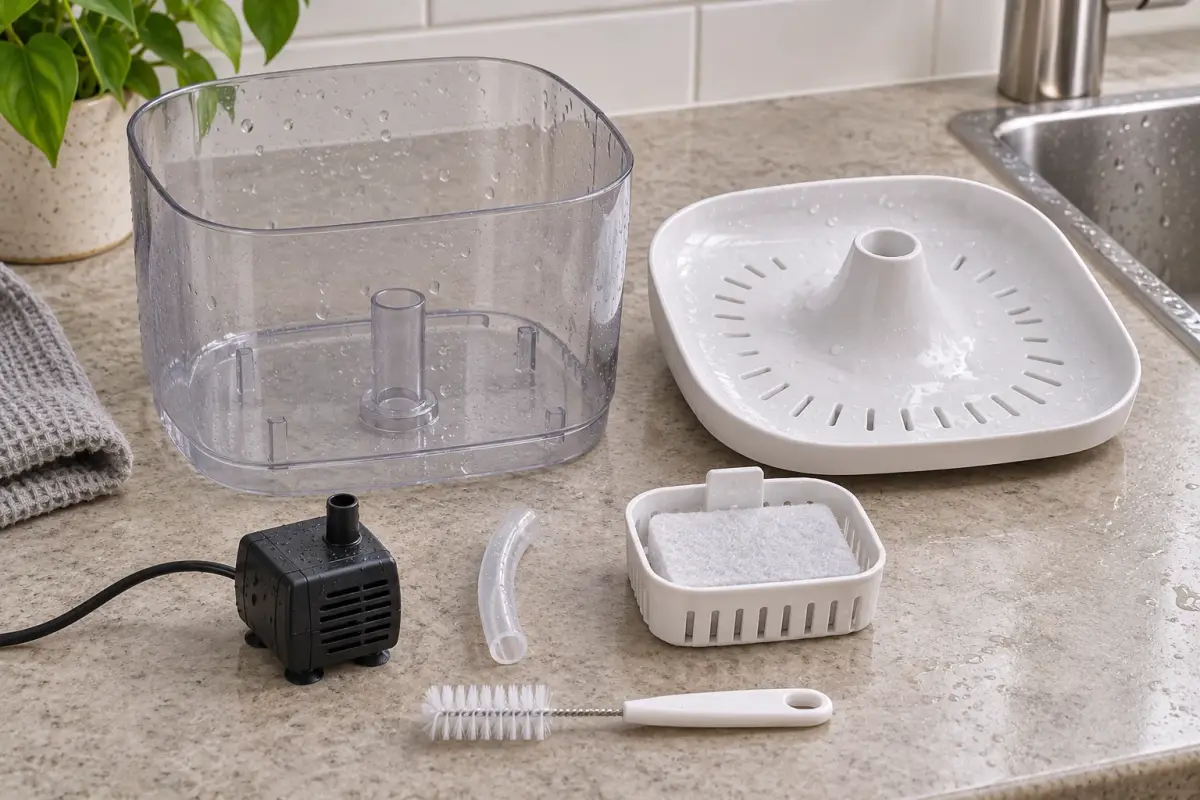
The pump, its intake, any tubing and the filter housing are where slime collects, because they sit in moving water that never fully drains. A good design lets you lift the pump out with one hand, exposes the intake so you can see it, and has no long narrow channels. Fewer joints mean fewer places for grime to hide.
Check the opening too. If your hand or a bottle brush cannot reach the bottom corners of the basin, you will be cleaning by guesswork. Smooth inner corners are easier than sharp ones. Some listings, such as a round USB fountain described as detachable for easy cleaning, highlight takedown design, which is the right feature to look for. Always follow the maker's care instructions on whether any part can go in a dishwasher.
Filters: one more part to keep up with
Most fountains use a filter, and a filter is a part you need to rinse, replace and keep supplied. If you know you will forget, a filterless design removes a chore, though you then rely on regular water changes. If you prefer a filter, pick one whose replacement is simple and whose housing opens fully for rinsing.
Do not treat a filter as a substitute for washing. It does not clean the basin or the pump, so the rest of the fountain still needs the same routine. Our filterless cat fountains are worth a look if simplicity is the priority.
Keep spare replacement filters in the cupboard so a change never has to wait for an order to arrive.
A cleaning routine you will actually keep
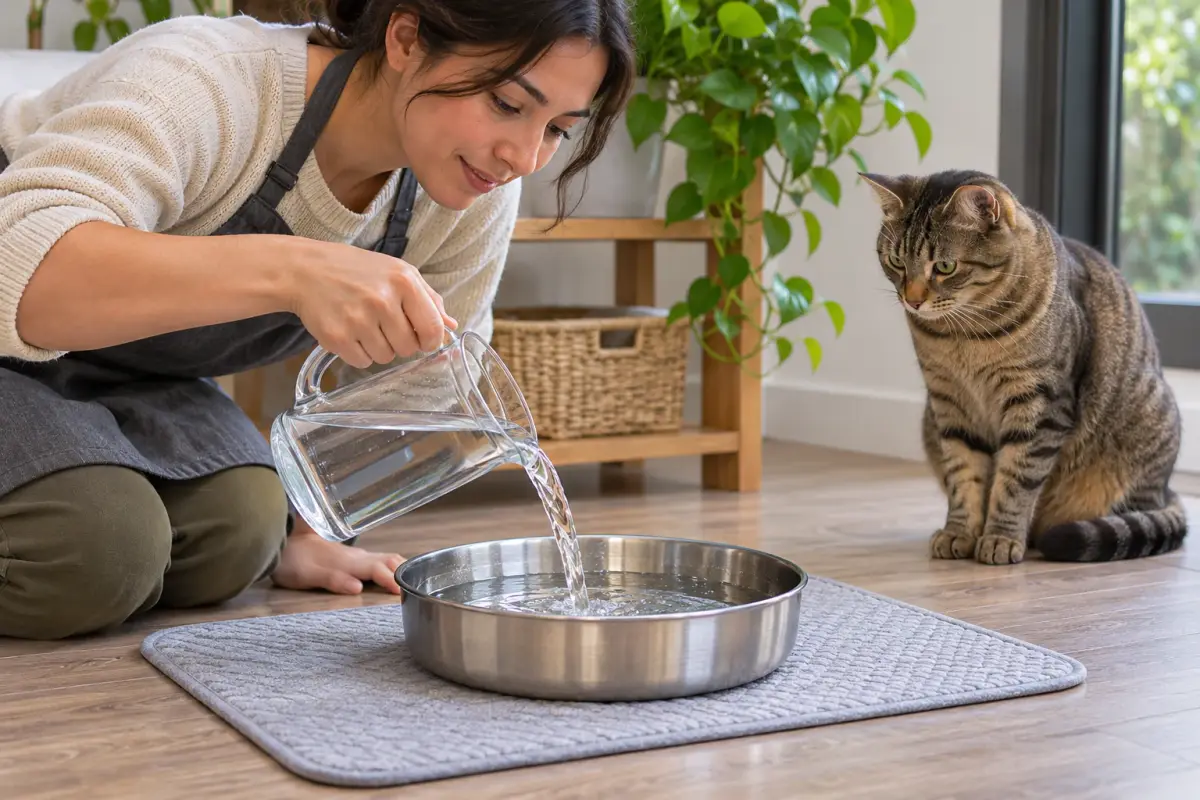
PetMD gives no fixed schedule for fountains, and VCA recommends washing cat dishes daily, so a sensible approach is to rinse and refill the basin every day or two, and do a full teardown on the schedule the manufacturer gives. Scrub the pump intake and the underside of the basin, because slime shows up there first. Rinse thoroughly so no soap taste remains.
Top up with fresh water as it drops, and never let the pump run dry. Our guide on how to clean a cat water fountain walks through the full teardown, and the wider best cat water fountains guide covers flow style, noise and size.
What to avoid, and when to call the vet
Avoid fountains with many tiny parts, sealed pump housings you cannot open, scratched or heavily textured plastic basins, and designs where water pools in spots you cannot reach. Also avoid any that you would have to unscrew with tools to clean.
If your cat suddenly stops drinking, drinks far more than usual, or develops red bumps or blackheads on the chin, call your vet. Changing the fountain is not a treatment for a health problem. When you are ready to compare designs, start with our easy-to-clean cat fountains.
This page is general information, not veterinary advice, and it cannot replace an examination by the vet who knows your pet.
Common questions
What is the easiest cat water fountain to clean?
One with a smooth stainless steel or glazed ceramic basin, a pump you can lift out in seconds, no narrow tubing, and an opening wide enough to scrub every corner by hand.
How often should I clean a cat water fountain?
Rinse and refill the basin every day or two, and do a full teardown on the maker's schedule. VCA recommends washing cat dishes daily, and fountains have extra parts, so do not leave them for weeks.
Is a plastic cat fountain bad?
Not automatically, but VCA notes that scratched plastic is more prone to bacterial contamination. Smooth stainless steel or ceramic is easier to keep clean, and any plastic basin should be replaced once it scratches.
Does a filter make a fountain easier or harder to clean?
Harder, because it is one more part to rinse and replace. A filterless design removes that chore, but you then need to change the water regularly and wash the basin on schedule.
Sources we checked
This guide is general information, not veterinary advice. If your pet is unwell or injured, contact your veterinarian.


