Buying guides
Best Dog Water Fountains: How to Choose One
The best dog water fountain is one you will clean easily, in a material that stays hygienic, sized for how much your dog drinks. Stainless steel is the toughest and most hygienic choice; ceramic is heavy and stable but breakable; plastic is light and cheap but scratches. For big dogs, choose a large reservoir and a wide, low basin that a big muzzle fits into.
By Matt GarnettUpdated November 13, 20263 min read2 sources
What matters most: material and cleaning
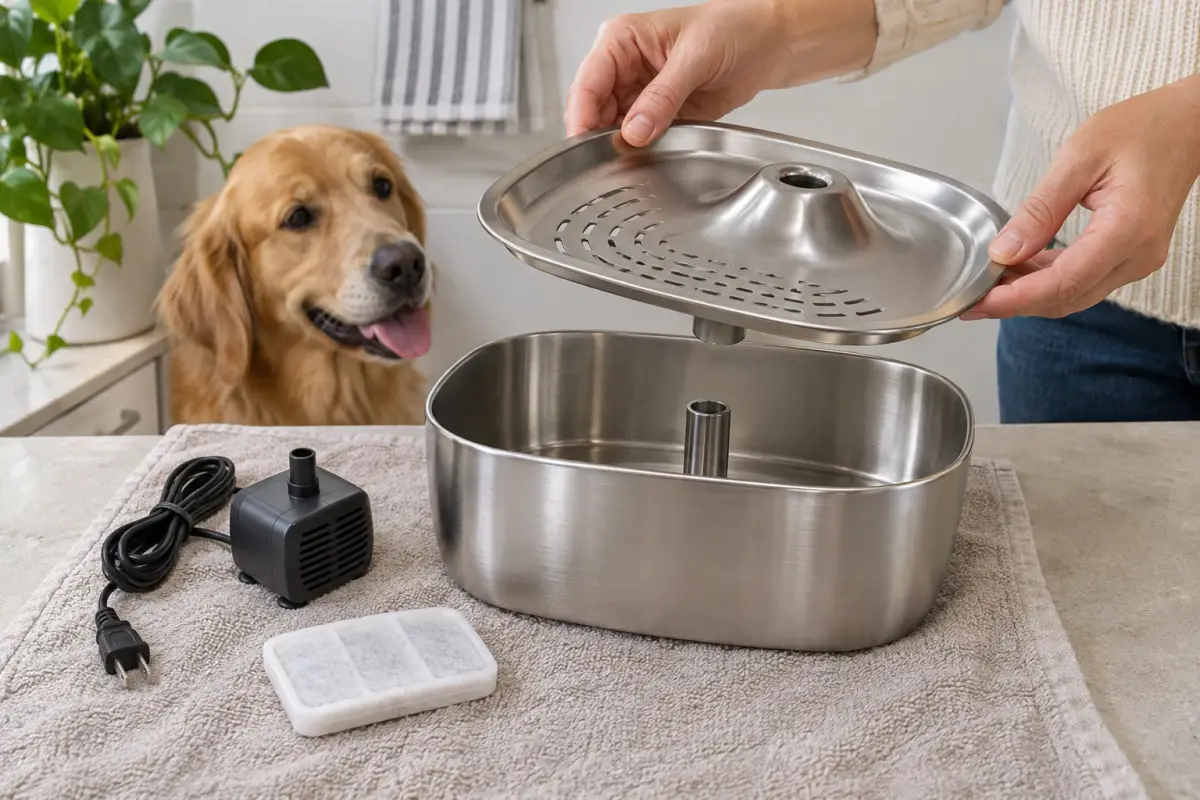
The AKC describes stainless steel as the most hygienic fountain material and very tough. Ceramic is also easy to keep clean but heavy and fragile, while plastic is light and economical but may hold bacteria more readily once scratched and can cause skin reactions in some dogs. If your dog drools heavily into the water, the easier a fountain is to take apart, the better it will stay.
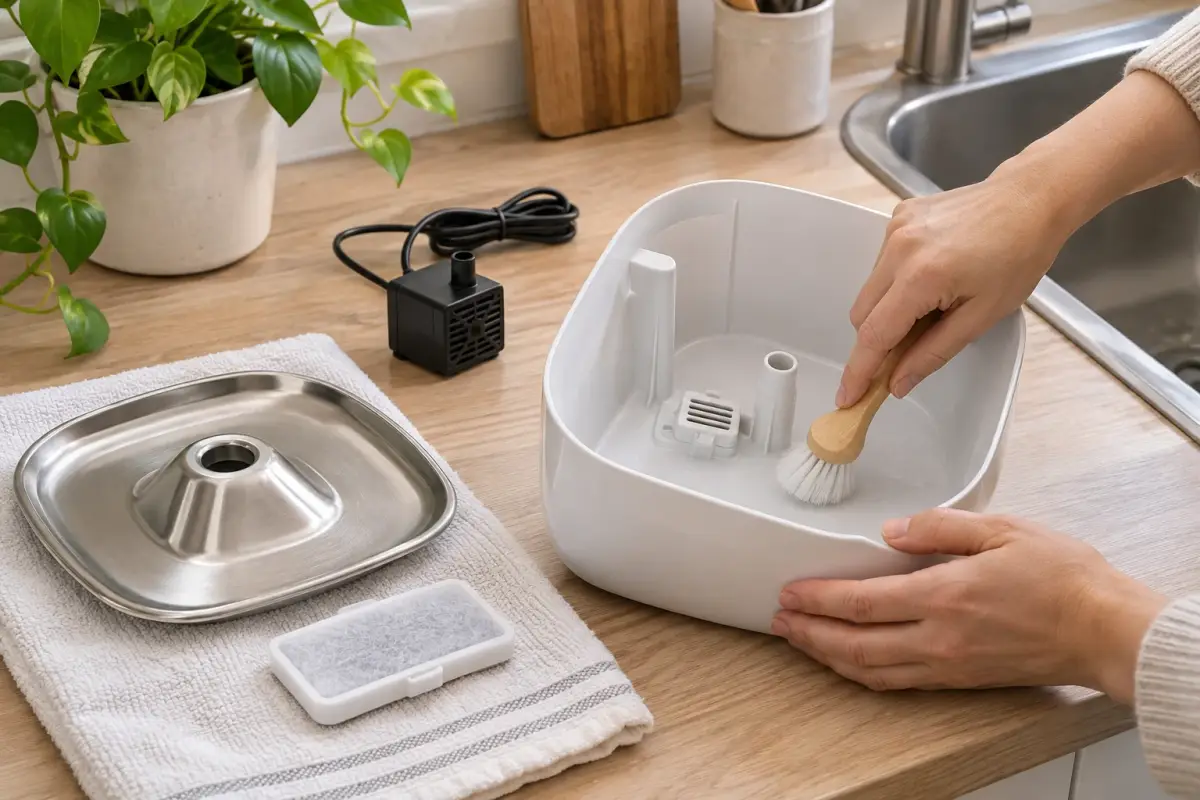
Cleaning is the commitment you are buying. The AKC advises replacing the water and cleaning the fountain daily, and changing the filter regularly. Count the parts before you buy: fewer, dishwasher-safe pieces and a pump that comes out without tools make daily rinses realistic. Our dog water fountains are worth browsing with that parts count in mind.
Do dogs need a fountain at all?
The AKC is candid that there is no evidence dogs prefer running water, a point we pick apart in are water fountains good for dogs. The case for a fountain is that circulating water stays cooler, research suggests dogs like cool water, and a filter removes hair, food crumbs and debris. That suits households where water sits all day, or dogs that ignore a warm, stale bowl; our guide to getting a dog to drink more water covers other ways to help.
A fountain does not purify water the way a household filter does, and a clean dog water bowl refilled twice a day is just as good for many dogs. If your dog is drinking noticeably more or less than usual, see your vet rather than changing the bowl.
Best type for each dog
For large dogs or several dogs, pick a large reservoir, a wide, shallow drinking area a big muzzle can reach without pushing the pump, and a heavy base that does not slide. The AKC suggests larger models for multi-dog homes and big breeds. For small dogs, a compact fountain with a low rim is easier to reach and quicker to clean.
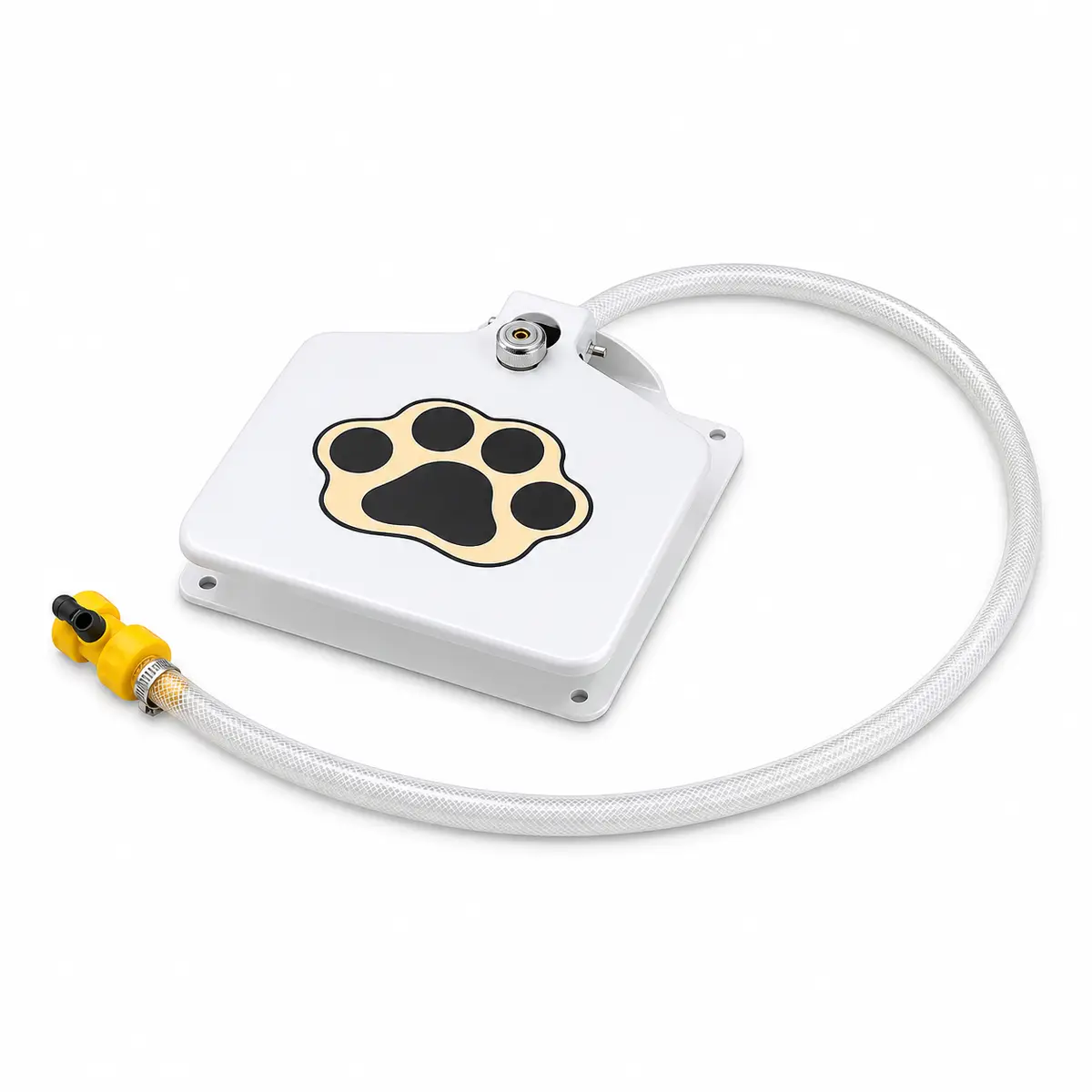
For outdoor use, look for a design rated for outdoor use with a protected cord, or a gravity or float-valve waterer that needs no power (our outdoor dog water fountain guide goes further). For puppies and chewers, keep cords covered or out of reach, which applies to any plug-in design such as a wired automatic pet fountain. For dogs with long ears, a narrow drinking spout keeps ears drier.
Filters, noise and running costs
Most fountains use a replaceable filter, often a foam pre-filter plus a carbon or resin layer. A filtered bowl is another route; see our guide to filtered dog water bowls. Factor in the cost and frequency of replacements, and check that the brand sells them reliably. Some models remind you when a filter is due.
Pumps should be close to silent; a buzzing or gurgling fountain usually means low water or a clogged intake. Keep the reservoir topped up, because a pump running dry wears out quickly. Unplug the fountain before cleaning, and check the cord for chew marks during each wash.
What to avoid and how long a fountain lasts
Avoid fountains with crevices you cannot reach with a brush, thin plastic that scratches easily, a reservoir too small for your dog's daily drinking, and lightweight bases that a big dog can knock over. Avoid leaving a fountain unplugged with water standing in it, which grows slime quickly.
Clean the pump impeller every week or two, because hair and slime build up there first. Replace scratched plastic parts and any pump that no longer runs smoothly. With regular care, a stainless steel body lasts for years; the pump is usually the part that wears out. When you are ready to compare, browse dog water fountains.
Common questions
What is the best dog water fountain for large dogs?
Choose a large reservoir, a wide, shallow drinking area and a heavy, non-slip base, ideally in stainless steel. Easy-to-remove parts make daily cleaning practical with big drinkers.
Are water fountains good for dogs?
They can encourage some dogs to drink by keeping water cool and filtered, but there is no evidence dogs prefer running water. A clean, regularly refilled bowl works well too.
How often should I clean a dog water fountain?
The AKC advises changing the water and cleaning daily, and changing the filter regularly. Clean the pump every week or two, where hair and slime build up.
Is stainless steel or plastic better for a dog fountain?
Stainless steel is the most hygienic and durable. Plastic is lighter and cheaper but scratches, which can hold bacteria, and may cause skin reactions in some dogs.
Sources we checked
This guide is general information, not veterinary advice. If your pet is unwell or injured, contact your veterinarian.