Buying guides
Best Outdoor Dog Water Fountains: How to Choose One
The best outdoor dog water fountain is one your dog will actually use, that sits in shade, and that you can clean every day. Powered pumps need electricity, while step-on or paw-activated dispensers need none, so pick by where it will live. The ASPCA says to give pets plenty of fresh, clean water when it is hot or humid; see our outdoor dog water fountains.
By Matt GarnettUpdated November 13, 20264 min read3 sources
Two kinds of outdoor fountain
A powered fountain uses a motorized pump and filter to circulate water. The AKC describes it as providing a continually circulating, consistently cool stream. Outdoors, that means finding a safe, dry power source and a spot where the cord is out of the way. The AKC notes that wireless pumps reduce safety risks.
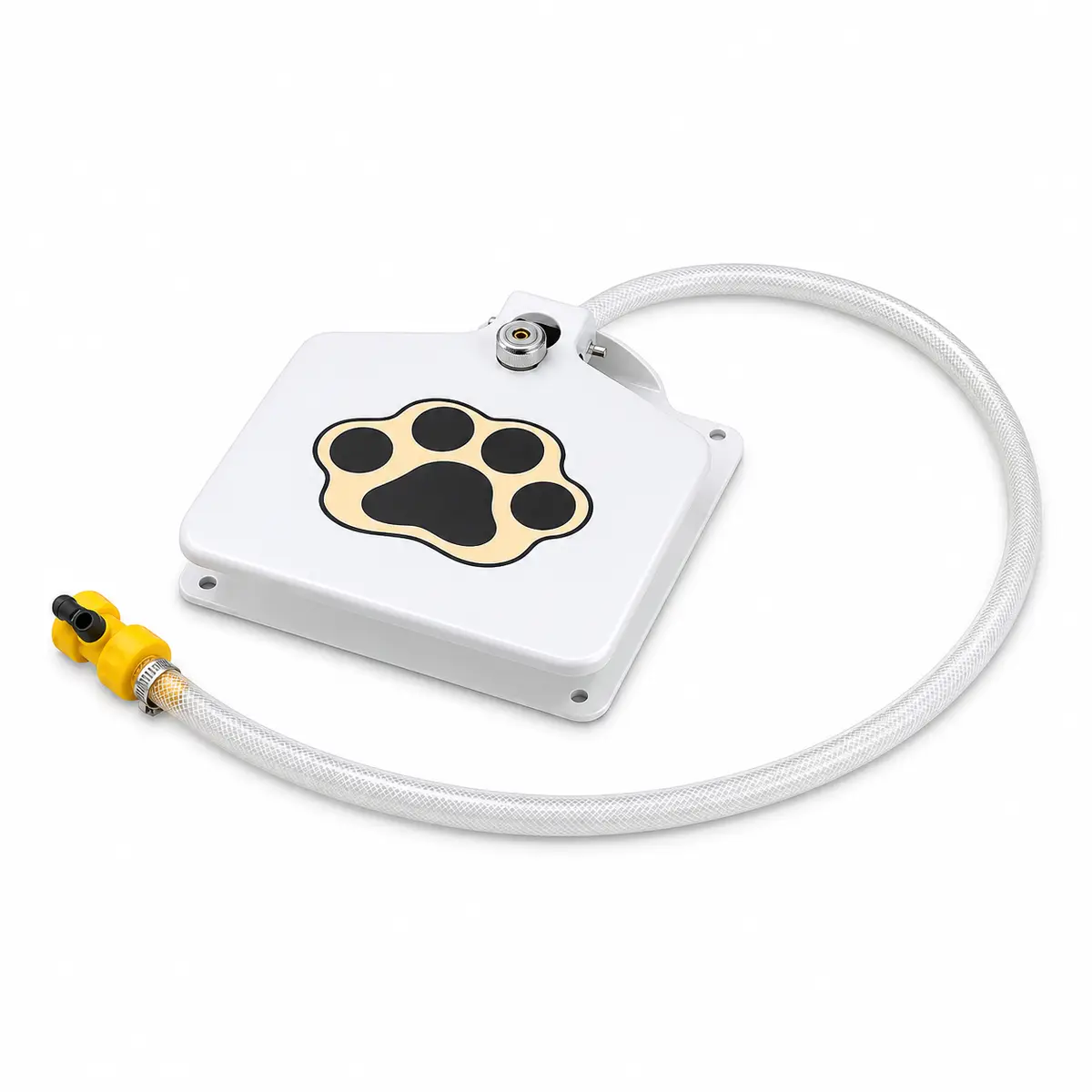
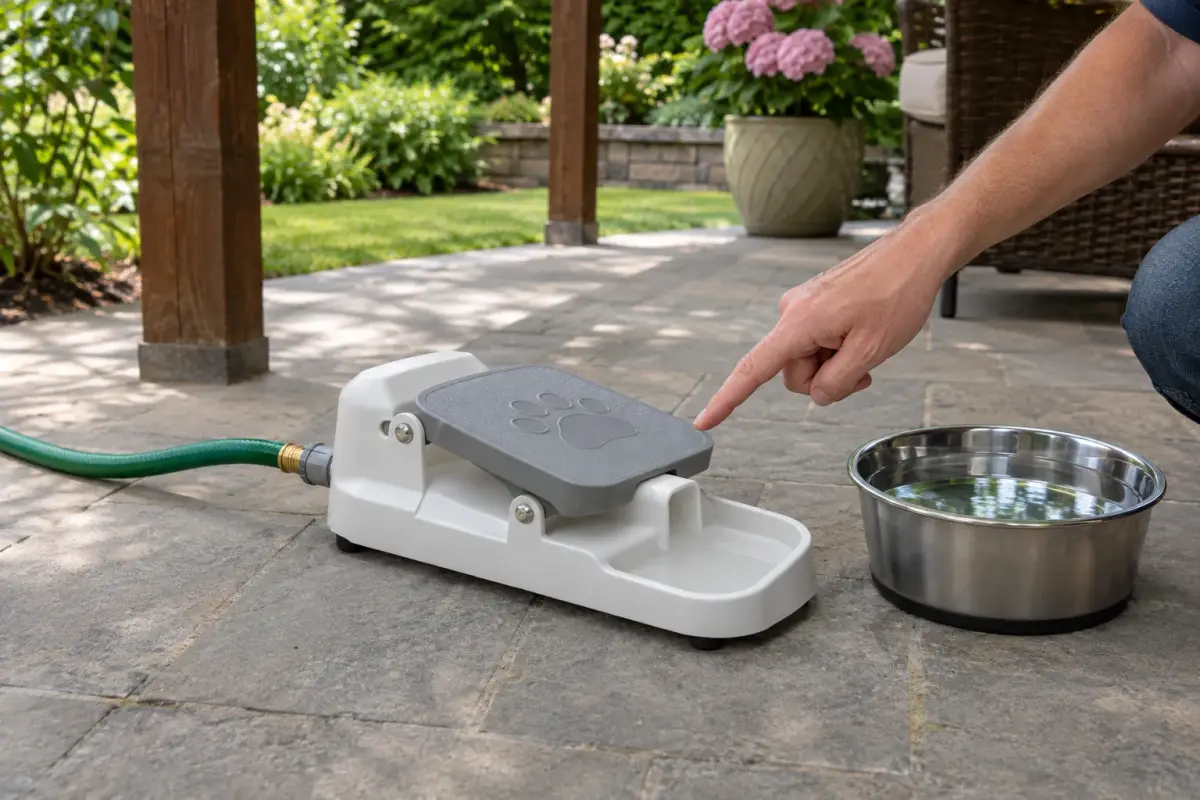
A paw-activated or step-on dispenser needs no electricity. The dog presses a pedal and water flows. Several are listed in our outdoor dog water fountains collection, such as a step-on activated sprinkler-style fountain and a no-electricity paw-controlled model. Check each product page for how it connects to a water supply.
Does your dog need one?
Not necessarily. The AKC says a fountain is not essential, and if your dog already drinks well from a bowl, it may not be worth the cost. It notes that some dogs like running water, but adds that the experts it quotes are unaware of evidence that dogs as a group prefer it.
A fountain can help in multi-dog households, where several water sources reduce competition, and for large dogs that need a bigger supply. Outdoors, the main benefit is often practical: a larger reserve and cooler water on hot days. If your dog's drinking habits suddenly change, see your vet, since drinking much more or less than usual can signal a health problem.
Placement: shade, ground and distance
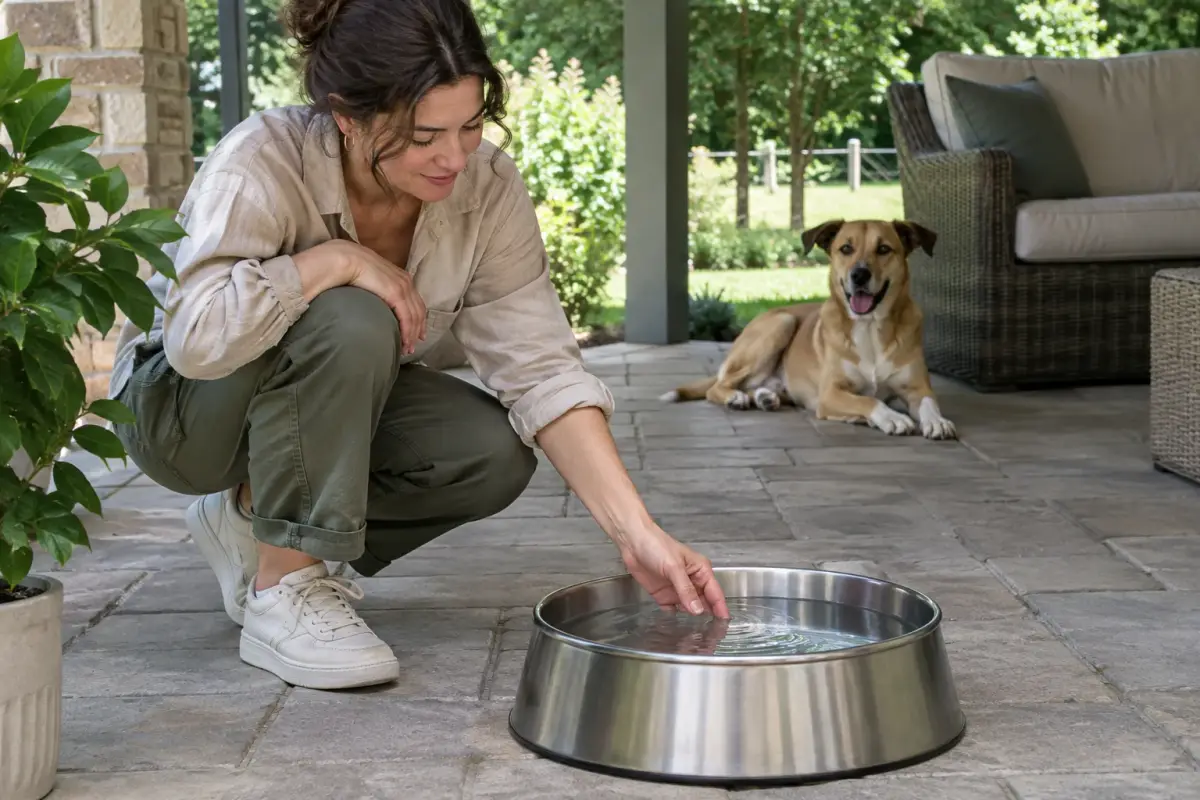
The ASPCA advises giving a shaded spot where pets can escape the sun and fresh, clean water when it is hot or humid. Put the fountain in that shade, not in full sun, so the water stays cooler and the dog is not tempted to drink while overheating on bare ground.
Keep it on level, firm ground away from the pool, ponds and ocean access. The ASPCA warns against letting pets drink pool water or lake and ocean water. A spot your dog already uses, near the door or under a covered patio, also means it gets used and cleaned.
Cleaning and maintenance
The AKC recommends replacing the water and cleaning the bowl or fountain daily. Outdoors, leaves, insects, dirt and algae all collect faster, so a design that comes apart easily and has few small parts is more likely to be cleaned. Powered models also need filters changed regularly, which the AKC calls more of a chore than a plain bowl.
Plastic parts may accumulate bacteria and can cause skin reactions in some dogs, according to the AKC, so stainless steel or ceramic reservoirs are worth a look where available. Drain a fountain before freezing weather arrives and check hoses and seals each spring.
Training your dog to use it
A step-on dispenser is a new idea for a dog. Show it the pedal, reward any paw touch, and let your dog watch the water flow. Some dogs learn in minutes, others in days. Keep a regular bowl out until your dog is using the dispenser reliably.
The AKC makes the same point about powered fountains: keep the old bowl as a backup in case of a power outage or pump failure. Fountain pumps also make noise, which can bother fearful or noise-sensitive dogs, so introduce a new one gradually and watch for avoidance.
Heat, signs to watch and what to avoid
The ASPCA lists heavy panting, trouble breathing, drooling, mild weakness or collapse as signs of overheating, and says a body temperature above 104 degrees F is a warning sign. Flat-faced, older and overweight pets are at higher risk. Go to a vet at once if you see these signs; a fountain cannot treat a dog that is overheating.
Avoid placing a fountain in direct sun, relying on it as the only water source, or leaving a cord where a dog can chew it. For the wider choice see our guide to dog water fountains, the best outdoor water bowl for dogs, or outdoor dog water bowls.
This page is general information, not veterinary advice, and it cannot replace an examination by the vet who knows your pet.
Common questions
Do outdoor dog water fountains need electricity?
Powered pump models do, but paw-activated or step-on dispensers do not. Choose based on where the fountain will sit and whether you have a safe, dry outlet or a water supply nearby.
Is a water fountain better than a bowl for dogs?
Not always. The AKC says a fountain is not essential, and the experts it quotes know of no evidence that dogs as a group prefer running water. It can help multi-dog households and large dogs.
How often should I clean an outdoor dog fountain?
Daily, according to the AKC, which advises replacing the water and cleaning the bowl or fountain each day. Outdoors, leaves, insects and algae gather faster, so check for debris more often in summer.
Where should I put an outdoor dog water fountain?
In shade, on level ground and away from pool or pond water. The ASPCA advises providing shade and plenty of fresh, clean water when it is hot or humid, so put the fountain where your dog already rests.
Sources we checked
This guide is general information, not veterinary advice. If your pet is unwell or injured, contact your veterinarian.