






Buying guides
Best Outdoor Water Bowls for Dogs: What Actually Matters
The best outdoor water bowl for a dog is heavy or anchored so it cannot tip, large enough to last through a hot afternoon, easy to scrub, and placed in shade. Step-activated dispensers and heated bowls suit particular situations, but a plain, stable bowl that is refilled and cleaned often beats any gadget. Water outdoors is a safety item, not an accessory, so choose for reliability.
By Matt GarnettUpdated November 13, 20265 min read3 sources
Why outdoor water is a safety item
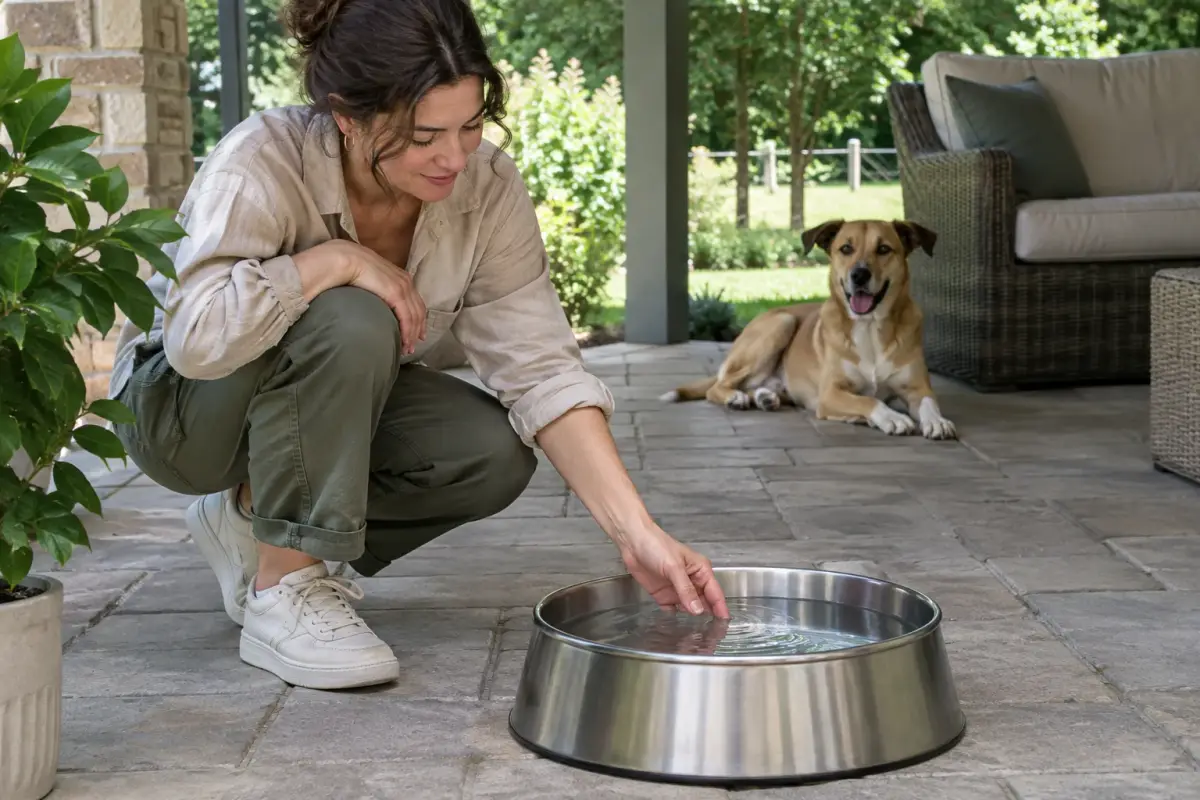
If you are choosing from our outdoor dog water bowls, start with why it matters. The ASPCA advises giving pets plenty of fresh, clean water when it is hot or humid outdoors, and a shady place to get out of the sun. VCA Hospitals lists leaving a dog in a yard without access to shade or water on a hot day as a cause of heat stroke. An outdoor bowl is therefore part of how you keep a dog safe, and the main question is whether it will still hold clean water at the end of the afternoon.
That shifts the criteria away from looks. A bowl that tips in two minutes, a dispenser the dog cannot work out, or a shallow dish that dries to nothing in the sun is a risk even if it looks good. Choose something your dog will actually use, fill it before you step outside, and check it through the day rather than assuming it is full.
Stability and capacity
The most common failure outdoors is a tipped bowl. Look for a heavy base, a wide footprint, a non-slip bottom or a design that clips to a fence, stake or crate. A deep, narrow bowl is harder to knock over than a shallow, light one, but it must still be easy to reach for a short-nosed or small dog. Match the diameter to the dog's muzzle so it can drink without pressing the rim.
Capacity depends on the dog and the day. A large dog in warm weather will empty a small dish quickly, and a bowl that runs dry is worse than none. Rather than chase one huge bowl, many owners set two stations in different shady spots. A heated model such as a 74 ounce heated water bowl shows how much a larger vessel holds, though capacity is only useful if the dog can reach it.
Step-activated dispensers and fountains
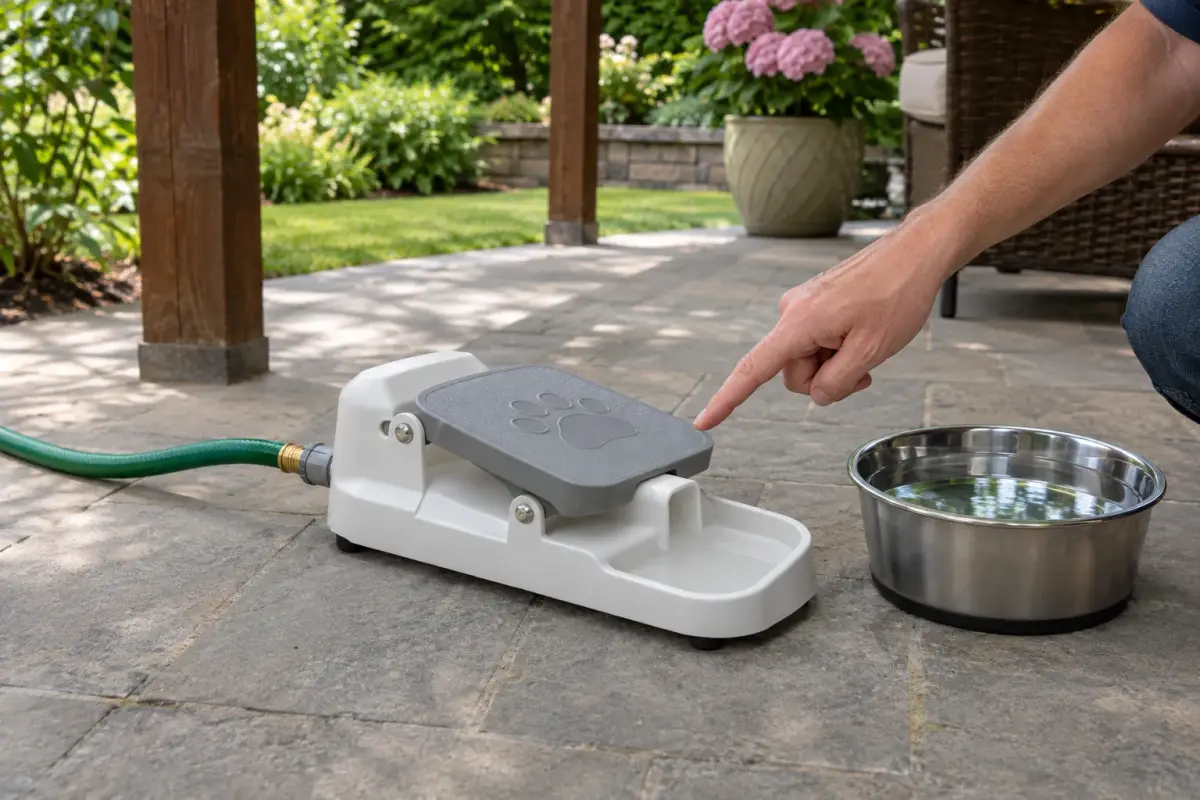
A step-activated dispenser releases water when the dog presses a pedal, which keeps the water cleaner and cooler than an open bowl and is useful in a garden where leaves and dirt fall in. The trade-off is training: a dog must learn to step on the pedal, and some never do. A step-activated dog water dispenser with a two-way splitter needs a hose connection and a steady surface.
A step-on sprinkler fountain with a paw pedal works on the same idea and can double as a way for a dog to cool its face, though it will make a muddy patch around the base. Introduce either type gradually, with the dog watching you press the pedal and a bowl of water still available, and never rely on a dispenser the dog has not proven it can use.
Heat, shade and cold weather
VCA says heat stroke is an immediate medical emergency and that dogs cool themselves mainly by panting. Shade matters as much as water: put the bowl where the sun will not heat it through the day, and bring the dog inside in extreme heat. The ASPCA also notes that flat-faced breeds, older and overweight dogs are more susceptible to heat stroke, so offer them extra care and keep them in cool areas.
In winter, water that freezes is no water at all. A heated bowl keeps it liquid, but plug it into a protected outdoor outlet and keep the cord out of chewing range. The ASPCA's cold-weather advice is blunt: if it is too cold for you, it is probably too cold for your pet, so keep animals indoors. Treat an outdoor heated bowl as a convenience for short time outside, not a reason to leave a dog out in a freeze.
Cleaning and materials
Outdoor water collects dust, pollen, leaves and slime quickly. Empty and scrub the bowl daily with a brush and rinse thoroughly, and clean any dispenser's reservoir and valve more often in warm weather. Stainless steel and sturdy ceramic are easy to scrub and do not hold smells; scratched plastic is harder to get clean. Choose a bowl with a wide opening so you can reach every surface.
Check the water itself too. Throw out water that looks cloudy, smells off or has algae, and watch for insects or debris. Move the bowl if it sits under a tree dropping fruit or sap. A routine of checking the bowl every time you go in or out of the house is more effective than any feature.
What to avoid, and when to call the vet
Avoid very light bowls, bowls with sharp or cracked edges, dispensers with exposed cords and any design that traps stagnant water. Do not leave a dog alone outdoors in extreme heat or cold, even with water. For the wider field see our best dog water bowls guide and our outdoor dog water fountains. When you are ready to choose, browse our outdoor dog water bowls.
Fast or heavy breathing, drooling, weakness, glazed eyes or collapse in hot weather means call a vet or emergency clinic right away. VCA says to move the dog somewhere cool and go to a veterinarian immediately. A dog that suddenly drinks far more or less than usual should also see your vet.
This page is general information, not veterinary advice, and it cannot replace an examination by the vet who knows your pet.
Outdoor bowl access and cleaning points
| Part or material | Access difference | What to inspect |
|---|---|---|
| Stainless steel | A rigid metal bowl surface | Opening width and accessible corners |
| Ceramic | A heavier glazed body | Chips,cracks and access for scrubbing |
| Plastic | A molded body | Scratches and wear |
| Dispenser reservoir | Water stored above or behind the bowl | Reservoir access and valve cleaning |
Common questions
What is the best outdoor water bowl for dogs?
One that is heavy or anchored so it cannot tip, big enough to last the day, easy to scrub and kept in shade. A simple stable bowl you refill often beats a gadget the dog cannot use.
Do step-activated dog water dispensers work?
They can, once the dog learns to press the pedal, and they keep water cleaner than an open bowl. Introduce them gradually and keep a regular bowl available until you are sure your dog can use it.
How do I stop my dog tipping its water bowl outside?
Choose a heavy bowl with a wide base and non-slip bottom, or one that clips to a fence or stake. Putting it in a corner or a stand also helps.
Should I use a heated water bowl in winter?
A heated bowl keeps water from freezing, but it needs a safe outdoor outlet and a chew-proof cord. The ASPCA advises keeping pets indoors in cold weather, so use it for short outdoor time only.
Sources we checked
This guide is general information, not veterinary advice. If your pet is unwell or injured, contact your veterinarian.


