






Buying guides
Best Dog Sling Carrier: How to Choose and Size One
The best dog sling carrier fits your dog's body length, keeps them secure with an inside tether and zipped or covered opening, and has mesh for airflow and a padded, adjustable strap. A sling suits small, calm dogs on short outings. Measure your dog first, add a few inches, and skip slings for dogs that wriggle, overheat easily or are close to the weight limit.
By Matt GarnettUpdated November 14, 20265 min read2 sources
What a sling carrier is, and who it suits
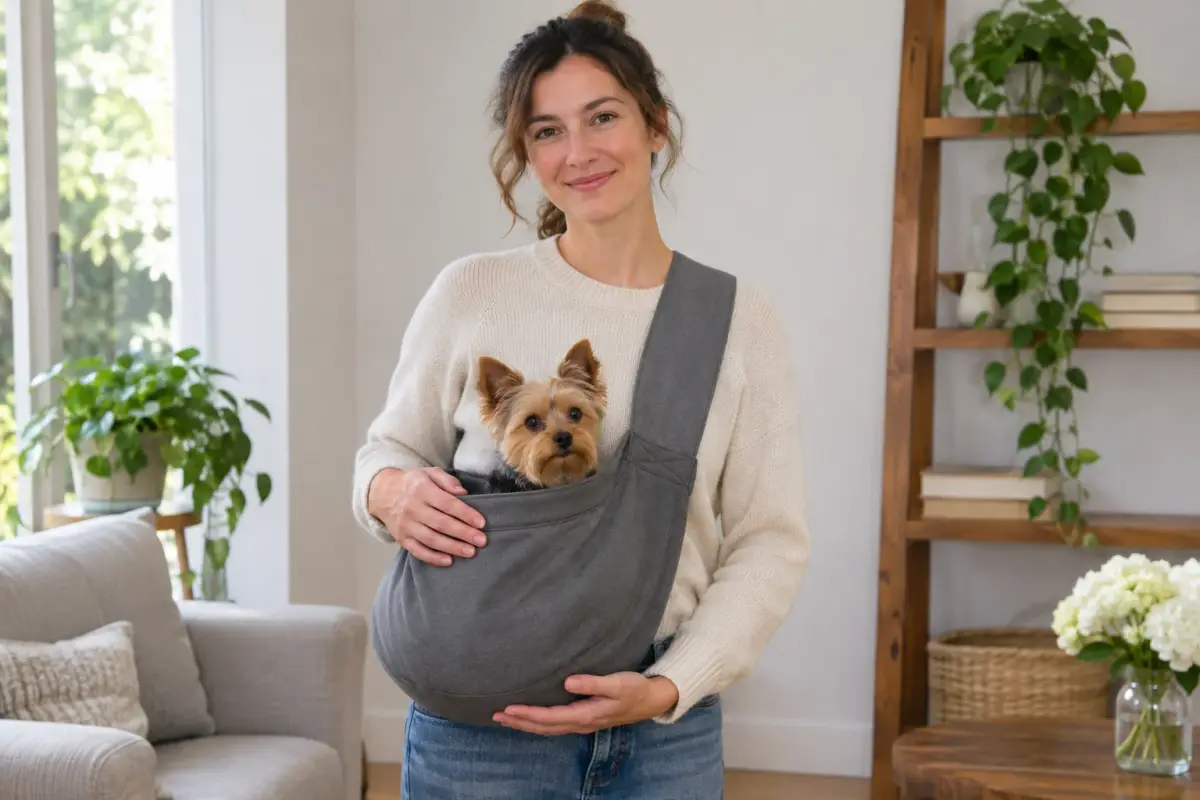
A sling carrier is a soft pouch worn across the body, like a messenger bag with a hammock for your dog. The AKC lists shoulder slings alongside backpacks and front packs as wearable carriers, which it describes as generally intended for puppies and small dogs. They are light and fold flat, which makes them handy for errands, vet visits, public transit and short walks.
A sling works best for a small dog that is calm about being held close, because your dog sits tucked against your side. It is a poor fit for a dog that squirms, a heavy dog, or a long outing where you need both hands and a steady load. For longer trips, a structured carrier or dog backpack carrier spreads the weight better.
Sizing: measure the dog, not just the label
The AKC's sizing advice for carriers is simple: measure your dog's back from the collar to the base of the tail, measure shoulder height from the shoulders to the paws, and add a few inches to each. Their example is a 9-inch-tall Dachshund needing a carrier at least 12 inches tall. Your dog should be able to stand up, turn around and stretch out when lying down.
Weight limits vary a lot between slings, and the figure on the label is the maker's limit, so read it and keep your dog comfortably under it. A long, low dog like a Dachshund may need more length than weight suggests, while a compact dog may fit a smaller pouch. Check the body length against the pouch as well as the pounds against the rating.
Safety features that matter
A sling puts your dog at waist height, so a secure opening matters. The AKC notes that zippers offer security, while latches, Velcro and interlocking clips are also used, and says to check closures and consider whether your dog could break through them. Look for a zipped or toggled cover, plus a short inside leash or clip that attaches to your dog's harness, never the collar.
Check the seams, strap anchors and any metal hardware before each outing, and take the dog out if the stitching frays. Do not use a sling as a car restraint: for travel by car, use a carrier or restraint made for that. For flights, confirm the carrier size and construction requirements with the airline before you book.
Ventilation and heat
Mesh panels keep air moving and help prevent heat exhaustion, according to the AKC, which also warns that a carrier can get hot even in an air-conditioned car or cabin. A sling holds your dog against your body, adding your body heat, so choose a breathable fabric and a mesh window or open top, and skip slings in hot weather for flat-faced or thick-coated dogs.
Watch for panting, drooling, restlessness or a dog that stops responding, and take them out into shade with water right away. Our dog cooling mats can help at home in summer, but they do not replace shade and breaks outdoors.
Comfort for you and your dog
Wide, padded straps that adjust at the shoulder keep the load off your neck, and a sling worn across the body should sit at your hip with your dog's head visible. Switch shoulders regularly. Practicing at home helps: the AKC suggests introducing the carrier in a neutral space like the living room with the opening wide, putting a familiar scented item inside, and rewarding every interaction.
Build up to longer stays in short steps, and watch for signs of discomfort. The AKC warns that dogs should not be kept in one position for long periods, which can stress them and cause injury. A short, active outing where your dog also walks suits a sling far better than hours inside it. Browse our dog sling carriers to compare strap, opening and fabric styles.
Choosing between sling styles
Fabric slings with a single shoulder strap are the lightest option, and a canvas design like this shoulder sling pet carrier bag suits short city trips. A hands-free design with a wider body and breathable panel, such as a travel sling puppy carrier, is better for walks outdoors.
Messenger-style bags such as this portable pet messenger bag look like a normal bag but offer less support for the dog's body. Compare the opening, the inside tether and the strap padding rather than the look. If your dog is near the top of the size range, our guide to the best dog carrier covers sturdier styles, and the dog backpack guide covers hands-free ones.
When to see your vet
If your dog seems to be in pain when lifted, has trouble walking, or is a very small, older or arthritic dog, ask your vet whether carrying is suitable and how long is safe. Dogs with breathing trouble should not be carried in hot conditions, and a flat-faced breed that struggles in warm weather needs extra caution.
Take a dog to the vet promptly if they stay lethargic, pant heavily or vomit after time in a carrier. This page is general information, not veterinary advice, and it cannot replace an examination by the vet who knows your pet.
Sling and shoulder-bag features
| Format or feature | Carrying arrangement | What to compare |
|---|---|---|
| Single-strap fabric sling | Weight carried from one shoulder | Strap width and usable body support |
| Wider sling body | More fabric around the pet | Opening and the pet’s supported position |
| Breathable panel | Mesh or open-textured material in the body | Panel location and actual openings |
| Messenger-style body | A bag-like shoulder shape | Inside space,opening and strap padding |
Common questions
What size dog fits in a sling carrier?
Slings are generally meant for puppies and small dogs. Measure your dog from collar to tail base and shoulder height, add a few inches, and keep the dog well under the maker's weight limit.
Are sling carriers safe for dogs?
They can be for small, calm dogs on short outings if they have a secure opening, an inside tether and breathable mesh. Check the closures and stitching before each use and do not use one as a car restraint.
Is a sling or a backpack better for a small dog?
A sling is lighter and quicker for short errands, while a backpack spreads the weight better for longer trips. Choose by how long you will carry and how still your dog sits.
How long can a dog stay in a sling carrier?
There is no fixed limit, but dogs should not stay in one position for long because it can cause stress or injury. Use short, active outings and let your dog out to walk and stretch.
Sources we checked
This guide is general information, not veterinary advice. If your pet is unwell or injured, contact your veterinarian.


