Buying guides
Best Dog Shampoo for Smelly Dogs: What Removes Odor
The best shampoo for a smelly dog is a pH-balanced dog shampoo that actually cleans, ideally with a deodorizing ingredient such as baking soda or enzymes, and a light scent rather than a heavy perfume. Fragrance only covers odor for a day or two; cleaning removes it. If the smell comes back within days, the cause is usually ears, teeth, skin or anal glands, and that is a job for your vet, not a stronger shampoo.
By Matt GarnettUpdated November 14, 20264 min read2 sources
What matters most: a dog-specific base, real cleaning and gentle scent
A dog's skin has a different pH from ours, and the AKC advises against human shampoo because it is formulated for a different skin pH and can dry or irritate a dog's skin. Start with a shampoo labeled for dogs and pH-balanced, then look at what it does about odor. Most normal dog smell comes from oils and debris in the coat, so a shampoo that lifts oil without stripping the skin does most of the work.
Scent is the last consideration, not the first. The AKC notes that artificial fragrances, dyes and parabens can trigger skin sensitivity in some dogs, and suggests lightly scented or fragrance-free products for sensitive skin. A shampoo that smells wonderful in the bottle but leaves your dog scratching has not solved the problem.
Deodorizing, enzyme and scented shampoos compared
Deodorizing shampoos often use baking soda, activated charcoal or zinc to neutralize odor molecules. They suit dogs that roll in things and dogs with oily coats. Enzyme and odor-eliminating formulas break down the organic compounds behind strong smells and are useful after a dog rolls in something foul. Scented shampoos with plant-based fragrance, such as coconut, oatmeal or lavender, leave a pleasant smell but do less to remove odor on their own.
Moisturizing shampoos with oatmeal, aloe or coconut oil suit dogs with dry, flaky skin, where odor often comes from irritated skin rather than dirt. Medicated shampoos for yeast or bacterial skin problems are a different category; a vet should choose those, because using the wrong one can make skin worse. Skunk shampoos are specialist odor removers made for that one problem.
Best shampoo type for each smelly dog
For a dog that rolls in mud, manure or dead things, an enzyme or odor-eliminating shampoo, followed by a gentle conditioner, works best. For an oily-coated breed such as a Basset Hound or Cocker Spaniel, a clarifying or deodorizing shampoo used every few weeks keeps the coat fresher. For dogs with sensitive or dry skin, choose a fragrance-free or lightly scented oatmeal formula.
For a skunked dog, use a skunk-specific product or a de-skunking wash and keep it away from the eyes; ordinary shampoo alone rarely shifts the oils. For dogs that swim, a rinse with fresh water after every swim and a deodorizing bath every few weeks prevent that lingering pond smell. For puppies, use a gentle puppy shampoo.
What to avoid
Avoid human shampoo, dish soap and heavily perfumed products. Avoid bathing too often: the AKC says overbathing can dry the skin and coat, which can increase odor as the skin overproduces oil. Avoid essential oil-heavy products unless they are made for dogs, since some oils irritate skin and are risky if licked. Never use a product made for cats or people on a dog without checking the label.
If your dog smells bad again within a few days of a bath, smells yeasty or musty, has greasy patches, red skin, a smelly ear or bad breath, the cause is likely medical. Ear infections, dental disease, skin infections and full anal glands are all common sources of odor, and your vet can find and treat the real cause.
How to bathe a smelly dog so the shampoo works
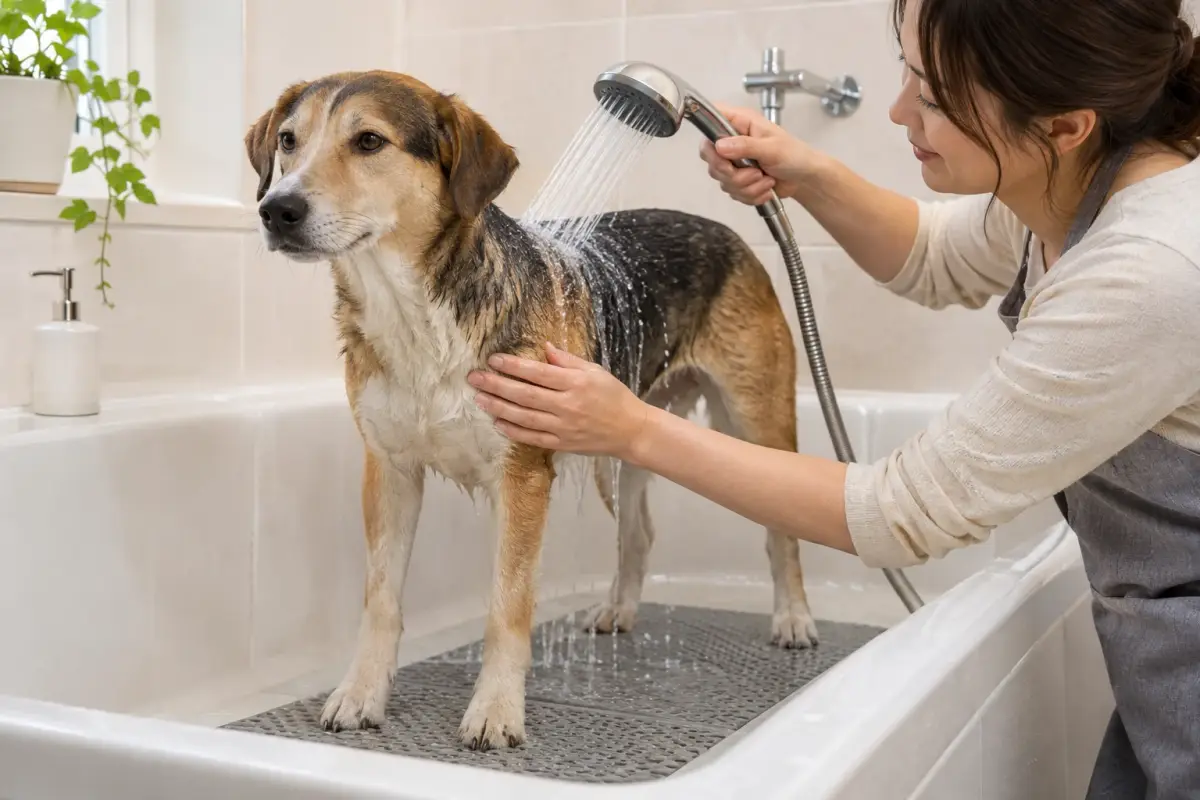
Brush first to remove loose hair and mats, because water and shampoo cannot reach skin under a mat. Wet the coat thoroughly with lukewarm water down to the skin, which takes longer than most people expect on a double coat. Lather, working against the direction of hair growth on heavily soiled areas, and leave a deodorizing shampoo on for the time the label gives.
Rinse until the water runs clear; leftover shampoo causes itching and can smell. Dry the coat fully, especially under the ears, between the toes and in skin folds, because a damp coat develops that wet-dog smell quickly. Wash bedding, collars and harnesses at the same time, or the dog will smell like them again by morning.
How often to bathe, and how long a bottle lasts
Most dogs need a bath every few weeks to once a month, depending on coat type and lifestyle, and the AKC notes the ideal schedule depends on coat, activity and skin condition. Between baths, brushing several times a week removes much of the oil and dirt that causes odor, and a waterless shampoo can handle small messes.
Concentrated dog shampoos are diluted before use and last much longer than ready-to-use formulas, which suits large or frequently bathed dogs. Store shampoo at room temperature with the cap closed. If you change products, watch your dog's skin for a few days; itching, redness or flaking mean the formula does not suit it.
Common questions
What is the best smelling dog shampoo that lasts?
Longer-lasting freshness comes from cleaning well, rinsing fully and drying thoroughly, plus a light scent. Heavily perfumed shampoos fade in a day or two and can irritate sensitive skin.
What shampoo do groomers use for smelly dogs?
Groomers often use concentrated deodorizing or enzyme shampoos, diluted, followed by a conditioner, and they dry the coat completely. The thorough rinse and drying matter as much as the product.
What is the best shampoo for skunk smell on dogs?
A product made specifically for skunk odor, used promptly and kept away from the eyes. Ordinary shampoo rarely removes skunk oils. If the eyes are red or your dog is pawing at its face, call your vet.
Why does my dog still smell after a bath?
Usually because the coat was not dried fully or the odor is coming from the ears, teeth, skin or anal glands. If the smell returns within days, have your vet check for a medical cause.
Sources we checked
This guide is general information, not veterinary advice. If your pet is unwell or injured, contact your veterinarian.