Buying guides
Best Puppy Shampoo: What to Look for Before the First Bath
The best puppy shampoo is made for dogs, mild, and fragrance-free or only lightly scented, because puppy skin is thin and easily irritated. VCA recommends a fragrance-free, hypoallergenic dog shampoo for routine bathing. A tear-free formula helps around the face. Bathe only when your puppy is dirty or smelly, rinse longer than you lather, and make the first baths short and positive.
By Matt GarnettUpdated November 14, 20263 min read3 sources
What matters most: a dog formula and gentle ingredients
Dog skin is not human skin. The AKC explains that human skin sits around pH 5.5, while dog skin is closer to neutral at about 6.2 to 7.4, and that dog skin has fewer cell layers, so harsh or wrong-pH products can strip protective oils. VCA goes further and says human shampoo, including baby shampoo, is too harsh for dogs.
For a puppy, start with the mildest option: a dog shampoo that is fragrance-free and hypoallergenic, which VCA calls the best choice for routine bathing. Gentle ingredients such as colloidal oatmeal and aloe are common in puppy formulas. A tear-free label is useful for the face but does not mean you can work shampoo into the eyes.
Best smelling vs fragrance-free
Many people search for the best smelling puppy shampoo, and scent is a fair preference. The trade-off is that fragrance is one of the more common irritants for sensitive skin, and contact with soaps and perfumes is a recognized cause of itchy skin in dogs. A lightly scented formula is fine for most puppies; choose fragrance-free if your puppy scratches after baths.
Remember that a puppy's nose is far more sensitive than yours. A scent that seems pleasant to you can be intense for the puppy, which may roll on the floor or rub its face after a bath. If that happens, switch to an unscented formula.
How often to bathe a puppy
Less often than most new owners expect. VCA advises that healthy dogs generally should not be bathed more than about once a month, to protect the skin and coat oils, with exceptions for puppies that roll in something or swim. Wiping paws and spot-cleaning between baths handles most mess.
Brush before every bath, because tangles tighten when wet, and use warm water you have tested with your wrist or elbow, since VCA notes puppies are more sensitive to temperature. Keep water out of the ears to help prevent ear infections, and dry your puppy thoroughly in a warm room.
Best choice for each puppy
For most puppies, a fragrance-free or lightly scented, tear-free dog shampoo is all you need. For curly or long-coated breeds that will need frequent grooming, a puppy shampoo paired with a light conditioner helps with tangles. For puppies with dry or flaky skin, an oatmeal-based formula is a gentle option.
For a puppy with fleas, itchy red skin, scabs, hair loss or a strong smell, do not reach for a stronger shampoo on your own. Puppies are sensitive to many flea and medicated products, so call your vet for a product suited to the puppy's age and weight.
What to avoid
Avoid human shampoo, dish soap, strongly perfumed products and essential oils, some of which can be toxic to pets. Avoid bathing too often, leaving shampoo residue, and scrubbing near the eyes. The AKC advises rinsing for longer than you spent lathering.
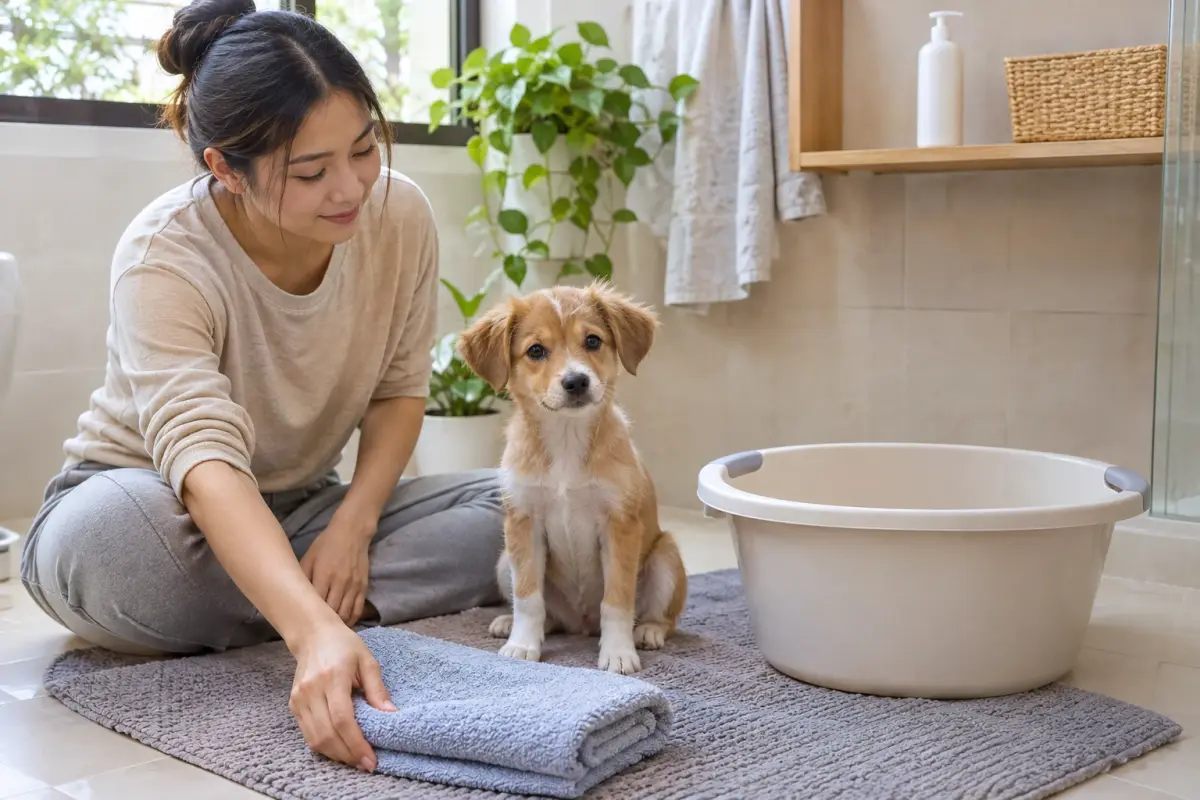
Avoid making the first bath an ordeal. Use treats, a non-slip mat in the tub, a handheld sprayer on low and short sessions. A puppy that learns baths are calm will be far easier to groom as an adult, which is the real goal of the first few months.
Common questions
Can I use baby shampoo on my puppy?
VCA advises against it: human shampoo, including baby shampoo, is too harsh for dog skin, which has a different pH. Use a mild dog shampoo made for puppies instead.
When can I give my puppy a bath?
Bathe only when your puppy is dirty or smelly, using warm water and a gentle dog shampoo. If your puppy is very young or unwell, ask your vet first.
How often should I bathe my puppy?
Usually no more than about once a month, unless the puppy gets dirty or swims. Brushing and spot-cleaning keep most puppies fresh between baths. Dry your puppy fully.
What is the best smelling puppy shampoo?
Choose a lightly scented dog shampoo if you like fragrance, but switch to fragrance-free if your puppy scratches or rubs its face after bathing, since scent can irritate.
Sources we checked
This guide is general information, not veterinary advice. If your pet is unwell or injured, contact your veterinarian.