Care & how-to
How Often Should You Bathe a Puppy?
Most puppies need a bath about once a month, and a clean puppy can often go longer. The AKC says bathing can start as early as 2 months old, but until a puppy is about 3 or 4 months old a warm washcloth is usually all it needs. Spot-clean in between, and browse puppy shampoo once your puppy is ready for a real wash.
By Matt GarnettUpdated November 14, 20265 min read2 sources
The short answer: about once a month
The AKC recommends bathing a puppy monthly, because skin and fur collect oil and dirt over time. VCA Animal Hospitals adds a useful ceiling: healthy adult dogs should generally be bathed no more than once a month, so their natural skin and coat oils are not stripped away. Puppies are not an exception to that limit.
So think of monthly as the maximum for a puppy that is not especially dirty, and a rough rhythm for a typical one. A puppy that rolls in mud gets washed that day, and one that stays tidy can go longer. For the grown-up version of this question, see how often to bathe a dog.
When can a puppy have a first bath?
The AKC says bathing can begin as early as 2 months old, and that starting early helps establish a lifelong routine. It also suggests going slowly: a first visit to a groomer often involves no bath at all, and is mainly about making grooming feel safe.
Until a puppy is about 3 or 4 months old, the AKC says a warm washcloth is all you really need, with no cleansing products. Shampoo and conditioner come in once the puppy is at least 3 months old. The AKC compares puppies under 6 months to human infants: they cannot protect themselves and are not used to the sensation, so keep every bath gentle, short and calm.
What to use at each age
In the washcloth stage, plain warm water on a soft cloth is the whole kit. After that, the AKC advises dog-specific, pH-balanced products rather than whatever is cheapest, and suggests asking your vet which kind suits your puppy's coat. Short coats need oils, while long coats benefit from moisturizing ingredients, so the right product depends on the coat you are washing.
A gentle all-purpose shampoo made for dogs and young pets is the sort of product to look for once your puppy is past the washcloth stage. For a quick clean between full baths, a waterless mousse-style wash for young dogs is another type to consider at that same age. Our guide to choosing puppy shampoo explains what to look for on a label.
How to give the bath, step by step
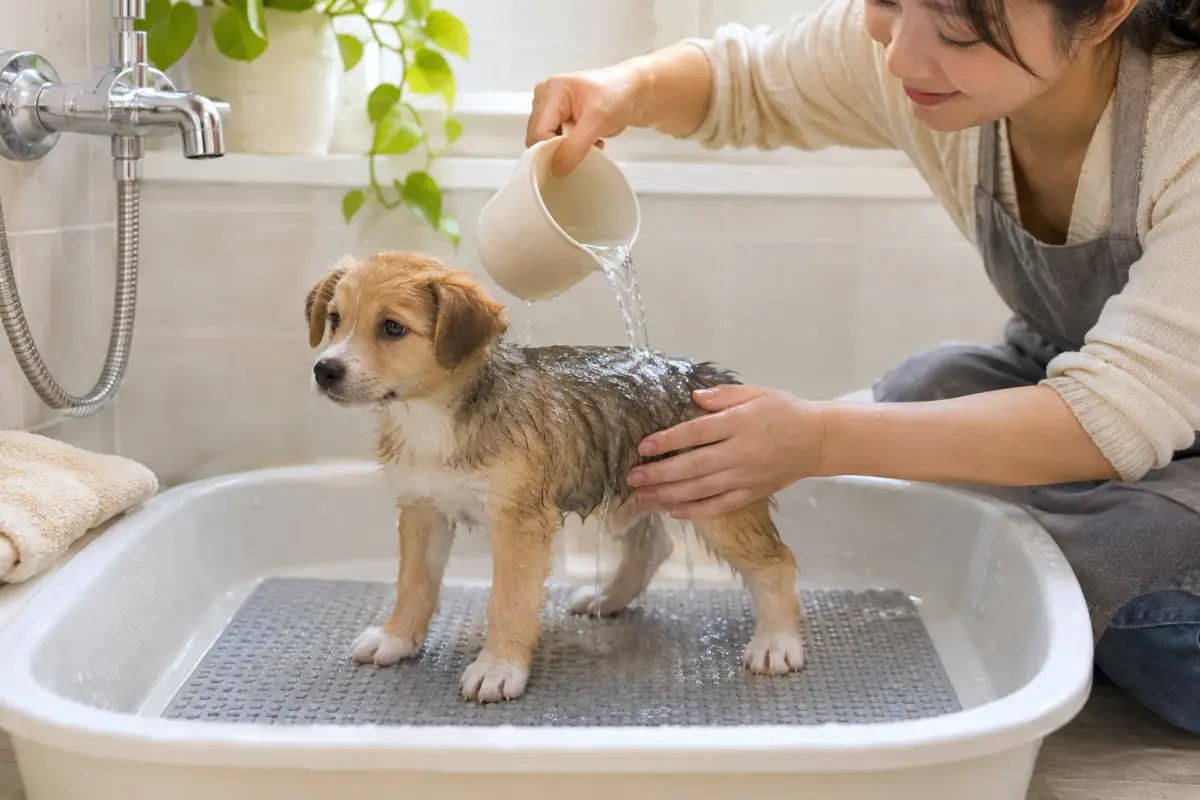
Step 1: Set up a laundry tub, bathtub or shower stall with a nonslip mat so your puppy feels steady, as VCA suggests. Step 2: Fill it with lukewarm water and test it with your hand or elbow. Puppies have thinner skin and may be more sensitive to temperature extremes. Step 3: Wet your puppy with a very soft stream of water.
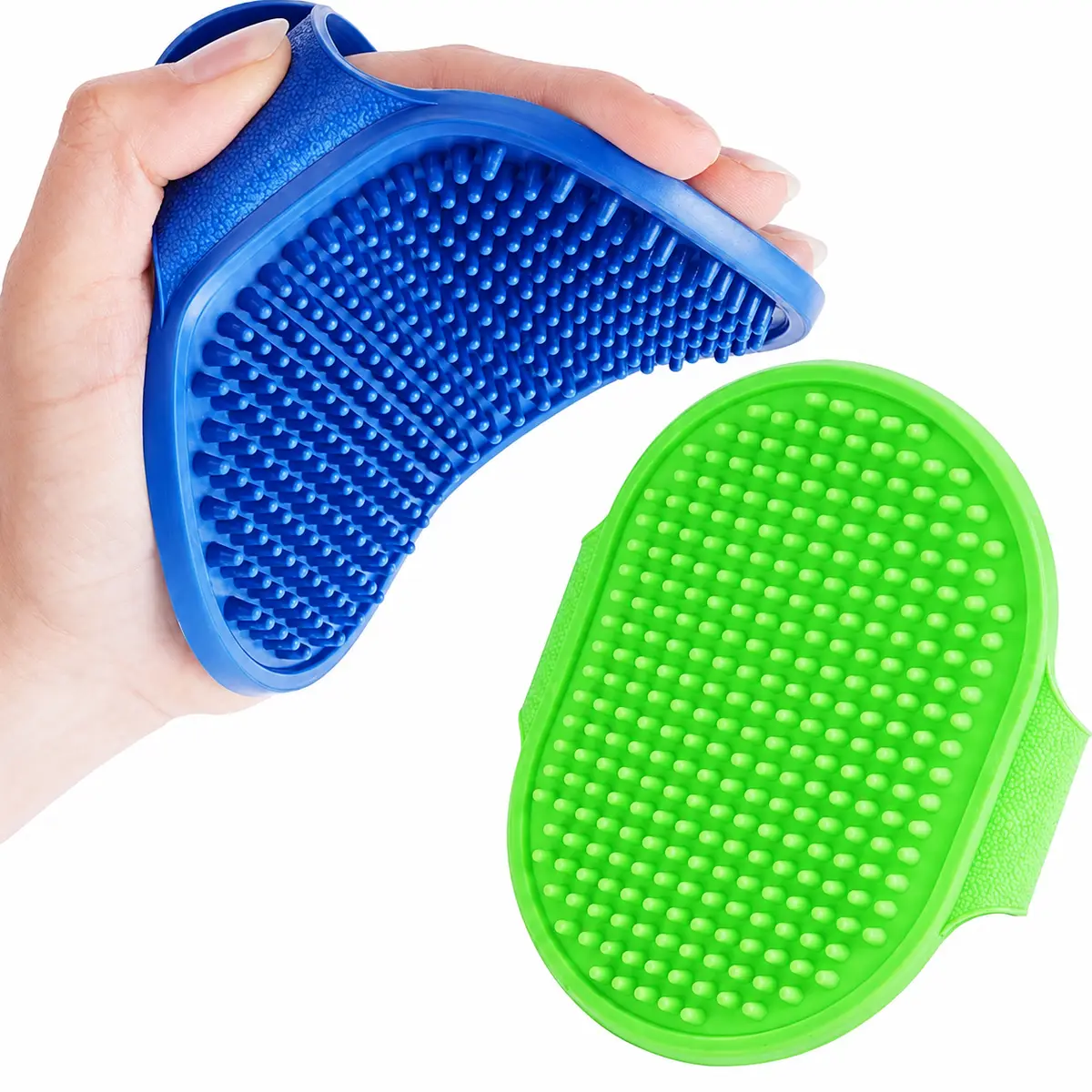
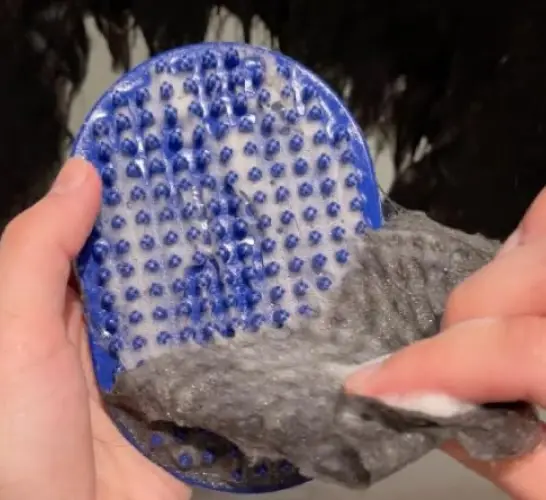
Step 4: Apply a small amount of shampoo, sparingly near the face, and wash with gentle hand motions in the direction the hair grows. Do not scrub. A soft silicone bath brush can help work lather through a thicker coat, and you can browse more dog bath brushes if you want options.
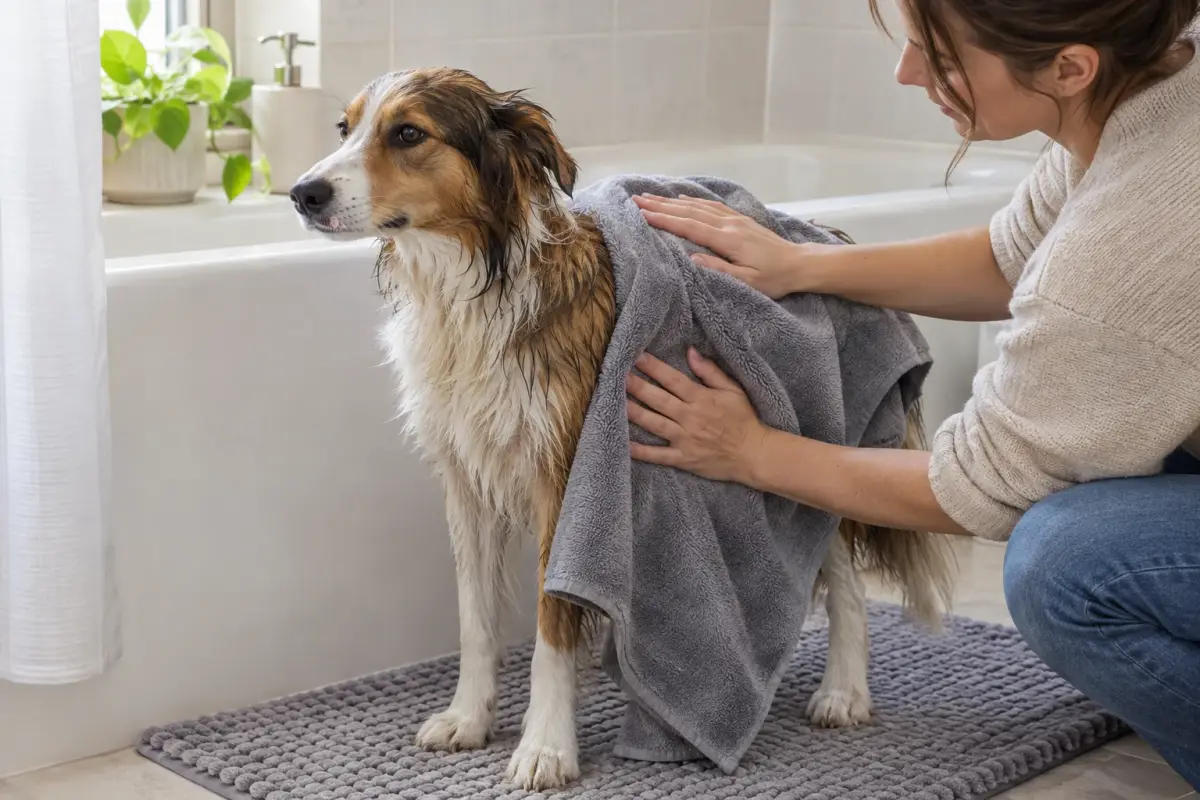
Step 5: Rinse until every trace of product is gone. The AKC's advice is that when you think you have rinsed enough, rinse some more. Step 6: Dry gently. The AKC suggests a small handheld dryer on a low setting, or a towel, and then brushing in the direction the hair grows.
Protecting the eyes, ears and face
Use as little product as possible around the face. The AKC points out that even tearless shampoos can irritate eyes, so keep suds well away from them and wipe the face with a damp cloth instead.
A dog's ear canal is L-shaped, so water that gets in can stay there, and trapped water can lead to ear infections. The AKC suggests pinching the base of the ear shut with your thumb and forefinger while you clean the face, and VCA also stresses keeping water out of the ears. If your puppy shakes its head a lot afterward, scratches at its ears or the ears smell, have your vet take a look.
Helping a nervous puppy accept the bath
VCA says positive reinforcement goes a long way, and that a puppy should never be punished for being afraid. Use high-value treats, because praise and petting alone may not be enough. For a fearful puppy, start by rewarding it for stepping into a dry tub, then let it eat treats from the edge of the tub before any water goes on.
Large puppies can often climb into the tub on their own and get a treat for it. Small puppies can be lifted in and rewarded, with water added slowly. Bath time is also a handy moment to check the coat for fleas and ticks and to feel for new lumps or bumps. Keep every bath repetitive, gentle and minimal, since the AKC notes that grooming habits last a lifetime.
Between baths, and when to call the vet
Between baths, a damp washcloth handles muddy paws and a dirty chin. Puppies that swim should get a rinse afterward to remove chlorine or salt water, VCA notes. Washing more often than the monthly guidance risks stripping protective oils, so resist the urge to wash a puppy every week just because it smells like a puppy. Browse our puppy shampoo when it is time for the next full bath.
If your puppy has constant itching, red or flaky skin, patchy hair loss or a strong odor that returns right after a bath, more baths will not fix it. Book a visit with your vet, who can find the cause and advise on a bathing routine that suits your puppy. This page is general information, not veterinary advice, and it cannot replace an examination by the vet who knows your pet.
Common questions
Can I bathe an 8-week-old puppy?
The AKC says bathing can begin as early as 2 months old, but until about 3 or 4 months a warm washcloth is all you need, with no cleansing products. Keep it brief and gentle, and ask your vet if unsure.
Can I bathe my puppy once a week?
Weekly baths are usually too often. VCA advises that healthy adult dogs be bathed no more than once a month to protect natural skin oils, and the AKC recommends monthly for puppies, unless your vet says otherwise.
What water temperature is right for a puppy bath?
Use lukewarm water and test it with your hand or elbow first. VCA notes puppies have thinner skin and may be more sensitive to temperature extremes, so water that feels merely warm to you can still be too hot.
Can I use my own shampoo on a puppy?
The AKC recommends dog-specific, pH-balanced products, and says to ask your vet which suits your puppy's coat. So choose one labeled for dogs.
How do I dry a puppy after a bath?
Towel dry gently, then the AKC suggests a small handheld dryer on a low setting, followed by brushing in the direction the hair grows. Keep the puppy warm and away from drafts until fully dry.
Sources we checked
This guide is general information, not veterinary advice. If your pet is unwell or injured, contact your veterinarian.