Care & how-to
How to Bathe a Puppy: First Bath, Step by Step
To bathe a puppy, wait until about two months old and use only a warm washcloth until three or four months. After that, use lukewarm water and a dog-specific shampoo, keep suds out of the ears and eyes, and go slowly with treats. Rinse longer than feels necessary, dry gently on a low setting, and bathe a healthy puppy no more than about once a month.
By Matt GarnettUpdated November 14, 20264 min read3 sources
How old should a puppy be for a bath?
The AKC says bathing can begin as young as two months old, which helps establish a lifelong routine. Until a puppy is three or four months old, though, a warm washcloth is all you need, and shampoo starts at about three months. When you reach that stage, browse our puppy shampoo for dog-specific formulas.
VCA Animal Hospitals says healthy dogs should not be bathed more than once a month, and the AKC also suggests a monthly bath. Between baths, wipe a muddy face or paws with a damp, warm cloth. For older dogs, see how often to bathe a dog on our schedule guide.
Set up before the puppy gets wet
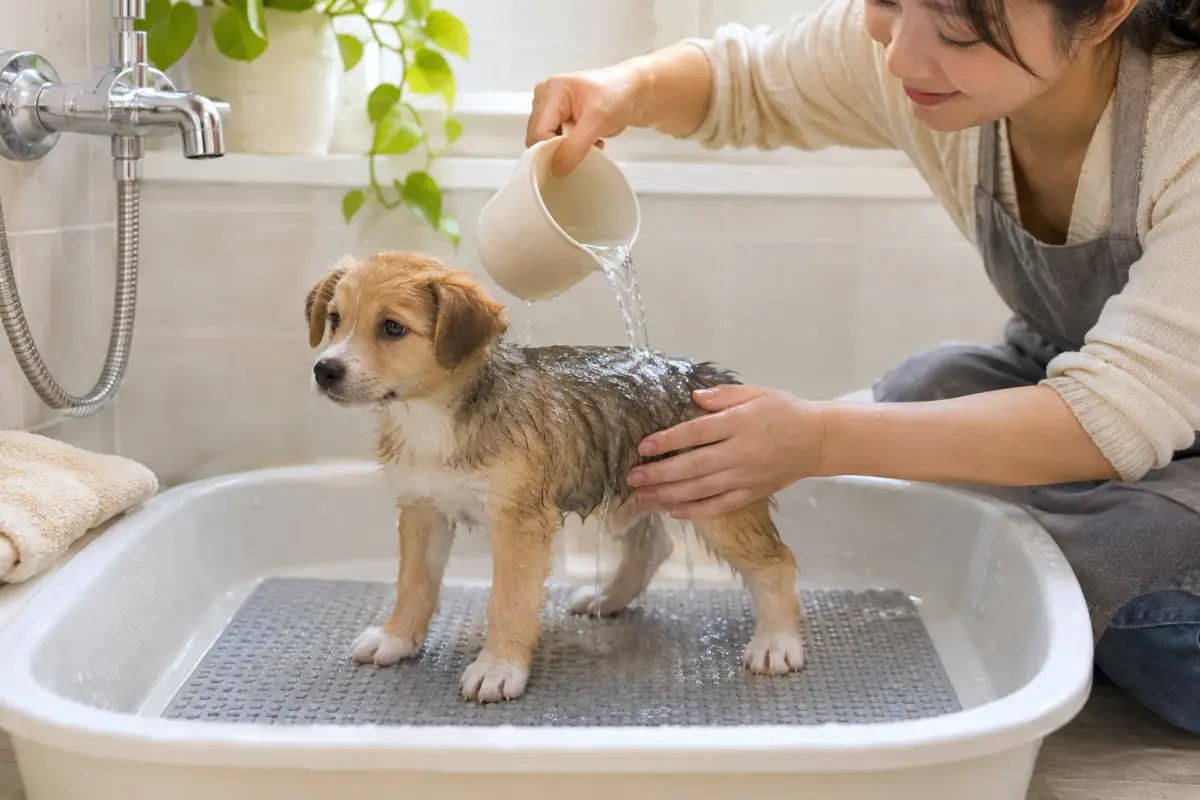
VCA suggests bathing in a laundry tub, bathtub or shower stall, and says a garden hose is acceptable only in warm weather with the water temperature checked. A nonslip bath mat helps a puppy feel steadier and more secure. Keep towels within reach, and have high-value treats ready, because VCA warns that praise and petting may not be enough to reward a nervous puppy.
Test the water with your hand or elbow before the puppy goes near it. VCA notes that puppies have thinner skin and can be more sensitive to temperature extremes, and the AKC recommends lukewarm water because dogs are sensitive to heat. Plan to keep water away from the ears from the start.
Step by step: the first wash
Step 1: Let your puppy into the empty tub and give a treat, as VCA suggests, before any water appears. Step 2: Slowly add lukewarm water, using what the AKC calls a very soft stream. Step 3: Apply a minimal amount of shampoo and use gentle hand motions in the direction the hair grows, without scrubbing.
Step 4: Go carefully around the face. The AKC notes that even tearless shampoos can irritate the eyes, and that a dog's ear canal is shaped like an L, so trapped water can lead to ear infections. Pinching the base of the ear shut while you clean the face helps. Step 5: Rinse thoroughly. The AKC advises that when you think you have rinsed enough, you should rinse some more, and the AKC's shampoo guidance says rinsing should take much longer than lathering.
Choosing what goes on the coat
The AKC recommends dog-specific, pH-balanced products. Its guidance on human shampoo explains why: human skin sits at a pH of about 5.5 to 5.6, while dog skin is more neutral at about 6.2 to 7.4, and the wrong product can disturb the skin's protective barrier. Ask your vet which shampoo suits your puppy's coat, since the AKC says short and long coats need different things.
Once your puppy is past three months, a gentle all-purpose dog and cat shampoo is the kind of product to look at, after checking the label and your vet's advice. Our puppy shampoo buying guide covers what to look for, and a dog conditioner can follow, rinsed out as fully as the shampoo.
Drying and checking your puppy over
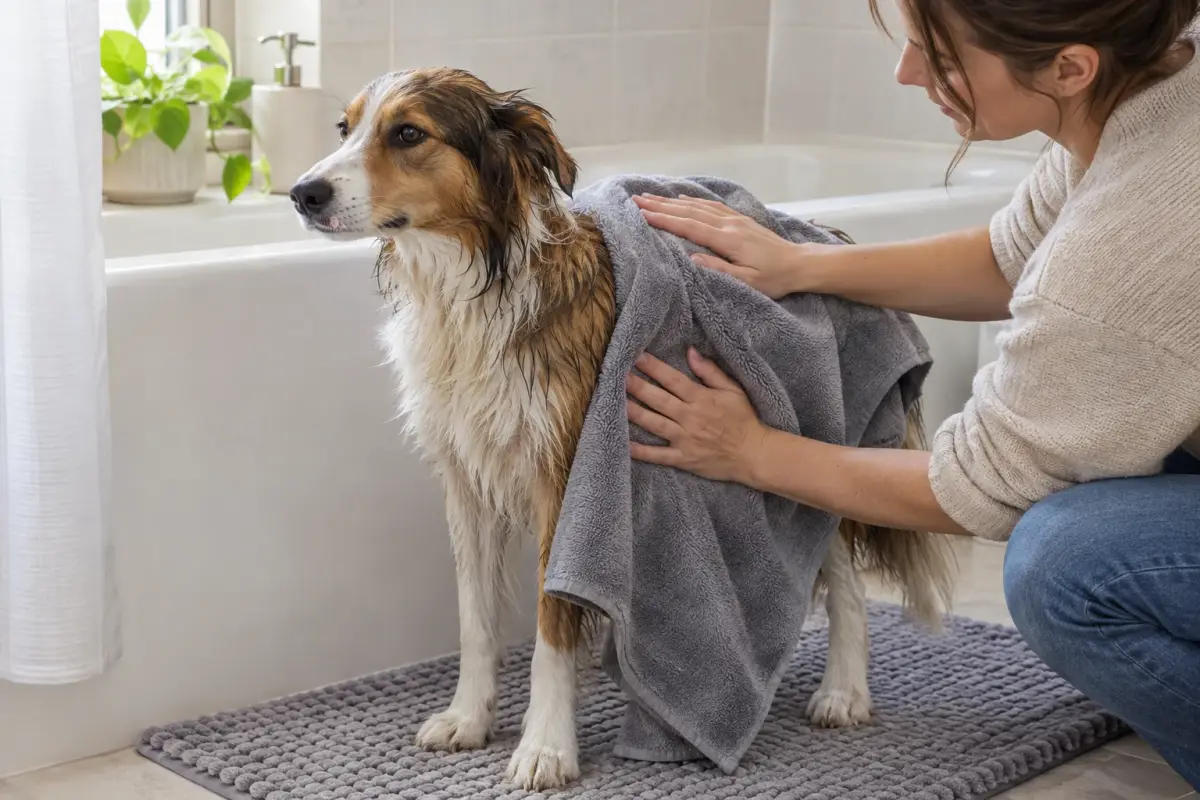
The AKC suggests a small handheld dryer on low, brushing in the direction of hair growth, and skipping blow-dry creams and styling aids. If your puppy is startled by the noise, stop and try again another day with treats rather than forcing it.
VCA points out that bath time is also a chance to check for fleas, ticks and new lumps or bumps. If you find anything you do not recognize, mention it to your vet at the next visit, or sooner if the area is red, swollen or sore.
When your puppy hates the bath
The AKC says early visits do not have to include a bath at all. Let the puppy get used to the room, offer treats and cuddle it so it feels safe, and treat a puppy under six months like a human infant that cannot protect itself. VCA suggests rewarding a fearful puppy for simply stepping into an empty tub, with treats on the edge or peanut butter smeared on the shower wall. If you use peanut butter, check that the label lists no xylitol, which is poisonous to dogs.
Never punish a puppy for fear of the tub, as VCA stresses positive reinforcement. Call your vet if your puppy has red, itchy or flaky skin after a bath, keeps shaking its head or scratching its ears, or stays frightened despite weeks of gentle practice.
This page is general information, not veterinary advice, and it cannot replace an examination by the vet who knows your pet.
Common questions
Can I bathe my puppy at 8 weeks old?
The AKC says bathing can start as young as two months, but only a warm washcloth is needed until three or four months. Shampoo can start at about three months. Ask your vet if your puppy is very small or unwell.
How often can I bathe my puppy?
VCA says healthy dogs should not be bathed more than once a month, and the AKC suggests a monthly bath. Wipe dirty paws or faces with a damp cloth between baths rather than bathing more often.
Can I use human shampoo on a puppy?
The AKC says human shampoo has a different pH from dog skin and can strip protective oils. It does not address puppies specifically, so use a dog-specific shampoo after three months and ask your vet which one.
What water temperature is right for a puppy bath?
Use lukewarm water and test it with your hand or elbow. VCA notes puppies have thinner skin and are more sensitive to temperature extremes, and the AKC says dogs are sensitive to heat.
How do I keep water out of my puppy's ears?
Pinch the base of the ear shut with your thumb and forefinger while you clean the face, and keep the stream low. The AKC explains that water trapped in the L-shaped ear canal can cause ear infections.
Sources we checked
This guide is general information, not veterinary advice. If your pet is unwell or injured, contact your veterinarian.