






Buying guides
Best Dog Running Harness: What Actually Matters
A good running harness fits snugly without restricting the shoulders, uses breathable padding, and clips where it will not pull the dog off balance. Reflective trim helps at dawn and dusk. Your dog also has to be physically ready: most should be fully grown first. Browse our dog running harnesses after you read how to judge fit and materials.
By Matt GarnettUpdated November 14, 20264 min read3 sources
Check your dog is ready to run first
The American Kennel Club says puppies generally should not run because their bones are still developing, and for most breeds it suggests waiting until about 1.5 years of age. VCA Animal Hospitals gives a wider window, noting that dogs reach skeletal maturity somewhere between 7 and 20 months, with small breeds maturing earlier than giant breeds.
Both sources also recommend a veterinary exam before you start, since a vet can outline a safe routine and spot problems such as arthritis. Some dogs, such as older dogs with arthritis, may not be suited to distance running at all. A harness only solves the gear question; it does not tell you whether the dog should be running.
Fit: the criterion that matters most
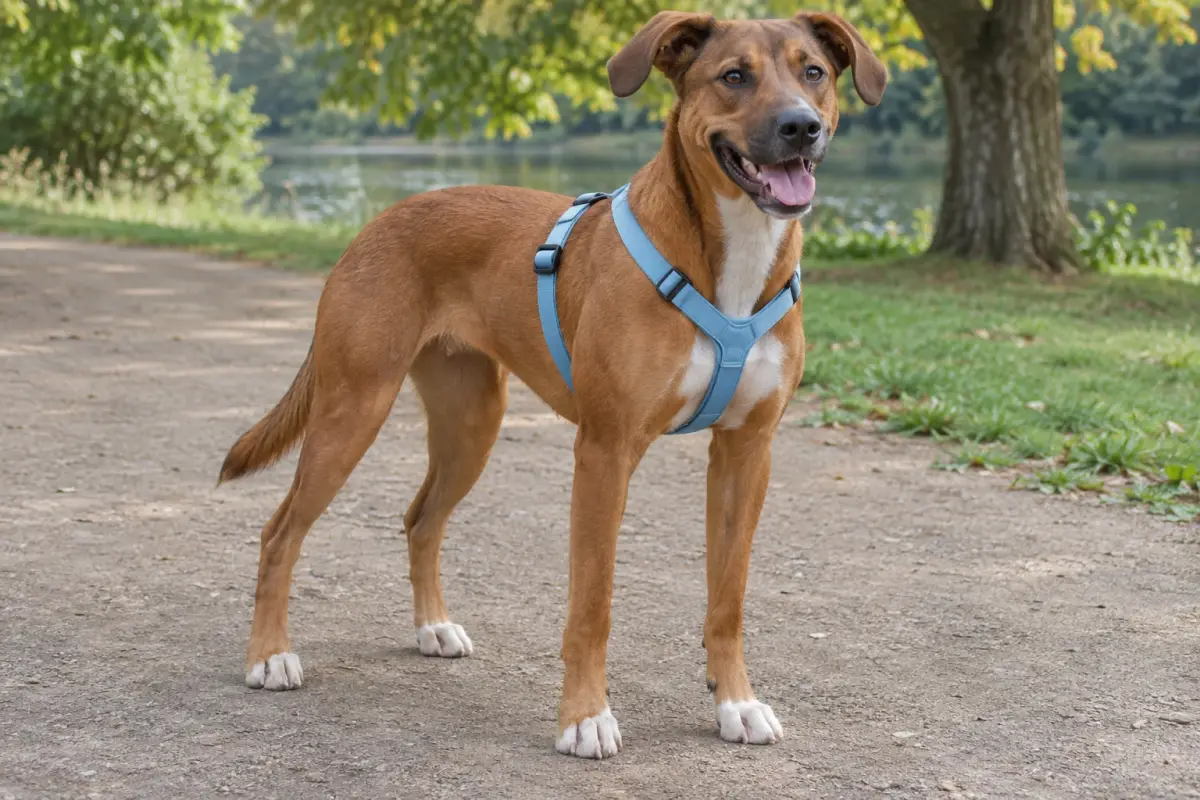
AKC advises measuring two points: the base of the neck where it meets the shoulders, and the widest part of the chest behind the front legs. Start loose and tighten gradually. A common test is to fit two fingers underneath the straps; the AKC's expert suggests two fingers is already on the snug side, so the harness should be secure but never uncomfortable.
Test the fit by walking and trotting the dog to see whether its stride looks natural. Pull the harness gently from several directions, back the dog up to confirm it cannot slide over its head, and look for rubbing at the armpits. Thick coats may need a tighter adjustment to stop slipping. Recheck fit after grooming or any weight change, and inspect buckles and stitching regularly. Our guide to putting on a dog harness walks through the steps.
Materials: breathable beats heavy
AKC notes that nylon is durable and affordable but less breathable, mesh is light and breathable but offers less padding so chafing is more likely, and neoprene can trap heat and moisture. For running, where your dog generates heat quickly, light padding and ventilation are worth prioritizing over heavy construction.
A breathable design such as this reflective and breathable pet harness suits warm weather, while a padded reflective no-pull harness adds cushioning where straps cross the chest. Look for smooth seams, wide straps and padding at the chest and under the front legs, where rubbing usually starts.
Clip position and style: front, back or dual
AKC describes back-clip harnesses as quick to attach and well suited to well-trained dogs, front-clip designs as helpful for discouraging pulling, and dual-clip harnesses as a way to use both. For running, a back clip keeps the leash out of your dog's legs, while a front clip gives more steering control for a dog that surges ahead.
Step-in harnesses suit dogs that dislike things over the head, but check they close securely. Whichever you choose, avoid anything that rides up into the armpits or restricts the shoulders when the dog extends its stride. If pulling is the main issue, see our no-pull harnesses and our overall dog harness guide.
Visibility, leashes and heat
Reflective trim makes a real difference when you run early or late, so check for reflective piping or panels, such as on this reflective nylon dog harness. Browse more reflective and waterproof harnesses if you run in poor light or wet weather.
VCA suggests a 4 to 6 foot leash for runs, and AKC mentions hands-free leashes as an option; a hands-free dog leash frees your arms but ties your body to the dog, so it suits a steady, well-trained dog and not an unpredictable one. Dogs overheat easily because they do not sweat the way people do, so run in the morning or evening, and use VCA's test: if the pavement is too hot for your bare hand for 10 seconds, it is too hot for paws.
Building up and when to stop
AKC recommends building up gradually: add short running stretches to your walks, then lengthen the running portion and shorten the walking over several weeks. Warm up first and finish with a few minutes of walking. Carry water and offer small sips, and skip sports drinks.
Stop and seek veterinary care if your dog becomes weak, vomits, has diarrhea, or pants excessively and cannot settle, since these can signal heat stroke or overexertion. Check paws after each run for cuts or bruises. Talk to your vet about how much running suits your dog's age, breed and fitness.
This page is general information, not veterinary advice, and it cannot replace an examination by the vet who knows your pet.
Common questions
How old should a dog be before running with a harness?
Most dogs should wait until they are fully grown. The American Kennel Club suggests about 1.5 years for most breeds, while VCA says skeletal maturity falls between 7 and 20 months, depending on size. Ask your vet first.
Is a harness better than a collar for running?
A harness spreads pressure across the chest instead of the neck, which many owners prefer for a dog that pulls or lunges. Choose one that does not restrict the shoulders as the dog's stride extends.
How tight should a dog running harness be?
Snug but comfortable. AKC says you should be able to fit about two fingers under the straps, and the dog should move naturally. Check that it cannot slide over the head and look for rubbing.
What leash length is good for running with a dog?
VCA suggests a 4 to 6 foot leash for running. Some runners use a hands-free leash, which suits a steady dog but ties you to the dog, so use it with care.
Sources we checked
This guide is general information, not veterinary advice. If your pet is unwell or injured, contact your veterinarian.


