






Buying guides
Best Dog Jogging Stroller: What Actually Matters
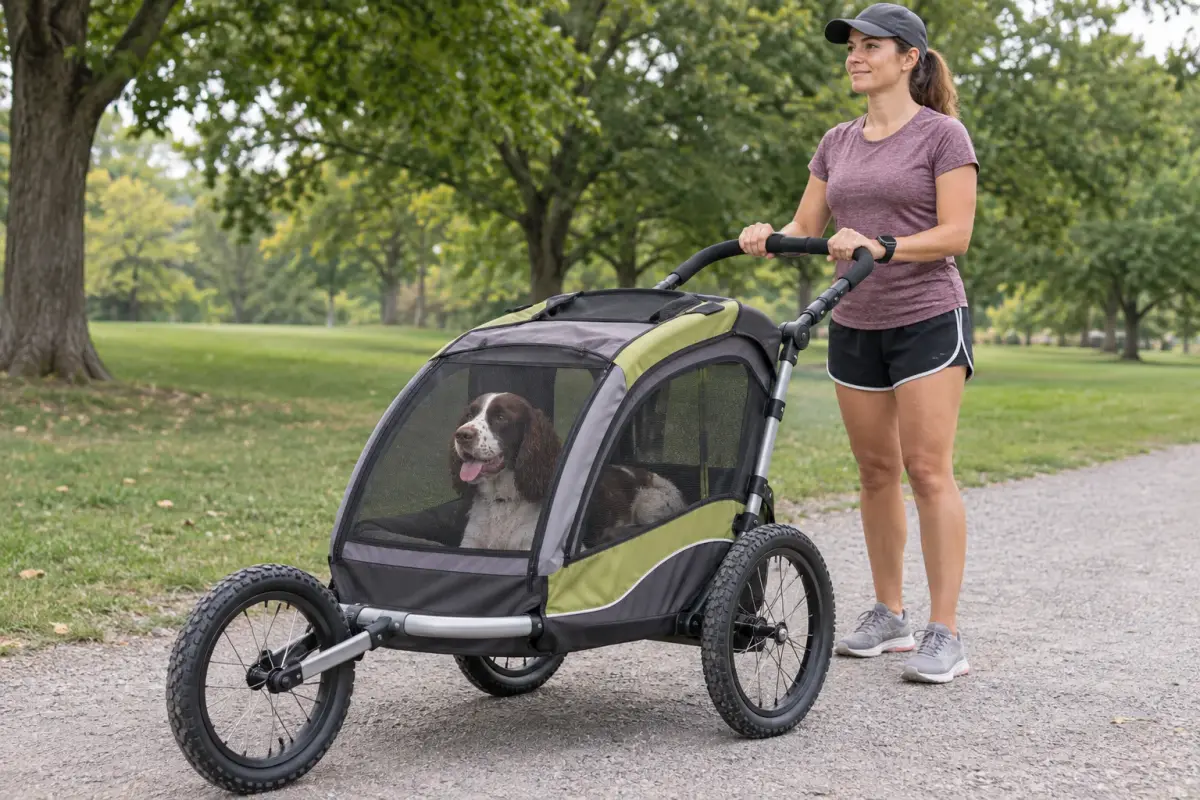
A dog jogging stroller is worth buying only if your dog is the one who needs the ride, and the best match has large wheels, working brakes, good airflow and a rated capacity above your dog's weight. It is a tool for senior or recovering dogs, not for running with a healthy one. Browse our jogging dog strollers, then read how to judge each feature.
By Matt GarnettUpdated November 14, 20264 min read2 sources
Who a jogging stroller is actually for
The American Kennel Club says strollers can benefit senior dogs, dogs recovering from injuries, pets with arthritis or other mobility limits, and small dogs that tire on longer outings. Calm, friendly dogs tend to adapt best. A stroller does not make a fit dog healthier; it lets a dog that cannot manage the distance still join the outing.
A jogging stroller is built for pushing at a faster pace over rougher ground than a standard pram. AKC's stroller guide does not discuss jogging models in particular, so everything below about wheels and suspension is a general design principle rather than a tested claim. If your dog is a healthy runner, a harness and a running harness guide will be more useful than a stroller.
Wheels, suspension and handling
Wheel size and tread decide how the stroller behaves on paths. Larger air-filled or foam wheels roll more smoothly over cracks, roots and gravel, while small hard wheels rattle and can jolt a nervous dog or one with sore joints. A swivel front wheel helps in tight spaces, and a lockable front wheel keeps a three-wheel design steady at speed.
Suspension softens the ride, which matters most for dogs with arthritis or after surgery. A heavy-duty model with all-terrain suspension, such as this gray heavy duty dog stroller rated up to 66 pounds, is designed for park and backyard paths. A compact 3-wheel pet stroller with a quick-fold frame suits a medium dog and smaller storage space. Compare more in our dog strollers range.
Brakes, tether and safety
AKC's checklist for any dog stroller starts with reliable brakes and sturdy construction. Test the brake on a slope before you rely on it, and pick a design with a wrist strap if you plan to push at speed. Check that the frame locks open and cannot fold unexpectedly.
AKC also advises choosing a stroller with an interior D-ring or O-ring so you can clip a harness or leash inside the compartment, which helps prevent a dog from jumping out while you move. Attach to a harness, not a collar, so a sudden lunge does not put force on the neck. Never leave a dog alone in a stroller, even for a moment, and close zippers fully when you stop.
Size, comfort and weight capacity
AKC says to choose a stroller with enough room for your dog to sit, lie down and turn around. It cites about 30 pounds as the size often considered ideal and notes that larger dogs may need a specialty model or may not fit at all. Product listings give different weight ratings, so check the manufacturer's capacity against your dog's weight with a margin, and measure your dog's length and height.
Look for a padded, washable floor and a comfortable bed liner, particularly for an arthritic dog. If you have a bigger dog, browse strollers for large dogs, and our overall dog stroller guide compares types beyond jogging models.
Ventilation, shade and heat
AKC notes that breathable mesh panels improve airflow and prevent overheating, and that an adjustable canopy gives shade in warm weather. Enclosed strollers can trap heat, so favor mesh on several sides and a canopy that does not seal the dog in.
Heatstroke is a real risk. AKC says it occurs when a dog's internal temperature rises above 105.8 degrees F, with early signs including heavy panting, rapid breathing, excessive drooling and bright red gums. Puppies, senior dogs, overweight dogs and short-snouted breeds are at higher risk. If you suspect overheating, move the dog somewhere cool and call your vet right away.
Introducing your dog and checking with your vet
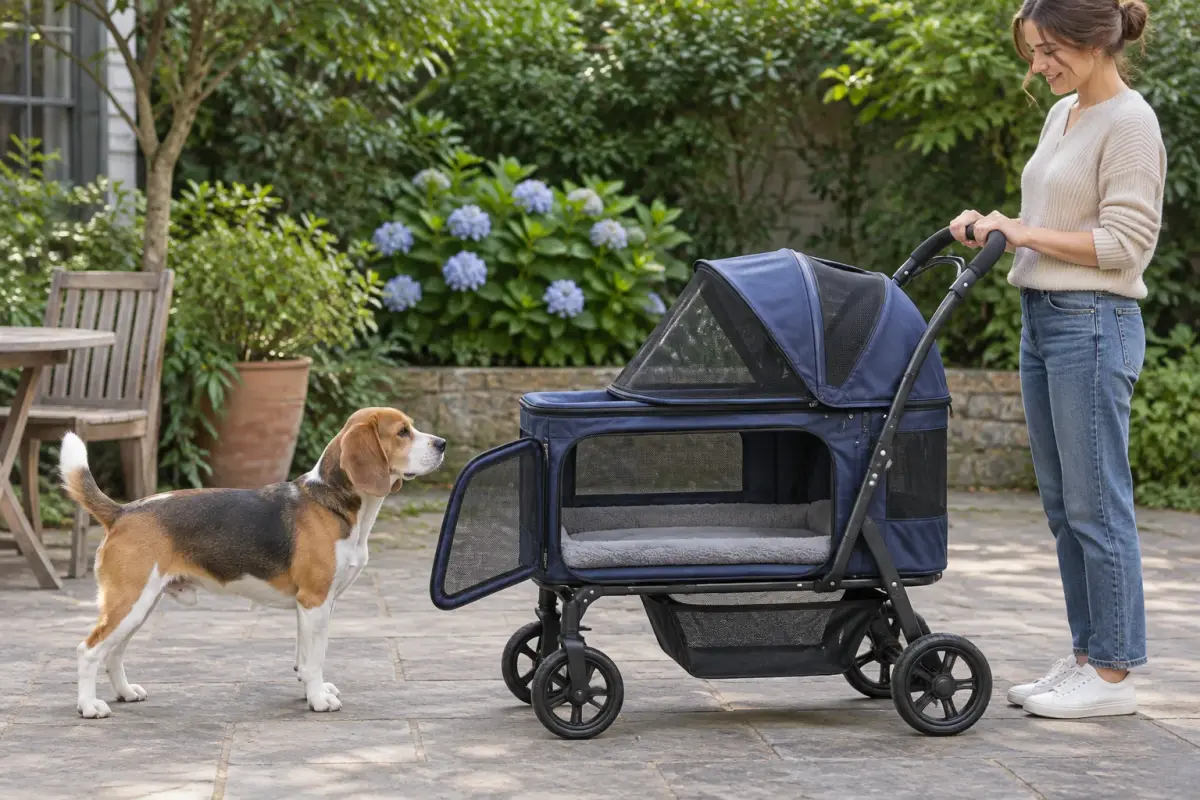
Let the dog sniff and sit in the stroller while it is stationary, with treats, before moving. Short, slow trips first help a cautious dog adjust. Not every dog will accept a stroller, and a calm, social dog usually does best.
If your dog has a mobility problem, ask your veterinarian whether a stroller, a support harness or other aids are right, and how long outings should be.
This page is general information, not veterinary advice, and it cannot replace an examination by the vet who knows your pet.
Common questions
Can I run with a dog in a jogging stroller?
Jogging strollers are built for brisk pushing, but the dog is the passenger. Choose one with working brakes, a harness tether inside and good ventilation, and keep speeds modest so the ride stays comfortable.
What size dog fits in a jogging stroller?
The AKC says dogs under about 30 pounds often fit best, and larger dogs may need a specialty model. Always check the manufacturer's weight rating and your dog's measurements.
Do dogs overheat in strollers?
They can. Enclosed strollers trap heat, so choose mesh panels and a canopy, avoid hot weather, and watch for heavy panting, drooling or bright red gums. Call your vet if you suspect overheating.
Is a stroller good for a senior dog?
Often, yes. The AKC says senior dogs and dogs with arthritis or recovering from injury can benefit. Check with your vet about what suits your dog's condition.
Sources we checked
This guide is general information, not veterinary advice. If your pet is unwell or injured, contact your veterinarian.


