






Buying guides
Best Dog Stroller: How to Choose by Size and Terrain
Choose a dog stroller by three numbers: your dog's weight against the stated limit, its length and height against the cabin, and the wheels against where you walk. Small three- and four-wheel strollers suit city sidewalks, air-filled jogging wheels suit trails and running, and large-dog strollers need a low, rear-entry ramp. A built-in safety tether and good ventilation matter for every dog.
By Matt GarnettUpdated November 14, 20264 min read3 sources
Who needs a dog stroller
Strollers are useful for senior dogs that tire before the walk is over, dogs recovering from surgery or injury, dogs with joint problems, small dogs on long city outings, and households with a mix of fit and less mobile dogs. The AKC makes a similar case for bike trailers: they help older dogs that cannot keep pace and protect paws when it is too hot to walk on concrete.
A stroller is not a replacement for exercise for a healthy dog. Most dogs still benefit from walking part of the way and riding when tired. Browse our dog strollers to compare styles.
What matters most: weight, cabin and wheels
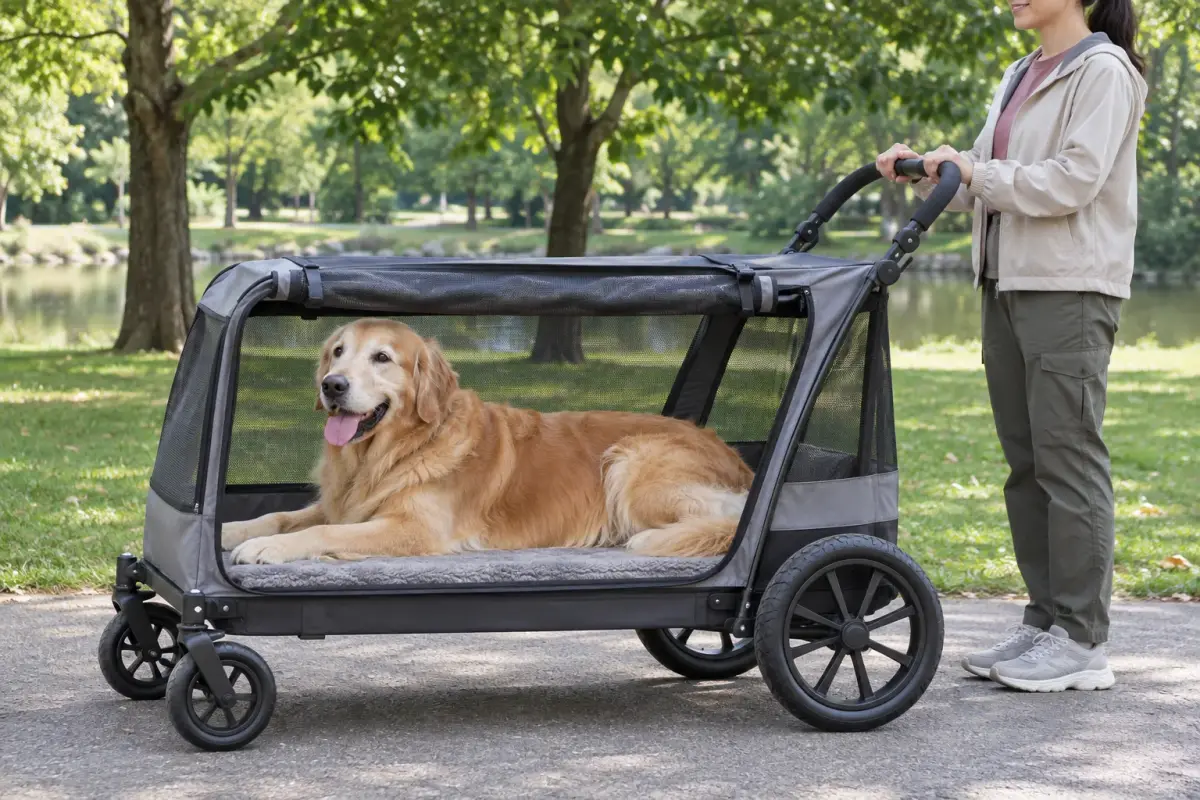
Weight limit first: choose a stroller rated comfortably above your dog's weight, especially for two dogs. Then the cabin: measure your dog from nose to tail base and from the floor to the top of the head sitting, and compare with the inside dimensions. The dog should be able to sit, turn and lie down.
Wheels decide where it works. Small plastic wheels suit smooth sidewalks and malls. Larger rubber or air-filled wheels with suspension handle grass, gravel and cracked pavement. A front wheel that locks straight is essential for jogging.
The main types compared
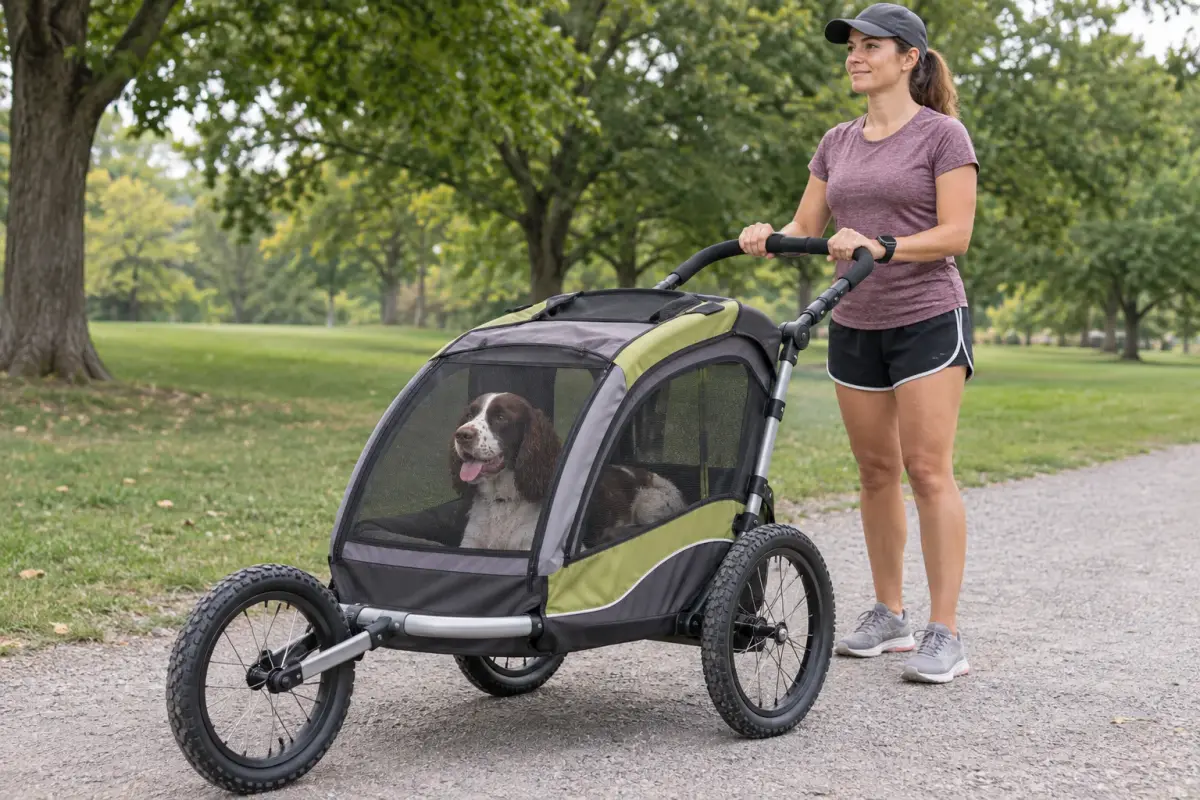
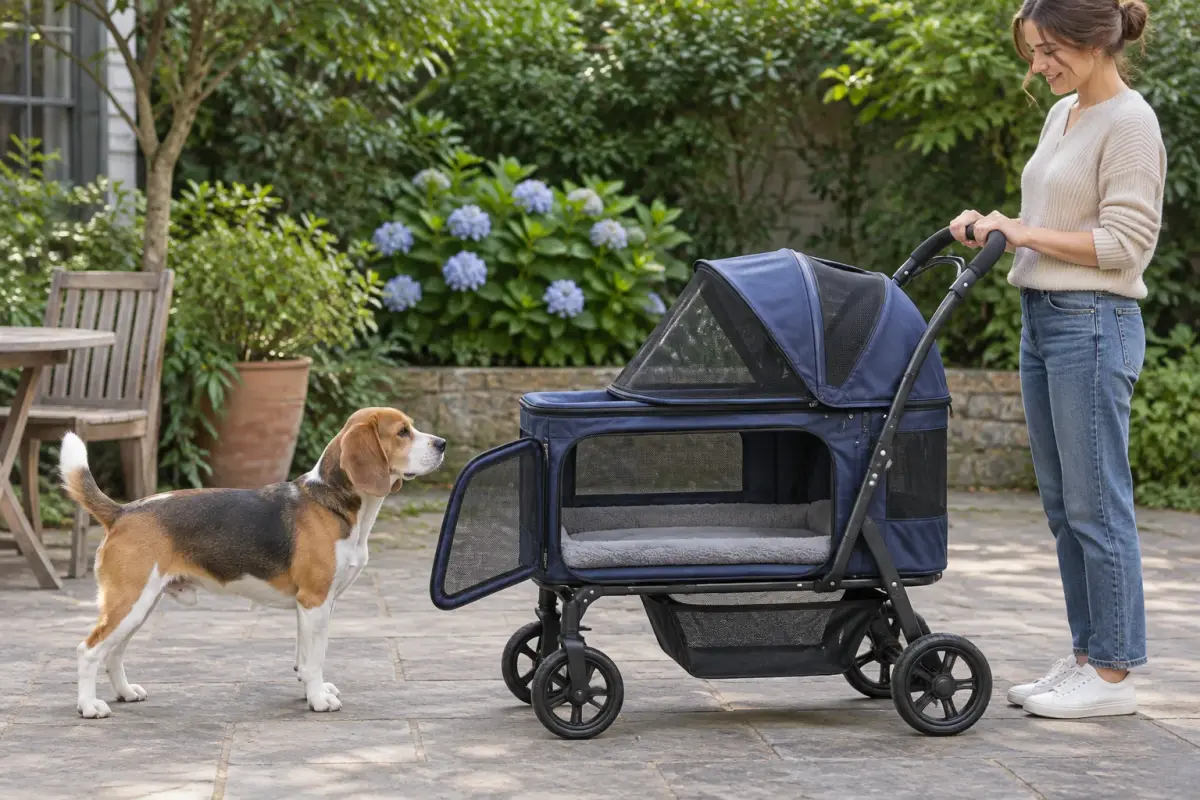
Compact four-wheel strollers fold small and suit small dogs and city use. A foldable four-wheel travel stroller with a reversible handle is one example. Three-wheel strollers turn easily and handle rougher ground. Jogging strollers have large air-filled tires, a hand brake and a fixed front wheel for running. Large-dog strollers have a low floor and rear ramp for dogs too heavy to lift.
Convertible strollers have a detachable carrier or car seat, handy for travel; a foldable stroller with a detachable carrier shows the idea. Double strollers have a divided or extra-wide cabin for two small dogs. Some bike trailers convert into strollers, which suits owners who cycle and walk.
Best type for each situation
For a small senior dog in the city, a light four-wheel stroller with a mesh canopy. For a medium dog or two small dogs, a wide-cabin stroller with a weight limit of 45 to 60 lb; see strollers for medium dogs. For a large dog, a heavy-duty stroller with a ramp and a low floor, as lifting a 70 lb dog in and out is hard on both of you; see strollers for large dogs.
For running, a jogging stroller with a hand brake and wrist strap, and only on routes where you can keep control. For hot climates, choose large mesh panels and shade; the AKC warns dogs handle heat less well than people, and a closed cabin in the sun heats up fast.
What to avoid
Avoid strollers without an internal leash tether, as a startled dog can jump out into traffic. Avoid cabins so small the dog cannot turn, and floors without a firm, padded base. Avoid wheels that are too small for your routes.
Avoid leaving a dog in a stroller in direct sun or in a parked car. Watch for heavy panting, drooling or bright red gums, which the AKC lists as early heatstroke signs, and cool the dog and call a vet if they appear.
Care and lifespan
Wash the removable pad and wipe the cabin regularly. Check tire pressure on air-filled wheels, lubricate folding joints, and test brakes before each outing.
A sturdy stroller lasts years. Replace mesh that tears, as dogs push through gaps, and tethers that fray. Browse dog strollers if it is time for a new one. If your dog needs a stroller because it has started struggling on walks, mention it to your vet, who may be able to help with pain or mobility.
This page is general information, not veterinary advice, and it cannot replace an examination by the vet who knows your pet.
Stroller wheel,cabin and conversion layouts
| Format | Physical arrangement | What to verify |
|---|---|---|
| Compact four-wheel | Small folding frame with four wheels | Folded size and cabin space |
| Three-wheel | Three-wheel frame | Wheel arrangement and intended terrain |
| Jogging-style | Larger tires and running-oriented controls | Exact brake,wheel and use instructions |
| Low-floor large-dog | Lower cabin with an access ramp | Entry dimensions and load rating |
| Convertible | Carrier separates from the frame | Each mode’s locks and permitted use |
| Double | Divided or wider cabin | Usable space for each animal |
| Trailer conversion | Frame changes between towing and pushing | The approved conversion and connections |
Common questions
What is the best dog stroller for medium dogs?
A stroller with a weight limit well above your dog's weight, a cabin long enough for it to lie down, larger wheels and a low entry. Measure your dog sitting and lying before you buy.
What stroller works for two small dogs?
A double or wide-cabin stroller with a combined weight limit above both dogs, two tethers and enough room for each to lie down. Some have a divider, which helps dogs that squabble.
Can I jog with a dog stroller?
Only with a true jogging stroller: large air-filled tires, a front wheel that locks straight, a hand brake and a wrist strap. Ordinary strollers become unstable at running speed.
Are dog strollers good for senior dogs?
Yes, they let older dogs join walks they cannot finish. Let your dog walk part of the way if it can, and talk to your vet if it is tiring much sooner than before.
Sources we checked
This guide is general information, not veterinary advice. If your pet is unwell or injured, contact your veterinarian.


