






Buying guides
Best Dog Stroller for Large Dogs: What to Check Before You Buy
The best dog stroller for a large dog has a weight limit well above your dog's weight, a cabin big enough to sit, lie down and turn around in, and sturdy wheels with reliable brakes. Strollers suit large dogs that are older, recovering or unable to walk far, not healthy dogs that simply want a ride. Browse our strollers for large dogs with those three checks in mind.
By Matt GarnettUpdated November 14, 20265 min read2 sources
Who a large-dog stroller is really for
Be realistic about this product. The American Kennel Club notes that dogs under 30 pounds are often the ideal size for a stroller, and that strollers work best for calm, friendly dogs. For large breeds the case is narrower: a senior dog with arthritis, a dog recovering from an injury or surgery, or a big dog that tires quickly on outings.
The AKC is also clear that a stroller is meant to supplement exercise, not replace it, and its veterinary adviser stresses that some form of movement keeps muscles and joints in good tone. If your dog is struggling to walk, talk to your vet before buying. VCA Animal Hospitals describes short, frequent walks as part of managing arthritis, so a stroller works best as a way to extend outings on the way there and back, not to skip them.
What matters most: weight limit, cabin size and wheels
Start with the weight limit and treat it as a ceiling, not a target. Pick a stroller rated comfortably above your dog's weight, because a dog that shifts, stands or climbs in puts more load on the frame than a dog lying still. Check the rating on the listing, and also check how heavy the stroller itself is, since you will be lifting it into a car.
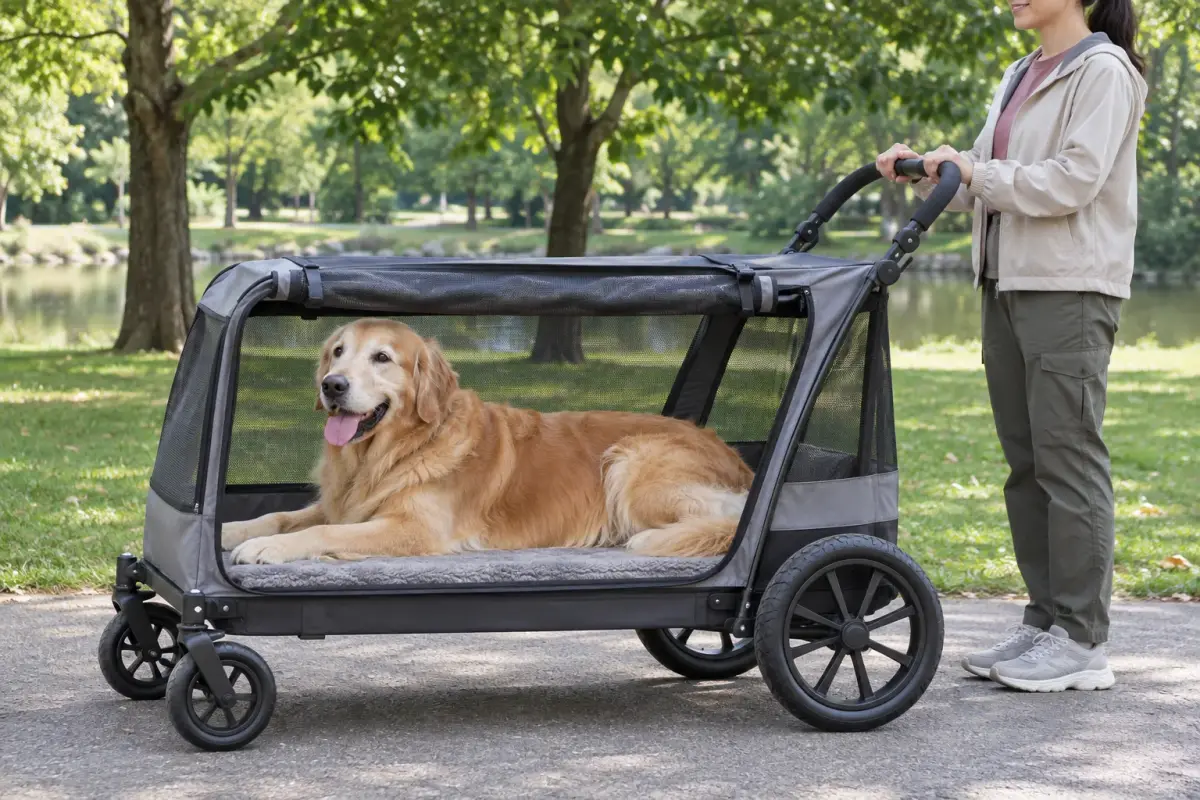
Cabin size is next. The AKC's veterinary adviser compares many strollers to crates on wheels and says the dog should be able to sit, lie down and turn around comfortably. For a large dog, that means measuring your dog lying down and standing, and comparing both to the inside dimensions of the cabin, not the outer frame.
Wheels and brakes decide how the stroller behaves with a heavy load. The AKC suggests thick, air-filled tires for sidewalks and sealed bearings with thick tread for grass, trails and uneven ground, and lists reliable brakes among the features to check. Add mesh panels for airflow, an adjustable canopy for shade, and an inner D-ring for a leash or harness so the dog cannot jump out.
Large-dog stroller types compared
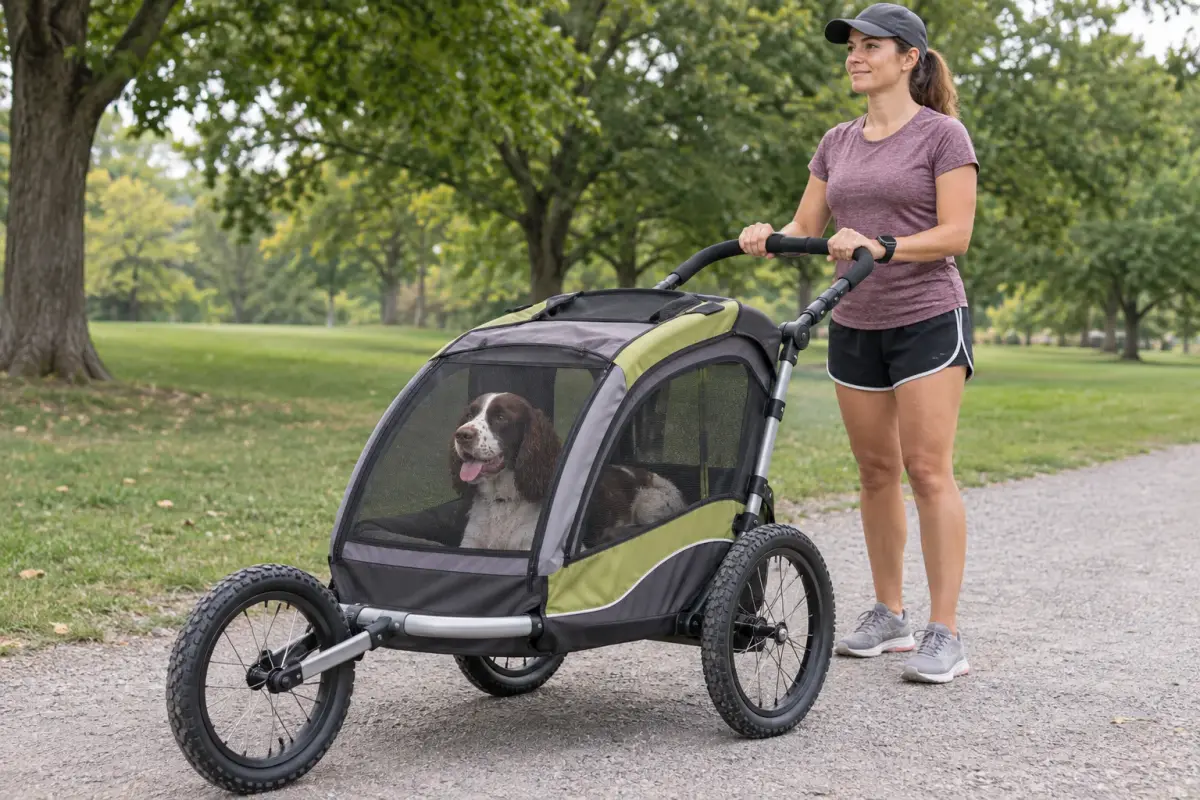
A foldable pushchair-style stroller, such as a one-click foldable stroller for medium and large dogs, is the easiest to store and lift into a trunk. Folding designs suit owners who need to carry the stroller more than they push it, and they work best for dogs at the lighter end of the large range.
A heavy-duty four-wheel stroller, for example a pet stroller with four wheels and a high weight capacity or a heavy-duty all-terrain stroller with suspension, offers a sturdier frame and bigger cabin. These are better for heavier dogs and rougher ground, but they are bulkier and heavier to carry.
A stroller and bike trailer combination serves a different purpose, since it can be used for walking or pulled behind a bicycle. Follow the maker's instructions on how it should be used, and ask your vet whether a dog with joint or heart problems should ride that way.
Best choice for each dog and owner
For a senior dog with sore joints, choose a low, wide entry or a front door that lets the dog walk in rather than be lifted, plus a padded floor. For a dog recovering from surgery, ask your vet how long the dog can ride and whether it needs to lie flat. Lifting a heavy dog in and out is where owners get hurt, so a low floor matters as much as the weight rating.
If your dog is between roughly 30 and 50 pounds, a model made for medium dogs might be enough, and our strollers for medium dogs are worth comparing. For a general overview of types and sizes, read our dog stroller buying guide. If you live in an apartment or walk on pavement, a smaller frame with air-filled wheels is easier to steer than an all-terrain model.
What to avoid
Avoid any stroller whose weight limit is only slightly above your dog's weight, a cabin you cannot see into, thin plastic wheels, or brakes that do not hold on a slope. Never leave a dog alone in a stroller, and never use one on a road with traffic unless it is designed for it.
Watch the weather. The AKC warns that direct sunlight raises the risk of dehydration and heatstroke, so use a canopy and mesh, and cut rides short on hot days. A stroller should enhance a dog's experience rather than create stress, so skip it if your dog is clearly miserable inside.
Introducing it, safety and when to see a vet
Introduce the stroller gradually. The AKC suggests treats and positive reinforcement: let the dog sniff it while parked, reward calm steps inside, then try a short roll at home before going outdoors. Keep the leash clipped to the inner ring, and stop if your dog trembles, pants hard or tries to leap out.
See your vet if your dog is suddenly unable to walk, is reluctant to move, or seems in pain after activity. A stroller helps with outings, but it cannot treat the cause. This page is general information, not veterinary advice, and it cannot replace an examination by the vet who knows your pet.
Large-stroller frames and conversion
| Format | Physical arrangement | Measure or verify |
|---|---|---|
| Folding pushchair | A cabin on a folding frame | Internal cabin,folded envelope and complete weight |
| Four-wheel frame | Cabin supported on four wheels | Door opening,wheels,brakes and capacity |
| Suspension model | A listed suspension mechanism in the chassis | Actual mechanism and maintenance |
| Trailer conversion | A frame with a stated bicycle mode | Included conversion parts,bike compatibility and separate instructions |
Common questions
Are strollers good for large dogs?
They can be for older, injured or recovering large dogs, but the AKC notes dogs under 30 pounds are the ideal size. A healthy large dog is better off walking, so check with your vet first.
How much weight can a large dog stroller hold?
It varies by model, so read the stated limit and choose one comfortably above your dog's weight. The frame also needs room for your dog to sit, lie down and turn around.
Can a stroller replace walks for a large dog?
No. The AKC says a stroller is best used to supplement appropriate exercise, and movement keeps muscles and joints in good tone. Use it to extend outings, not to replace them.
How do I get a big dog to ride in a stroller?
Go slowly with treats and praise. Let the dog explore the parked stroller, reward calm time inside, then try short rolls at home before venturing outdoors. Never force a nervous dog in.
Sources we checked
This guide is general information, not veterinary advice. If your pet is unwell or injured, contact your veterinarian.


