Buying guides
Best Dog Hiking Boots: What Matters on the Trail
The best dog hiking boots stay on, grip rock and loose ground, and protect the pad without trapping moisture. Look for a grooved sole, a secure strap and a shape that follows the natural paw, then measure your dog's paw rather than guessing. Boots also need a gradual introduction, so start at home. Browse our dog hiking boots when you have the measurements.
By Matt GarnettUpdated November 14, 20264 min read2 sources
When a dog needs boots on the trail
The American Kennel Club offers a simple rule of thumb: if you would not walk barefoot on a surface, your dog should not either. Boots help guard against cuts from sharp or slippery terrain, scalding or freezing ground, and exposure to deicers and road salt. The AKC notes that dogs can get frostbite when temperatures drop below 32°F.
Not every dog needs them on every hike. A long outing on rough ground can injure pads, and a dog that starts limping, licking a paw or stopping suddenly needs a look at the pad. If your dog has a paw problem, ask your vet before deciding whether boots are the answer.
Sole and traction: the feature that separates hiking from everyday boots
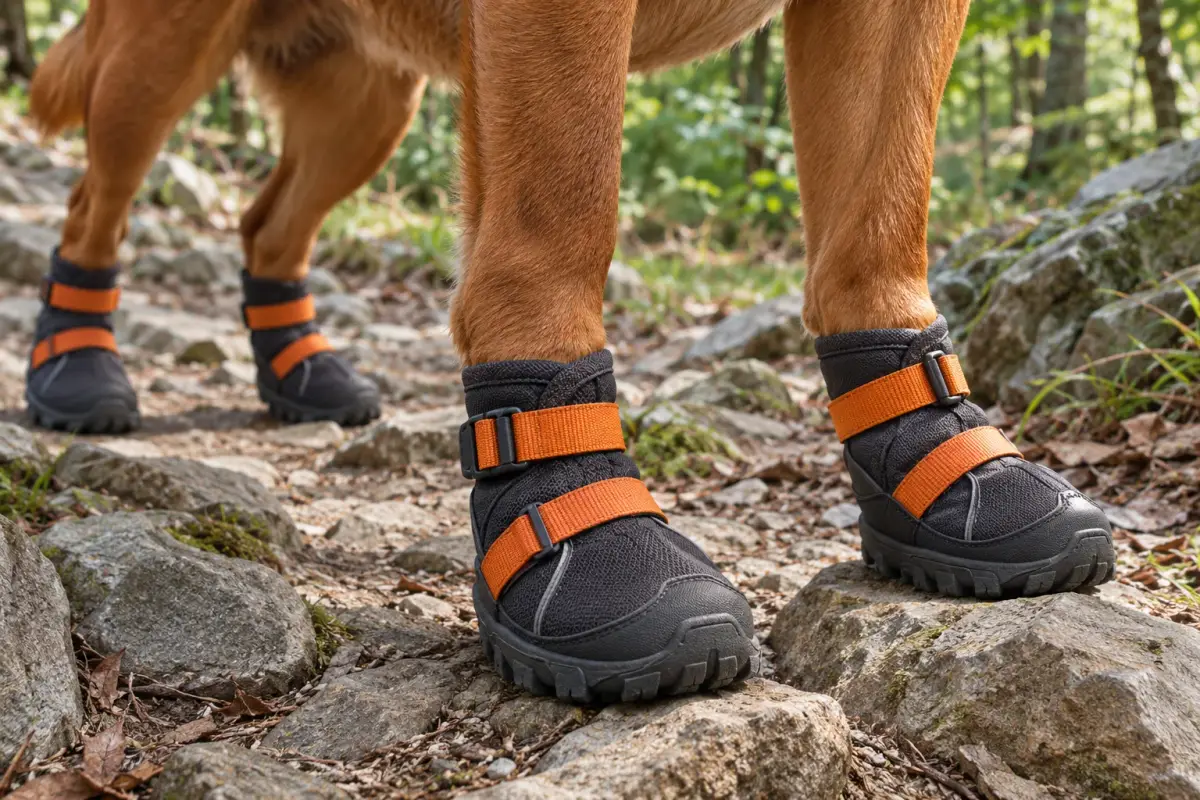
For hiking, the AKC recommends boots with grooved soles for traction on rocks and uneven ground, and puncture protection against sharp objects. It uses a five-mile mountain hike as an example of when traction matters. A smooth, thin sole built for a sidewalk will slip on wet rock and wear through quickly.
Rain boots and hiking boots are not interchangeable. The AKC points out that rain boots are built for different activities, so do not assume a waterproof boot will give grip on a trail. Check the sole pattern, check that it is firm enough to protect the pad, and check that it flexes with the paw. A set of anti-slip boots is one type to compare on sole pattern.
Fit and measuring: how to size a boot that stays on
A boot that slips off is useless and can annoy a dog. The AKC says boots should stay put, with the sole gripping well and the shape following the natural paw. Hook-and-loop straps make a snug fit easier to adjust, and if a boot will not stay secure, try another size rather than tightening it hard.
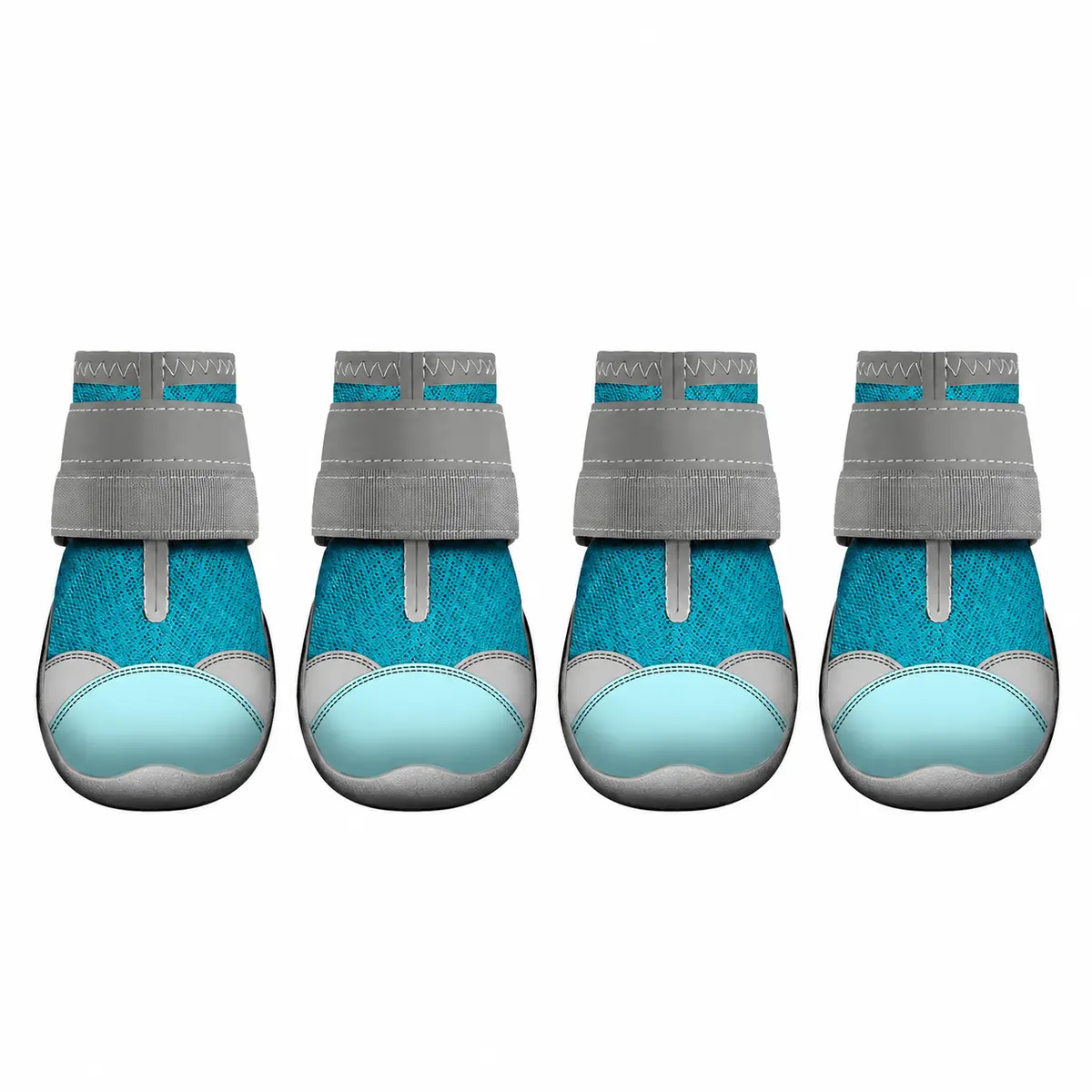
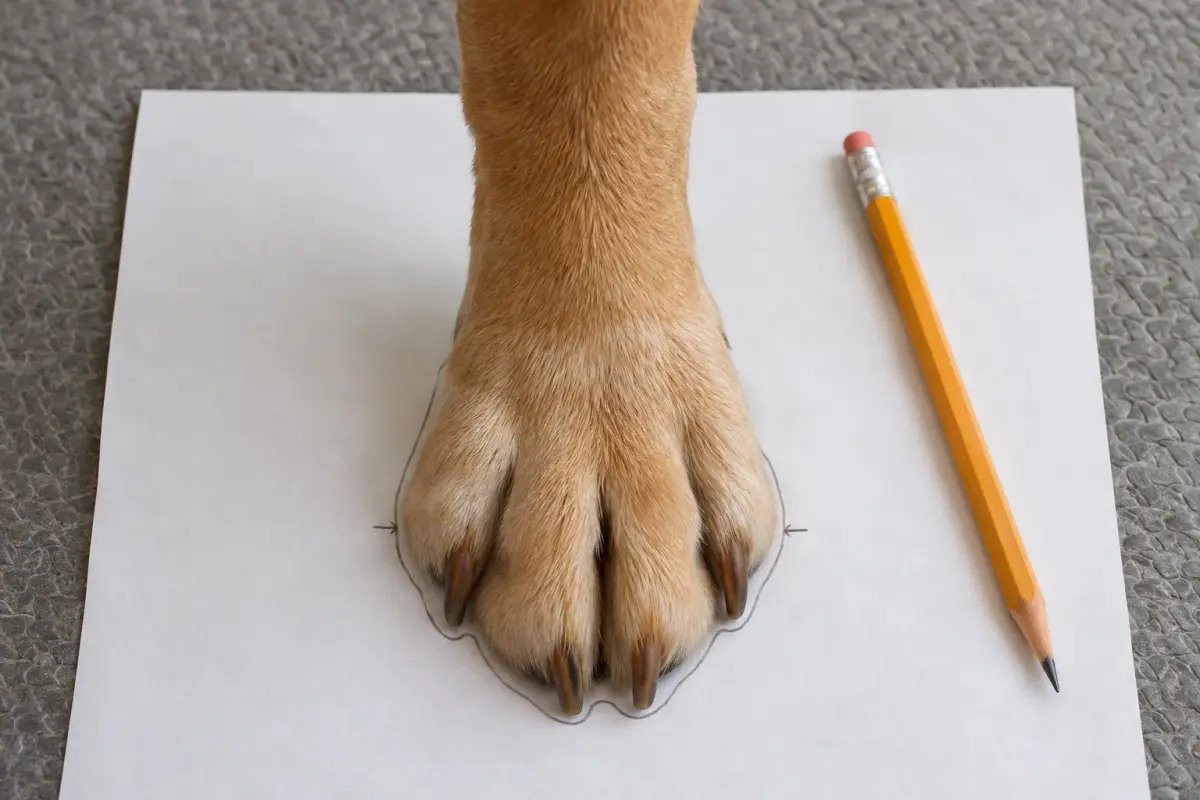
To measure, press your dog's paw onto paper so it spreads the way it does when walking, trace the outline, draw a line across the widest part and measure that line. Use the result with the maker's size chart, which matters most when ordering online. A lightweight mesh boot with twin hook-and-loop straps is one design where the strap adjustment is the main fit feature.
Breathability, moisture and what to avoid
Breathable fabric matters on a long walk. The AKC warns against boots that trap water, because moisture between the toe pads can lead to yeast infections. Dry the boots and the paws after every wet walk, and choose a ventilated design for long outings.
Avoid boots that do not fit securely, boots with little traction, and any boot you introduce in a hurry. Also steer clear of buying a pair for style alone, since novelty designs rarely suit rough terrain. A breathable mesh boot with a zip is the sort of ventilated design to compare, and our boots that stay on collection focuses on fit.
Getting your dog used to wearing boots
Many dogs dislike boots at first, so do not save the introduction for the trailhead. The AKC and its clothing guide suggest letting the dog sniff the boots, pairing them with praise and treats, starting with one boot, then adding the others. Build up wearing time indoors before you try a walk.
Watch for stress. If your dog seems stressed or frustrated, take the boots off right away and try again later. Never force a dog to wear them before it is comfortable. Some dogs need only a few short sessions, others take longer, and patience at this stage prevents a dog that refuses to move on the trail.
Paw checks and trail care
Check paws during and after each hike for cuts, cracks and debris, and take water breaks in warm weather. The AKC suggests carrying a dog first aid kit on longer hikes. Keep nails trimmed, and apply paw balm if pads are cracked or dry; ask your vet which product is suitable.
Bleeding, limping that lasts, swelling or a pad that looks torn should be seen by a vet. Boots protect pads but do not replace checking them. See our dog hiking boots when you are ready to compare.
This page is general information, not veterinary advice, and it cannot replace an examination by the vet who knows your pet.
Common questions
Do dogs need hiking boots?
Not always. Boots help on sharp, rough, scalding or icy ground, and when deicers or road salt are present. Ask your vet if your dog has a paw problem or you are unsure.
How should dog hiking boots fit?
They should stay on without slipping, have a sole that grips, and follow the natural shape of the paw. Hook-and-loop straps help adjust the fit. If a boot will not stay secure, try a different size.
How do I measure my dog's paw for boots?
Press the paw onto paper while it is spread as in walking, trace it, draw a line across the widest part and measure that line. Then compare it with the maker's size chart.
How do I get my dog to wear boots?
Let your dog sniff them, reward with treats, start with one boot and add the others. Build up time indoors before a walk, and remove the boots if your dog seems stressed.
Can dog boots cause problems?
Boots that trap water can cause moisture between the toe pads, which the AKC links to yeast infections, and boots that fit poorly can slip or rub. Dry paws and boots after wet walks.
Sources we checked
This guide is general information, not veterinary advice. If your pet is unwell or injured, contact your veterinarian.