






Buying guides
Best Dog Harness With Handle: What to Check Before You Buy
The best dog harness with a handle is one that fits snugly, has a grab handle stitched into the same webbing as the body straps, is padded where it presses, and adjusts at the neck and chest. A handle gives you control in busy places and help with steps or cars, but it is not a license to lift a dog by it. Browse our dog harnesses with handle.
By Matt GarnettUpdated November 14, 20265 min read2 sources
What matters most: a handle that is part of the harness
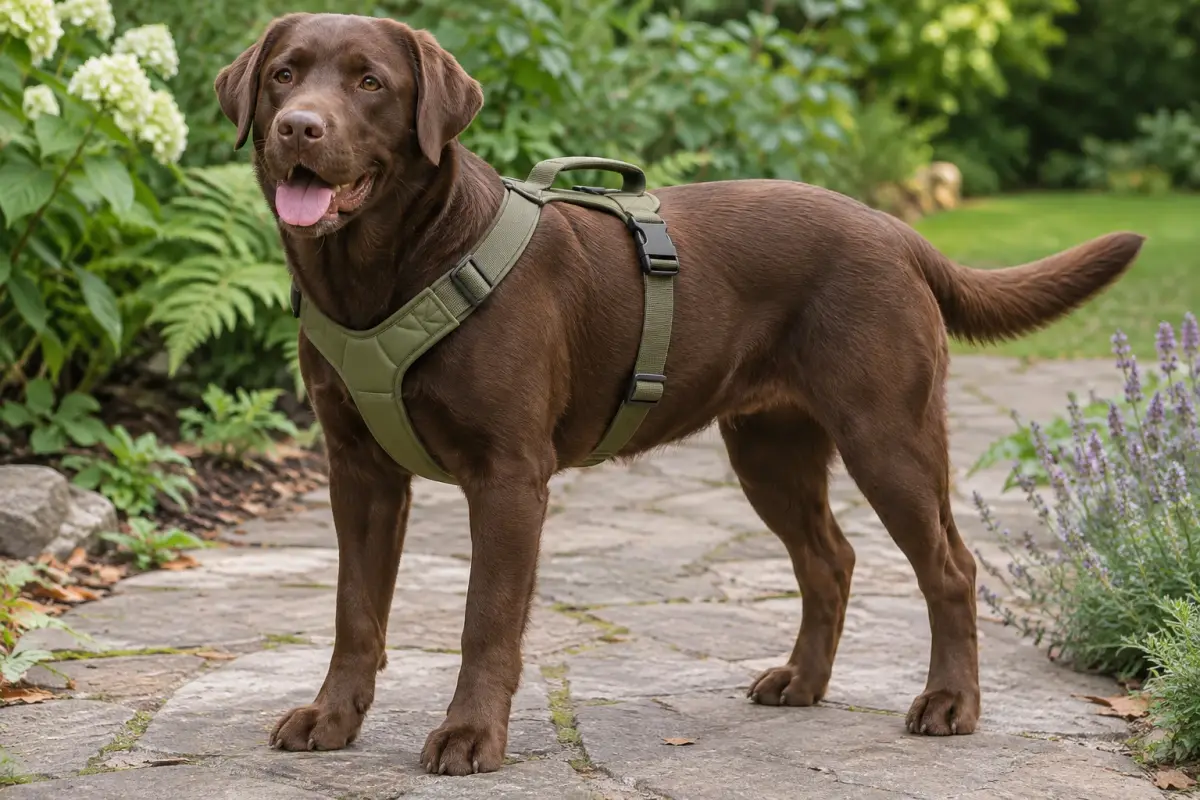
A handle is only as good as what holds it on. Look for one stitched through the same webbing as the body straps, with reinforced stitching where it joins, and a position over the shoulders and back so the harness lifts evenly. A handle sewn only to a thin fabric panel can tear when a dog lunges. The handle should also be wide enough for your whole hand and comfortable to hold for a few seconds at a time.
Fit comes first, though, because a handle does nothing on a harness that slips. The American Kennel Club says to measure the base of the neck where it meets the shoulders and the widest part of the chest, usually behind the front legs, with a cloth tape. Use the maker's chart, not the dog's weight. Our dog harnesses with handle list those measurements for every style.
Types of handle harness compared
A vest-style harness spreads the load across the chest and back, which suits larger dogs and anyone who wants padding. A padded vest dog harness with a top handle is the kind of design to check for comfortable chest padding and breathable lining. A strap-style harness is lighter and quicker to put on but concentrates pressure in a smaller area.
A heavy-duty design with a handle and twin D-rings gives you a choice of attachment points. Look at a heavy-duty padded dog harness with handle and twin D-rings for how the rings and the handle are reinforced. The AKC notes dual-clip harnesses have front and back attachment points and are useful when teaching a dog to wear a harness, while front-clip and no-pull styles help with dogs that pull.
Fit checks and materials
Start looser and tighten gradually. The AKC says a harness should fit snugly, but not too tight, with two fingers fitting underneath without discomfort. Walk the dog around to confirm natural movement of the shoulders and legs, pull gently from several directions to check the dog cannot back out, and watch for rubbing and pressure points. Recheck after grooming, weight changes or coat changes.
Materials matter. The AKC says nylon is lightweight and durable but less breathable, mesh is breathable but less durable and padded, and neoprene is padded but can retain heat and moisture. A handle adds weight on the back, so a padded, breathable lining is worth choosing for a big dog. Over-the-head styles are quick, while step-in styles avoid the head, which can help dogs with head, ear or neck sensitivity.
Everyday uses and the limits of a handle
A handle gives you quick control near traffic, at the vet, in a crowd or when a dog has to hop into a car. It also helps owners with small dogs that need steadying on steps. For these uses, the handle only needs to hold a firm grip for a moment while the dog stays on its feet.
It is not a carry handle. Lifting a dog's full weight by one handle puts all of it on the chest straps and can be painful or dangerous. If you need to support a dog on stairs or lift a heavy one, ask your vet which kind of support harness suits the problem, and check the maker states it is made for lifting. Unless a harness says it was built for that, treat the handle as a grab handle only.
Senior and mobility needs
Preventive Vet advises a comfortably fitting harness with an easy-to-reach support handle for older dogs, and notes that a harness with front and back handles can make lifting easier for the owner and more comfortable for the dog. It also points out that some popular harnesses give less back-end support than others, so a plain handle harness may not be enough for a dog with weak back legs.
Dogs with stiff joints often need more than a harness: traction on floors, ramps and stairs, and a bed that supports them. See dog ramps and orthopedic dog beds for that. If your dog has trouble getting up, slips, or yelps when lifted, talk to your vet first. Your vet can tell you whether a support harness is right and whether front, rear or full support is needed.
What to avoid, and which harness suits which dog
Avoid handles stitched onto thin fabric, harnesses with a single plastic buckle doing all the work, and anything that cannot be adjusted at both neck and chest. Avoid fitting over a thick coat without rechecking, and avoid using the handle to drag a dog away from something. A small dog usually needs a light vest with a short handle, a large dog needs reinforced webbing, and a puppy needs one that can be adjusted as they grow.
For walking, pair a handle harness with a lead that clips where you need it, and consider a no-pull dog harness if your dog pulls. When you are ready to choose, measure first, then browse our dog harnesses with handle. This page is general information, not veterinary advice, and it cannot replace an examination by the vet who knows your pet.
Handle harness construction checks
| Feature | Physical arrangement | Inspect before choosing |
|---|---|---|
| Padded vest | Broad body panels with a top handle | Panel edges,padding and handle stitching |
| Strap layout | Open webbing around the body | Adjustment range and strap path |
| Dual attachment | Front and back leash rings | Exact ring positions and intended leash use |
| Over-the-head entry | Neck opening passes over the head | Neck opening and adjustment |
| Step-in entry | Legs enter openings before fastening | Leg openings and closure position |
Common questions
Is a dog harness with a handle safe for lifting a dog?
Only if the maker states it is built for lifting. Most handles are for a quick grab to steady or control a dog, and lifting a whole dog by one handle can strain the chest and back.
What is a handle on a dog harness for?
It gives you control in traffic or crowds and helps steady a dog on steps or into a car. Older dogs may also use it for brief support, with your vet's advice.
How do I measure a dog for a harness with a handle?
Measure the base of the neck where it meets the shoulders and the widest part of the chest behind the front legs, using a cloth tape, then compare to the maker's size chart.
Are handle harnesses good for senior dogs?
They can help with steadying, but a dog with weak back legs may need a dedicated support harness. Ask your vet which type suits the problem before you buy.
Sources we checked
This guide is general information, not veterinary advice. If your pet is unwell or injured, contact your veterinarian.


