






Buying guides
Best Dog Drying Coats: Robes, Towels and What to Check
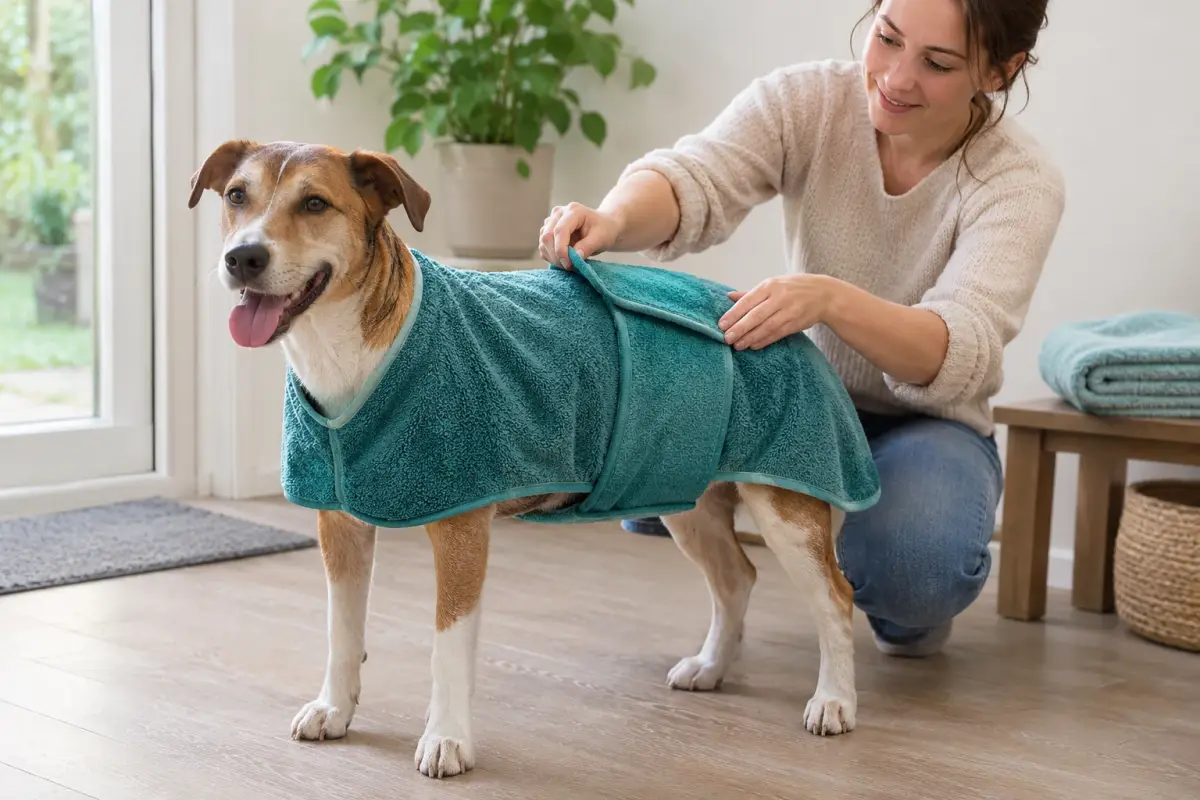
The best dog drying coat is made of absorbent microfiber, covers the chest and back, fastens securely without squeezing, and goes in the washing machine. It works like a bathrobe: it soaks up and wicks away water while your dog dries, but a thick double coat usually still needs a towel and a dog dryer too. Browse our dog drying coats with these checks in mind.
By Matt GarnettUpdated November 14, 20264 min read2 sources
What matters most: absorbency, coverage and fit
The American Kennel Club says drying coats act similarly to human bathrobes, and that their microfiber fabric helps absorb moisture and wick water off the coat. It also notes microfiber dog towels absorb more water than an average bath towel. So the first check is the fabric: look for microfiber, and check that the inside is soft and the outside does not shed lint onto your dog.
Coverage and fit come next. A coat should cover the chest, back and ideally the belly, with a closure that holds without pressing on the throat or restricting the legs. Measure your dog's neck, chest and back length and compare them to the size chart. A coat that is too large slides off, and one that is too small leaves the wettest parts exposed. Our dog drying coats range lists dimensions on every piece.
Robes, towels and drying bags compared
A robe or coat is the hands-free option: put it on, and your dog can walk around while it absorbs water and keeps them from getting dirty again. A microfiber pet drying robe is the type for dogs that shake, wriggle or head straight back outside. The AKC also describes drying bags with holes for the legs and head that can attach to a blow dryer, which is a different tool for dog-dryer users.
A towel is the simplest and cheapest tool and works well on short coats. A dog absorbent bath towel suits owners who like to control where the pressure goes, while a dog drying towel with hand pockets makes it easier to dry paws, ears and face. Most owners end up using a robe or towel for the first stage and a dryer or air for the rest.
How to dry properly, whichever tool you choose
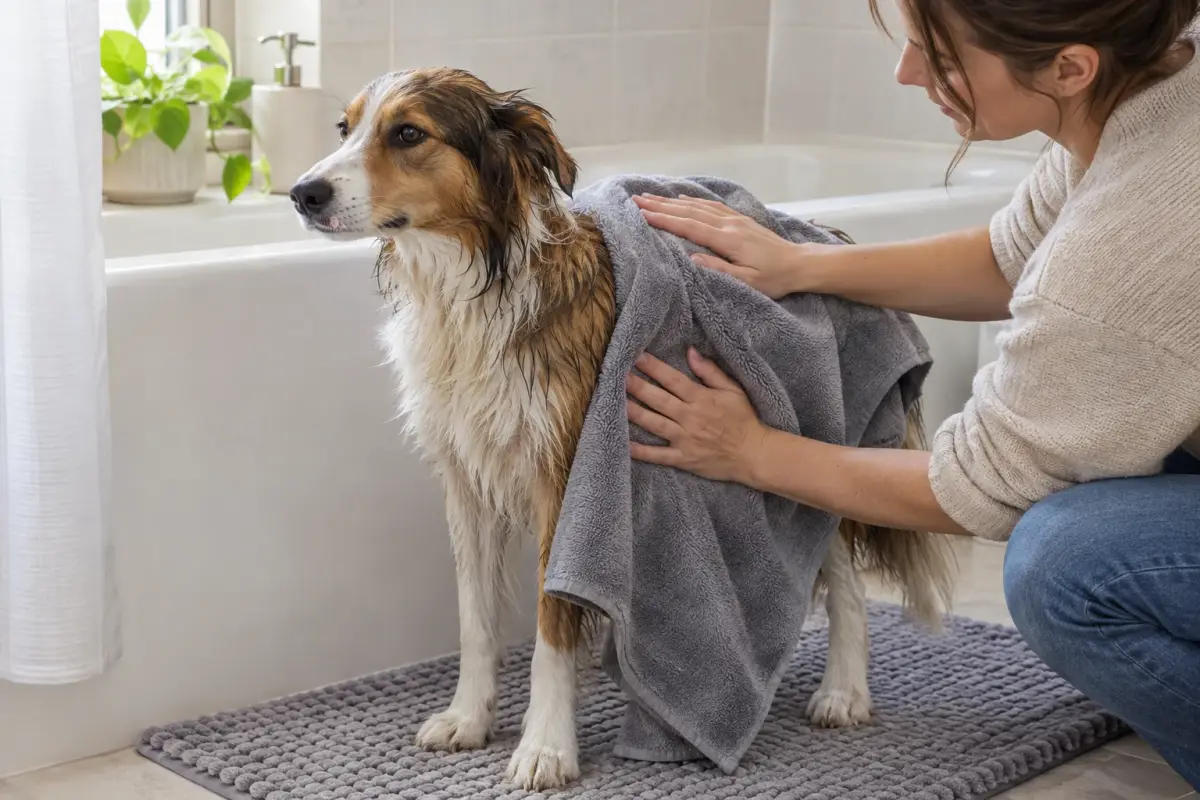
Press, do not rub. The AKC warns that rubbing a towel vigorously can cause tangles and mats, and recommends pressing the towel gently into the fur so it soaks up water without tangling the coat. This is more important the longer your dog's hair is, and it applies when you use a robe too: let the fabric do the work.
If you use a dryer, choose a dog-specific one, not a human hair dryer. The AKC says the airflow, not heat, is drying the fur, that heat might burn the skin, and that the nozzle should stay away from the face and ears. It also advises against crate dryers, since some dogs find being contained stressful, and suggests introducing the sound and airflow gradually with treats.
Coat type decides how much help you need
Short-coated dogs may only need a towel or a robe. Dogs with long or thick coats should be towel-dried first and then finished with a dryer, according to the AKC, which names corded and double-coated breeds as taking longer to dry. The more hair your dog has, the more important it is to dry them thoroughly, because damp fur next to the skin is where problems start.
The AKC says drying your dog helps keep them warm and prevents mats, tangles and bacteria growth, which may lead to skin infections. So for a heavy-coated dog, treat a drying coat as the first step, not the finish. Check the skin and the undercoat by parting the fur, and keep your dog somewhere warm until they are dry. Keep brushes handy: our dog brushes work best on a dry coat.
What to avoid and when to call your vet
Avoid thin, loose fabric that soaks through and stays cold, closures that pinch or bind, and anything scratchy near the neck. Avoid vigorous rubbing, high heat and blowing air at the face or ears. Avoid putting a damp robe back on a dog before it has been washed and dried, since a robe that stays wet can hold bacteria and smell.
While you dry your dog, look for lumps, bumps, scrapes, scabs or skin irritations, as the AKC suggests, and call your vet if you find something new. Wash the coat or towel after each use and let it dry fully. Wet walks are a separate job; for those, see our dog raincoats, and for bath time itself browse our dog shampoo. When you are ready to choose, browse our dog drying coats. This page is general information, not veterinary advice, and it cannot replace an examination by the vet who knows your pet.
Drying fabric and equipment formats
| Format | Physical arrangement | Check before use |
|---|---|---|
| Robe or coat | Absorbent fabric worn on the body | Neck,chest,length and fastening |
| Flat towel | A loose absorbent sheet | Flat size and washing instructions |
| Pocket towel | A towel with hand spaces | Pocket arrangement and seams |
| Drying bag | An enclosure with stated openings | Exact design and any equipment connection instructions |
Common questions
Is a dog drying coat better than a towel?
A coat is hands-free and keeps absorbing while your dog moves, while a towel gives you more control. Thick or double coats usually need a towel and a dog dryer as well.
Should I rub or press a dog dry?
Press. The AKC says vigorous rubbing can cause tangles and mats, while pressing a towel gently into the fur soaks up water without tangling the coat.
Can I use a human hair dryer on my dog?
The AKC recommends a dog-specific dryer instead, because heat can burn the skin. Airflow does the drying, and the nozzle should be kept away from the face and ears.
Why does a dog need to be dried fully?
The AKC says drying helps keep dogs warm and prevents mats, tangles and bacteria growth that may lead to skin infections, which matters most for long, thick or double coats.
Sources we checked
This guide is general information, not veterinary advice. If your pet is unwell or injured, contact your veterinarian.


