






Buying guides
Best Dog Hair Dryer: Force Dryers vs Stand Dryers vs Human Dryers
The best dog hair dryer for most home groomers is a high-velocity force dryer with adjustable airflow and a low or no-heat setting. It blasts water and loose undercoat out of the coat, which matters most for double-coated and long-coated dogs. Stand dryers suit fluff-drying curly coats hands-free. Human hair dryers run too hot and too weak for most dogs. Noise, heat control and nozzles decide the rest.
By Matt GarnettUpdated November 14, 20264 min read2 sources
What matters most: airflow, heat control and noise
Dogs can overheat and burn more easily than people, and they cannot move away from a hot nozzle quickly. So the first priority is a dryer that moves a lot of air at low or no heat, drying by force rather than temperature. The AKC's grooming articles note that groomers use high-velocity dryers on dense coats, aiming at the skin to push air through the undercoat and lift loose hair.
Variable speed is the second priority. Start low near the face and on nervous dogs, and turn it up on the body. Noise is the third: force dryers are loud, so models with a lower decibel rating, a soft-start motor and ear protection such as a snood make the experience easier for many dogs.
Force dryers, stand dryers and human dryers compared
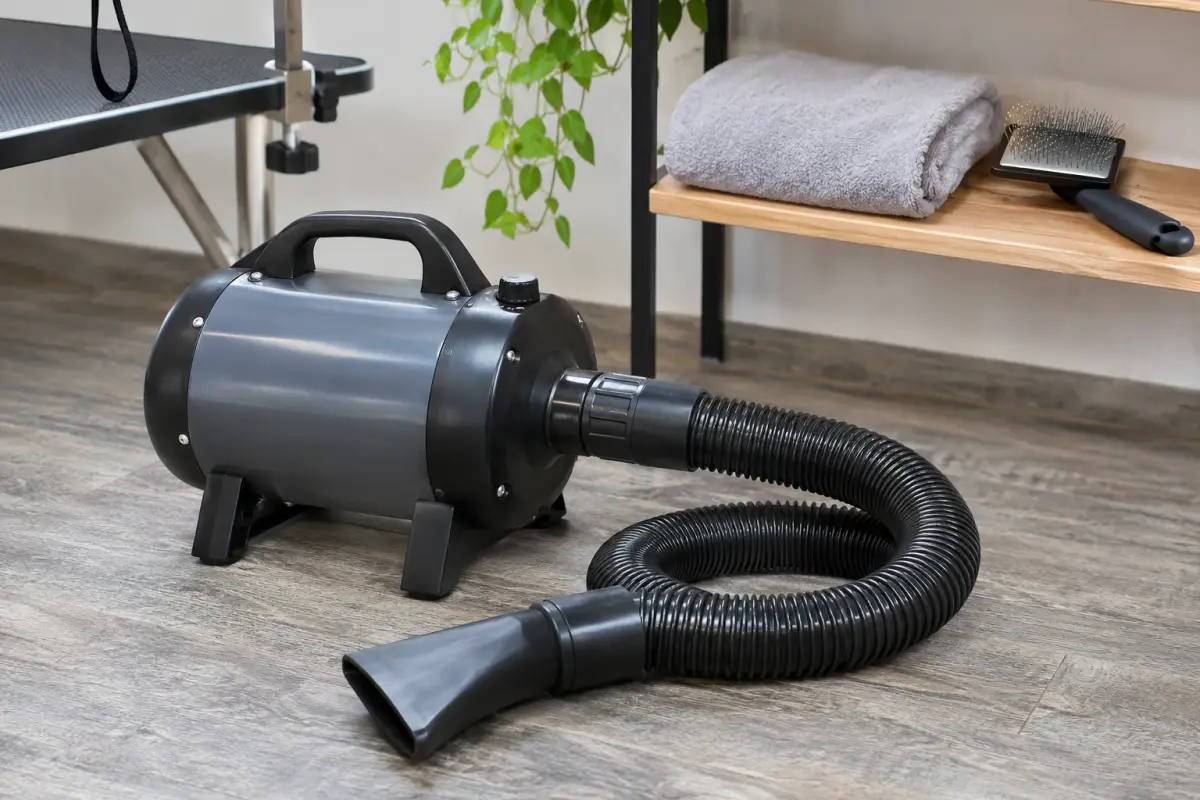
High-velocity or force dryers have a motor unit and a long hose, and push air hard enough to straighten and separate hair. They are the fastest way to dry Huskies, Golden Retrievers, German Shepherds and doodles, and they remove large amounts of shedding undercoat. Most offer mild warmth from the motor rather than a heating element.
Stand dryers sit on a stand and blow gentler, warm air while you brush, leaving both hands free for fluff-drying Poodles, Bichons and other curly coats into a straight, even finish. Human hair dryers are small and hot with weak airflow; on a large or thick-coated dog they take a long time and risk overheating, so use them only on the cool setting, at a distance, for small, short-coated dogs.
Best dryer for each coat
For double coats such as Huskies, Malamutes, Shepherds and Corgis, a force dryer with two speeds and a flat nozzle is the best tool; dry to the skin to avoid dampness that leads to hot spots. For curly and doodle coats, a force dryer to remove water followed by a stand dryer or the force dryer's low setting while brushing gives the smoothest finish.
For short, smooth coats such as Beagles and Boxers, a towel and a low-speed force dryer or a cool human dryer is plenty. For small or nervous dogs, choose a quieter model and start at the lowest setting with treats. For dogs with flat faces, keep airflow away from the nose and eyes.
What to avoid
Avoid high heat, holding the nozzle close to the skin and leaving a dog in a crate with a dryer blowing on it unattended, which has caused heat injuries. Avoid blowing air directly into ears, eyes or the face; use a low setting and a cloth for the head. Avoid using a force dryer on a matted coat at full power, which can whip mats tighter.
Watch for panting, restlessness or red skin, and stop if you see them. Flat-faced breeds and seniors overheat quickly, so take breaks. If your dog's skin is red, hot or sore after drying, or it seems unwell, call your vet.
Features worth paying for
Look for a long, flexible hose so the motor can sit on the floor away from your dog, at least two speeds or variable control, and a filter that is easy to clean. Interchangeable nozzles help: a wide flat nozzle for bulk drying and a cone for concentrated airflow on thick areas.
A metal or high-quality plastic body lasts longer in a busy grooming room, and an on-board thermal cutout adds safety. Wall-mounted or stand options free up space. For travel and small dogs, compact low-noise force dryers are lighter and easier to store.
Using it well, and caring for it
Towel-dry first to remove as much water as possible. Introduce the dryer turned on across the room with treats, then closer, then on low on the body. Work from back to front with the nozzle a few inches from the coat, moving constantly, and brush as you go. Earplugs designed for dogs or a snood help some dogs with noise.
Clean the intake filter after every few uses, because a blocked filter overheats the motor. Check the hose for splits and store the dryer coiled loosely. A good force dryer lasts many years and pays for itself in time saved on every bath.
Dryer body and outlet arrangements
| Format | Physical arrangement | Verify before use |
|---|---|---|
| Hose or force dryer | Motor body connected to a flexible hose | Air controls,nozzles and exact heat settings |
| Stand dryer | Outlet supported on a stand | Height,aiming controls and stability |
| Handheld dryer | Motor and outlet held in one hand | Exact intended use,temperature controls and instructions |
Common questions
Can I use a human hair dryer on my dog?
Only on the cool setting, at a distance, for a small or short-coated dog. Human dryers are hot with weak airflow, so they dry thick coats slowly and risk overheating the skin.
What is a high-velocity dog dryer?
A force dryer with a long hose that pushes a strong stream of air at low heat. It blows water and loose undercoat out of the coat, drying double and long coats much faster.
Are dog dryers safe?
Yes, when used at low heat, kept moving and not pointed at the face or ears. Never leave a dog in a crate under a dryer unattended, and stop if your dog pants or seems stressed.
How do I get my dog used to a blow dryer?
Turn it on across the room with treats, move it closer over several sessions, start on low on the body and keep sessions short. Ear protection helps some dogs.
Sources we checked
This guide is general information, not veterinary advice. If your pet is unwell or injured, contact your veterinarian.


