






Buying guides
Best Dog Raincoat: How to Choose Coverage, Fit and Fabric
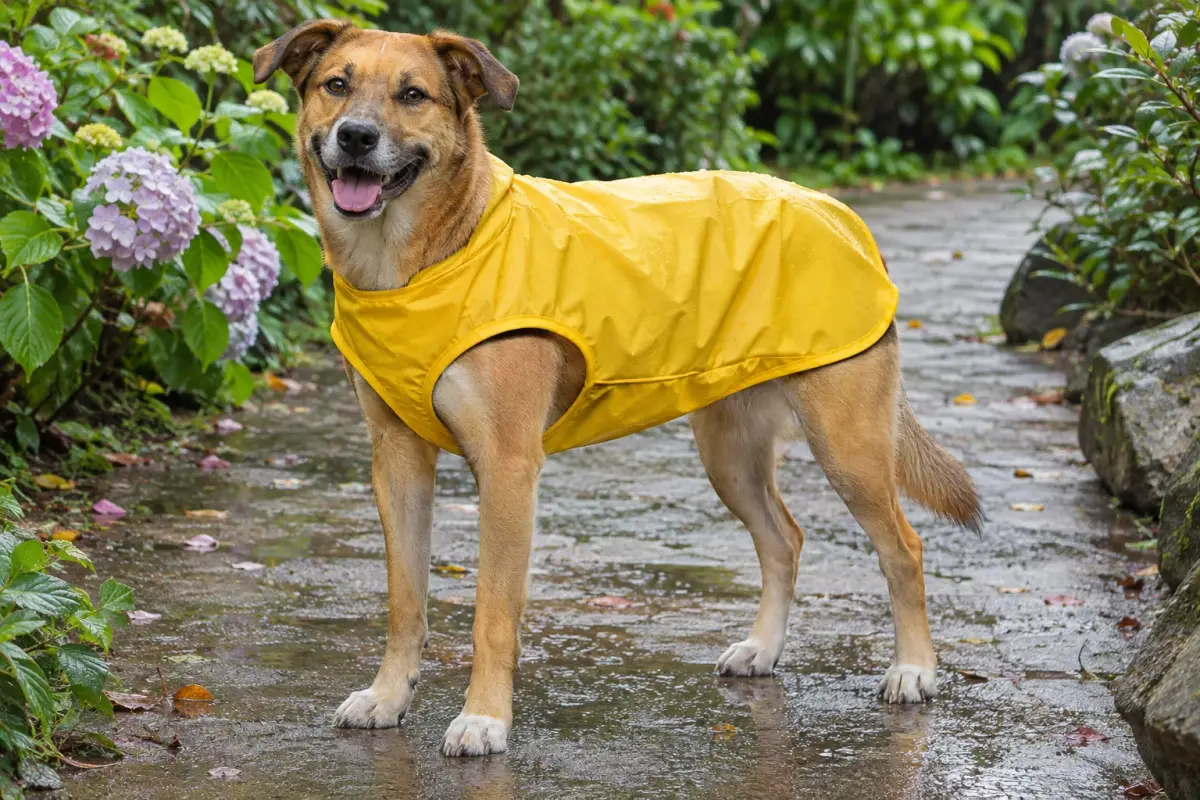
The best dog raincoat is truly waterproof, covers the back and chest (and the belly, for low-slung dogs), leaves the legs free, and fastens easily with a harness opening. Reflective trim matters for gray, rainy walks. Size by back length and chest girth. A breathable lining stops your dog overheating, and a coat that is easy to wash will actually get used.
By Matt GarnettUpdated November 10, 20264 min read2 sources
What matters most: waterproofing, coverage and fit
The AKC says a raincoat keeps a dog dry and more comfortable outside and cuts down on toweling off afterward. To do that, the fabric needs to be waterproof rather than merely water-resistant, with taped or sealed seams on the back where rain lands. Coverage comes next: most rain runs off the back, but short-legged and long-coated dogs collect water and mud underneath.
Fit decides whether your dog tolerates it. A good raincoat sits snugly enough not to twist or flap, leaves the elbows and hind legs free, and has a neck opening that does not rub. A slot or zip for the harness ring lets you clip on without lifting the coat, which keeps water out where it counts. Browse our dog raincoats, or dog coats with a harness hole.
The main styles compared
Cape or poncho styles cover the back and sides and fasten under the chest; a full-cover waterproof dog poncho is one example. They are quick to put on and suit dogs that dislike clothes. Jacket styles add a chest panel and sometimes a belly panel, giving much better protection for long-coated, low-slung or muddy dogs. Full-body suits with legs keep a dog almost entirely dry but take time to put on and suit small dogs that already accept clothes.
Hoods keep rain off the head but many dogs dislike them, so choose removable ones. A hooded waterproof dog raincoat shows the hooded style. Lined raincoats add warmth for cold rain, while unlined shells suit warm, wet climates. Reflective piping or a high-visibility color is a genuine safety feature when walking near traffic in dim light.
Best raincoat for each dog
For short-legged breeds such as Dachshunds, Corgis and Basset Hounds, choose a jacket with a belly panel, since their undersides sit close to puddles. For long-coated or feathered breeds, a full-coverage coat saves hours of drying and reduces matting. For short-coated, thin-skinned dogs such as Greyhounds and Whippets, a lined raincoat keeps them warm as well as dry.
For large dogs, a cape or jacket sized by chest girth, with adjustable straps, is usually the most practical. For dogs that resist clothes, start with a simple cape. For city walks after dark, choose a bright color with reflective trim, and make sure the harness and ID tag stay accessible.
What to avoid
Avoid coats that cover the eyes, rub the armpits or restrict the shoulders. Avoid non-breathable plastic shells in mild weather, which can make a dog damp with sweat from the inside. Avoid sizes that sag under the belly, because a dog can catch a leg in loose fabric. Avoid leaving a wet coat on indoors.
Introduce the coat gradually with treats, as the AKC suggests for winter clothing, starting with a few minutes indoors. If your dog shivers in rain even with a coat, or comes home with sore armpits or rubbed skin, change the fit or style. A dog that scratches constantly after wet walks may have a skin problem worth showing your vet.
How to measure and size a raincoat
Measure back length from the base of the neck, where a collar sits, to the base of the tail. Measure chest girth around the widest part just behind the front legs, and the neck. Most makers size by back length with a chest range; check both, since deep-chested dogs often need the next size for girth.
Try the coat with your dog's harness on underneath if you walk in a harness. Your dog should be able to sit, lie down, walk and toilet normally, and you should be able to slide two fingers under the straps. If the coat rides up or twists after a few minutes, the size or strap position is wrong.
Care and lifespan
Rinse off mud after each walk and hang the coat to dry away from direct heat. The AKC notes most raincoats are machine washable but suggests checking the label, since some need a delicate cycle or cold water. Avoid fabric softener, which can reduce waterproofing.
Re-treat the outer fabric with a waterproofing spray when water stops beading, often once a season. Replace the coat when seams leak, fasteners fail or the lining wears through. A well-made raincoat lasts several wet seasons, and a second one means a dry coat is always ready. Browse dog raincoats to compare.
Raincoat construction and fitting areas
| Style or feature | Coverage or access | What to check |
|---|---|---|
| Cape or poncho | Back and sides with fewer leg openings | Chest fastening and whether it twists |
| Jacket | Chest panel, sometimes with a belly panel | Shoulder clearance and the lower hem |
| Full-body suit | Additional leg sections | Each leg opening and normal movement |
| Hood | Additional head covering | Whether it obstructs the eyes |
| Harness opening | Access to an underlying harness attachment | Alignment with the actual harness ring |
| Lined or unlined | An additional inner layer or a lighter shell | Fabric layers and the maker's care directions |
Common questions
Do dogs really need raincoats?
Not all dogs. They help short-coated, thin-skinned, senior and small dogs stay warm and dry, and they save drying time for long or low-slung coats. Thick-coated breeds often manage without one.
How should a dog raincoat fit?
Snug enough not to twist or sag, with two fingers of room under the straps, legs and shoulders free, and the back covered from neck to tail base.
Is a waterproof or water-resistant dog coat better?
Waterproof, with sealed seams, for regular rain. Water-resistant coats handle drizzle but soak through in steady rain. Look for breathable fabric so your dog does not get damp from the inside.
What raincoat is best for a Dachshund?
A jacket with a belly panel and a long back, sized by back length, since Dachshunds' bellies sit close to wet ground. Check that it leaves the front legs free.
Sources we checked
This guide is general information, not veterinary advice. If your pet is unwell or injured, contact your veterinarian.


