Buying guides
Best Catnip for Cats: What to Look For and Which Form to Choose
The best catnip for cats is fresh, strongly scented dried Nepeta cataria with visible leaf and flower, because the scent is what cats respond to and a stale, dusty jar has little left. About 70% of adult cats react at all, so the first job is finding out whether yours does. Then pick the form that suits your cat: loose herb, spray, or catnip built into a toy.
By Matt GarnettUpdated November 13, 20265 min read3 sources
What matters most when you buy catnip
Catnip is a member of the mint family. According to Pet Poison Helpline, the plant produces a compound called nepetalactone, and it is the scent of that compound, picked up through the nose, that sets off the behavior cats are known for. Because scent is the whole point, freshness is the single best quality test. When you open the container, a good catnip smells strongly grassy and minty. If you have to put your nose right into it to smell anything, your cat will probably ignore it too.
Look at what is actually in the jar. Crushed leaves and some flower buds are what you want to see. A product that is mostly fine dust, stems or filler gives less scent for the same volume. If you are shopping within our catnip and silvervine range, read the label for a single ingredient, and keep sprays and toys that list added fragrances for last, since you cannot tell whether a cat is reacting to the plant or to the perfume.
First, check that your cat responds at all
Pet Poison Helpline puts the figure at approximately 70% of adult cats being affected by catnip, and the response is partly inherited, so a cat either has the trait or it does not. That means roughly three in ten cats will sniff and walk away however good the catnip is. Before you buy a large bag or a pricey toy, start with a small amount and watch for rubbing, rolling, drooling or a burst of energy.
Kittens are a special case. The same source notes that catnip is not effective until sexual maturity is reached, so a young kitten that ignores it has not failed a test. Try again in a few months. When a cat does respond, the effect is short: around 10 to 15 minutes, followed by an hour or two when the cat is temporarily unresponsive.
The main forms compared: loose, spray and toys
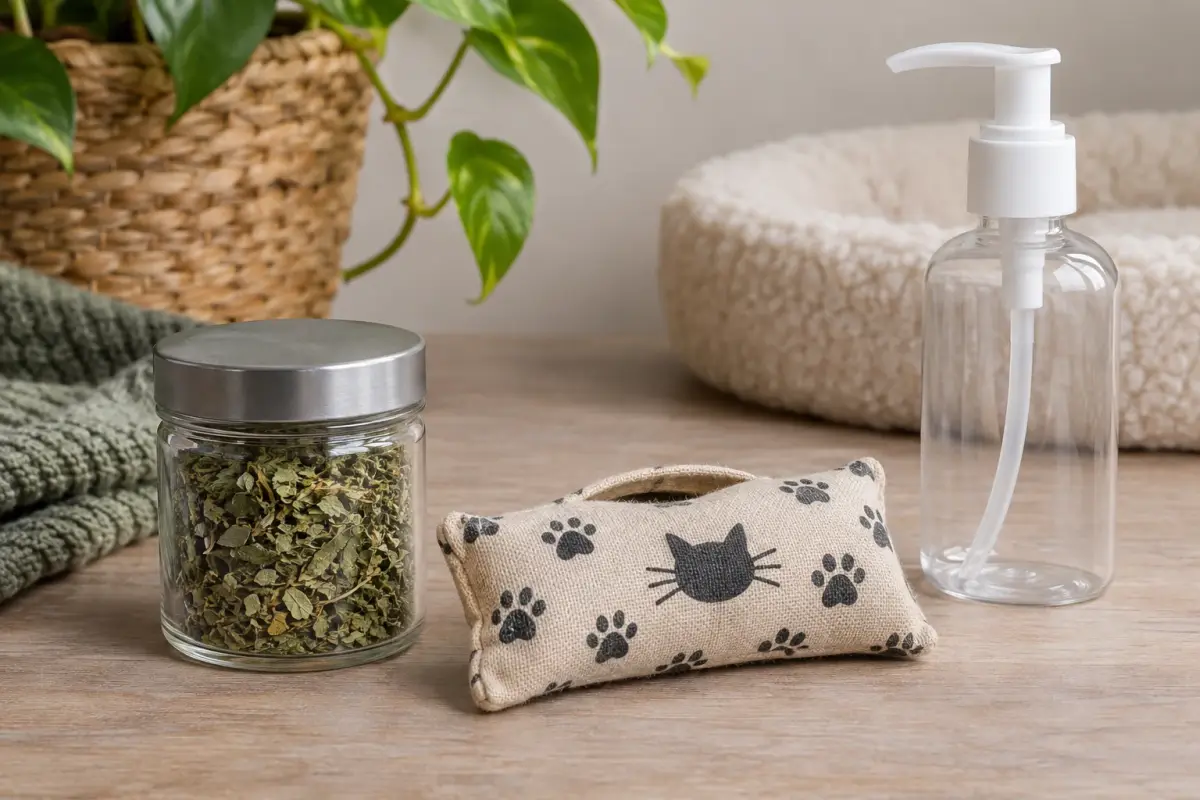
Loose dried catnip is the most flexible form. You can sprinkle a pinch on a scratching post or a mat, stuff it into a fabric toy you already own, or mix a little into a play session so it feels like an event. It also lets you control how much your cat gets. Its weakness is that it loses scent once opened, so buy small containers rather than one large bag you will still be using months from now.
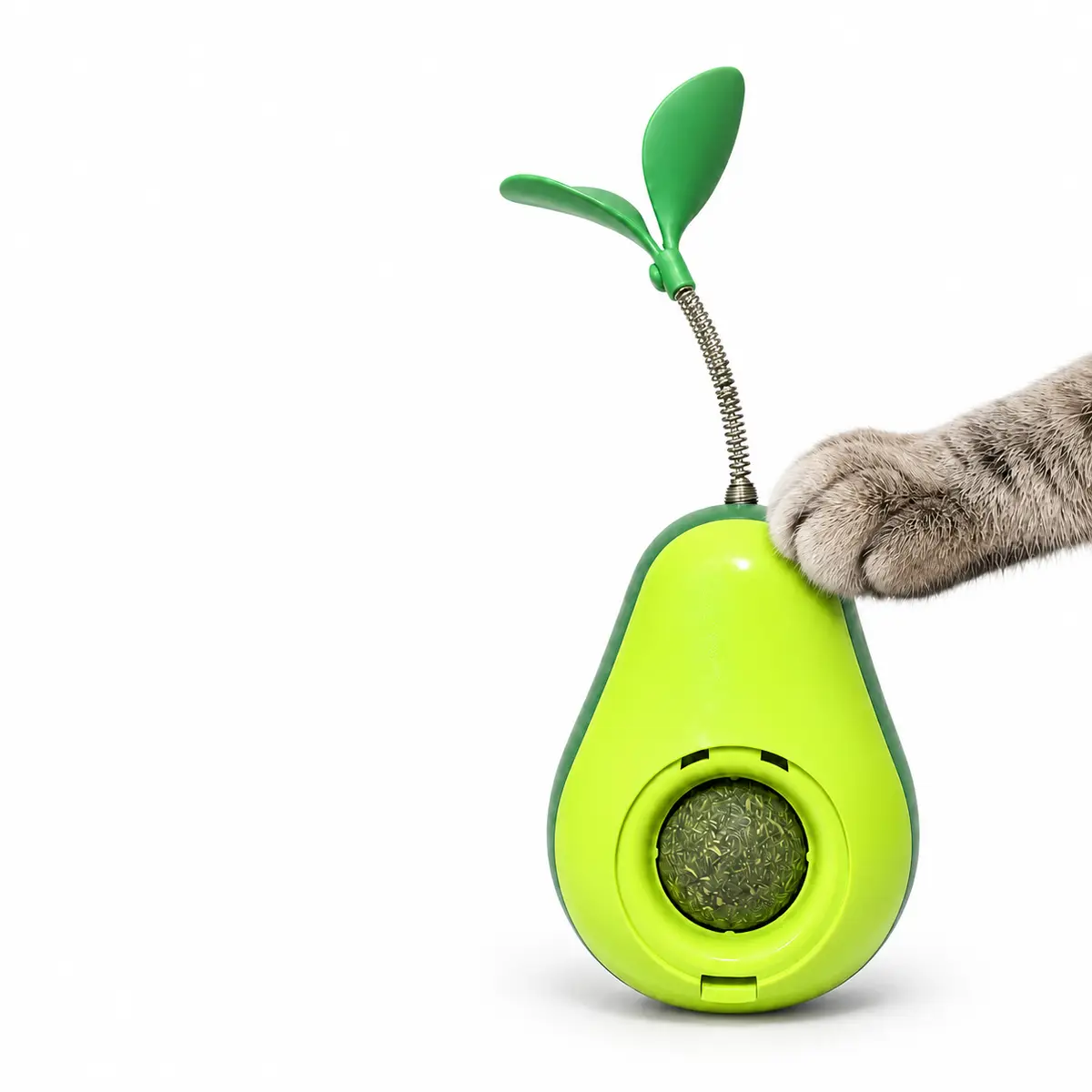
A catnip spray is useful for refreshing an old toy, scratcher or cat tree without refilling anything, and it is the easiest form for a cat that gets overexcited, because one light mist is a small dose. A catnip spray or a silvervine and catnip spray also suits cats that only react to fresh scent, since you can renew it on demand. Catnip toys are the grab-and-go option. A catnip licking ball suits cats that lick and nuzzle more than they bat, and a silvervine feather tumbler toy suits cats that like to chase and pounce. For more toy shapes, see catnip toys and kicker toys.
The best type for each kind of cat
For a cat that has never tried catnip, start with loose herb and a small pinch, so you can see how it reacts. For an adult that loves it, a refillable fabric toy plus a bottle of spray keeps things fresh without spending much. For a multi-cat home, offer catnip in separate spots at the same time, since some cats guard a favorite toy and the excitement can tip into squabbles.
Cats that do not react to catnip are not out of options. Silvervine is a different plant that some owners try for cats that ignore catnip. Evidence on how often it works is thinner than for catnip, so treat it as an experiment rather than a guarantee, and try a small amount first. If you want to match the toy to the way your cat plays, our guide to catnip toys goes through the shapes in more detail.
Safety, amounts and what to avoid
VCA Animal Hospitals describes the effects of catnip as harmless and temporary and says it is non-addictive and poses no long-term risks, and it suggests checking with your veterinarian before the first time. Pet Poison Helpline likewise expects no significant toxicity in cats. The ASPCA plant list, however, notes that catnip can cause vomiting and diarrhea, so the sensible approach is a small pinch, not a handful, and no free access to the bag.
Keep the container out of reach, since a cat that gets into the bag can eat a lot. Discard catnip that has gone damp or moldy. If your cat vomits repeatedly, seems unwell after catnip, or has eaten a large amount, call your vet. Never use catnip to calm a cat for travel or a vet visit without asking your vet first, because the effect can be stimulating rather than relaxing.
Storage, freshness and how long it lasts
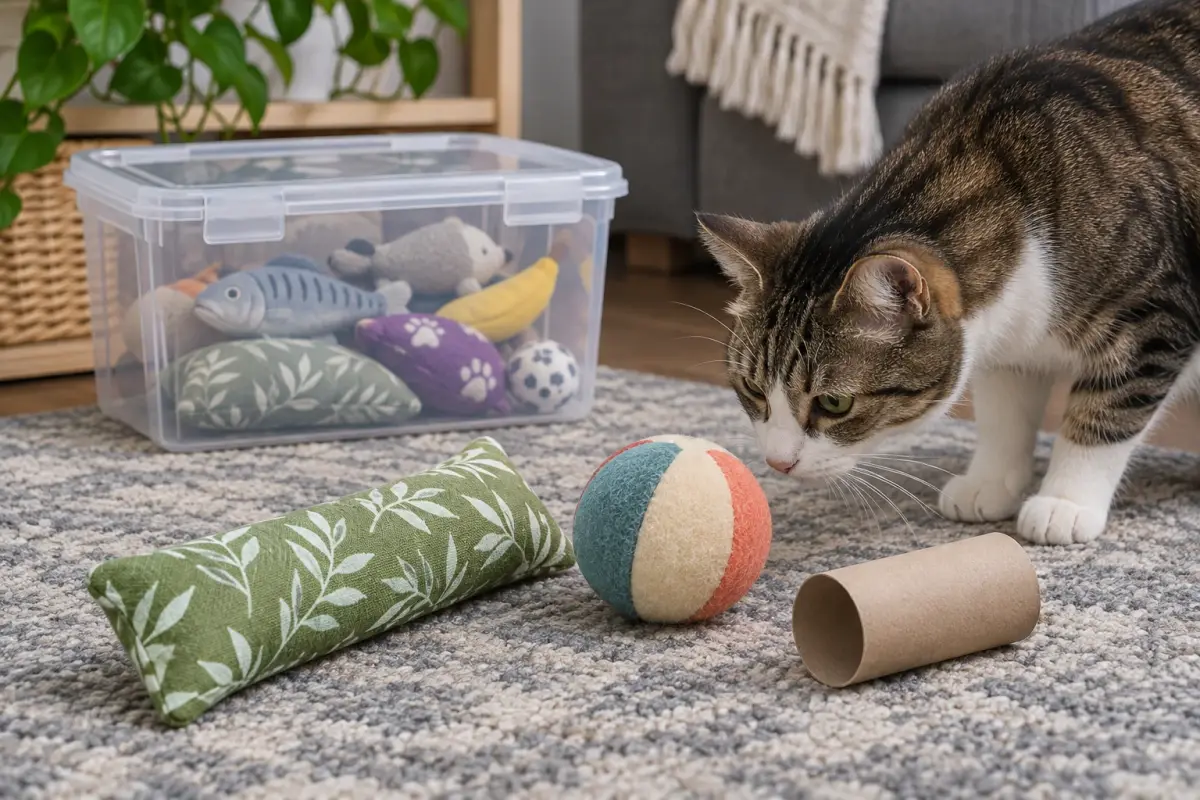
Store loose catnip in an airtight container away from heat and light, and close it right after each use. Sprays and toys follow the same logic: when a cat stops reacting to a toy it used to love, the scent is usually spent rather than the cat bored, and a light spray or a fresh pinch often brings it back.
Offer catnip in short sessions rather than leaving it out all day, because the response fades with constant exposure and you want it to stay an occasional treat. When you are ready to choose, browse all catnip and silvervine products and start with the form that matches how your cat likes to play.
Common questions
Is catnip good for cats?
For most cats that respond, catnip is a harmless way to get a few minutes of play and relaxation. VCA describes its effects as temporary and non-addictive. Roughly 70% of adult cats react, so some will ignore it entirely.
What is the strongest catnip?
Strength comes down to freshness and quality: dried leaf and flower buds with a strong minty smell beat dusty, faded herb. Strong is not always better, since some cats get overexcited, so start with a small pinch of a fresh product.
How often can I give my cat catnip?
There is no single rule, but short sessions work best because the effect lasts around 10 to 15 minutes and is followed by an hour or two when cats are temporarily unresponsive. Many owners offer it occasionally and ask their vet if they have concerns.
Does catnip work on kittens?
Usually not at first. Pet Poison Helpline says catnip is not effective until sexual maturity is reached, so a young kitten that does not react may well respond later. Try again as your kitten grows up.
Why does my cat ignore catnip?
The reaction is partly inherited, and roughly three in ten adult cats do not respond at all. The catnip may also be stale, so check that it smells strongly. Some owners try silvervine as an alternative, though results vary.
Sources we checked
This guide is general information, not veterinary advice. If your pet is unwell or injured, contact your veterinarian.