






Buying guides
Best Cat Stroller: How to Choose a Safe, Enclosed Stroller
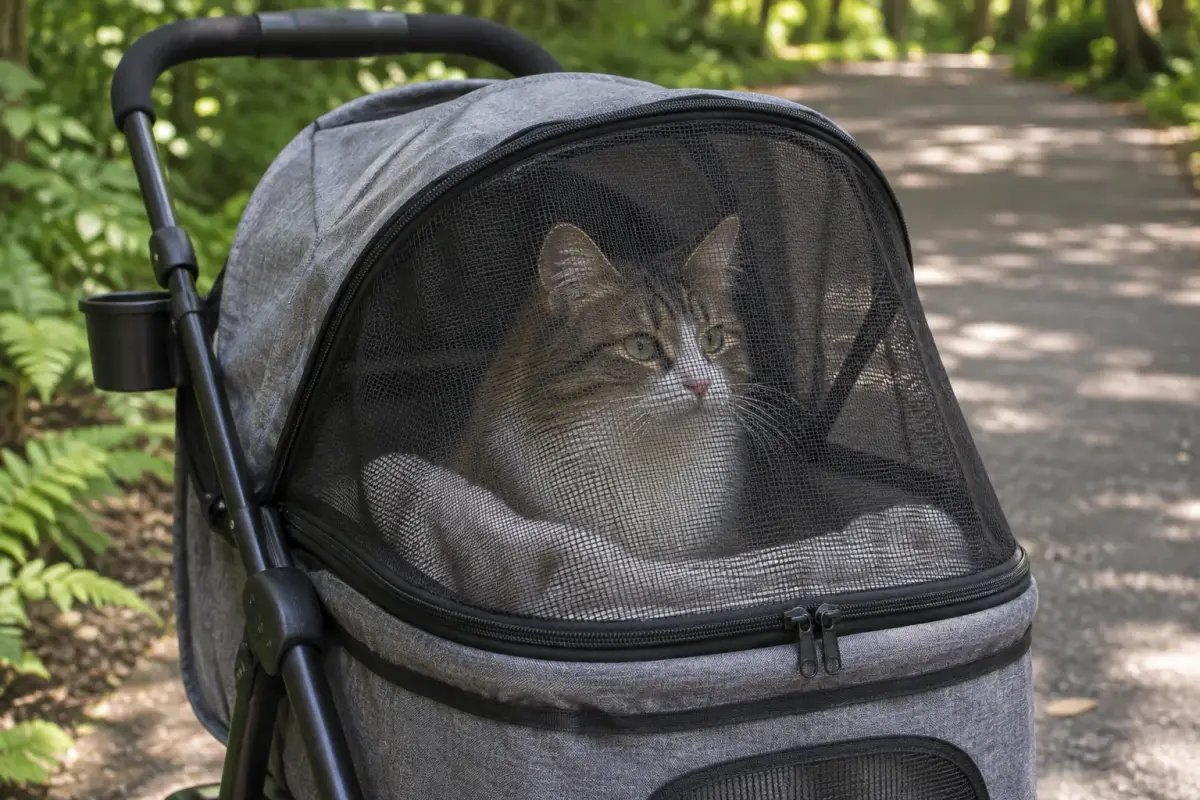
The best cat stroller is fully enclosed, with zippered mesh panels a cat cannot claw through, locking zips, an internal leash clip for a harness, and a sturdy base that does not wobble. Choose wheels for where you walk: small wheels for sidewalks and malls, larger air or rubber wheels for parks and trails. A stroller lets indoor cats explore outdoors safely, but only once your cat is relaxed in it at home.
By Matt GarnettUpdated November 14, 20264 min read2 sources
What matters most: full enclosure and security
A frightened cat can squeeze through a gap you would not think possible, so a cat stroller must be fully enclosed. Look for a cabin with mesh on several sides, a top or front opening that zips shut, zip pulls that clip or lock together, and an internal tether that clips to your cat's harness, never its collar. That tether is the backup if a zip is opened by mistake.
Ventilation and visibility come next. Many cats feel calmer when they can see out but also have a solid, shaded side to hide behind, so a cabin with a sunshade or a removable cover is ideal. VCA's enrichment guidance points to safe outdoor experiences as valuable for indoor cats, and a good stroller is one of the safest.
Stroller types compared
Three- and four-wheel strollers with a fixed cabin are the most common. Four wheels are more stable, as on this 4-wheel foldable pet stroller for small dogs and cats; three wheels steer more easily. Detachable-carrier strollers have a cabin that lifts off and becomes a carrier, which is useful for car trips and vet visits. Jogging strollers with large wheels and suspension suit trails and rough paths.
Some strollers have two-level cabins or extra-wide double cabins for two cats. Lightweight umbrella-style strollers fold small but are less stable and often less secure. Check that the cabin floor is firm and padded, since a sagging floor makes cats feel unstable and anxious.
Best stroller for each cat
For a single indoor cat on sidewalk walks, a light four-wheel stroller with a fully enclosed cabin and a sunshade is plenty. For a large cat, check the cabin's interior height and length and the weight limit; your cat should be able to stand, turn and lie stretched out. For two cats, choose an extra-wide cabin rated for their combined weight.
For senior cats or cats with limited mobility, a stroller gives fresh air without exertion; add a soft pad. For anxious cats, a stroller with a full cover lets them retreat. For trail walks, choose large rubber or air wheels and a brake that locks firmly.
What to avoid
Avoid strollers with open tops, gaps at the zips, flimsy mesh or no internal tether. Avoid using one in hot weather without shade and airflow; cats overheat, and a stroller in direct sun warms quickly. Avoid busy areas with dogs off leash on early outings, which can terrify a cat.
Make sure your cat is microchipped and wears a well-fitted cat harness with ID. VCA's leash-walking guidance also advises keeping vaccinations and parasite prevention up to date before regular outdoor outings, which your vet can check. If your cat pants, drools, cries or tries frantically to escape, end the outing and go home.
How to size a stroller and introduce it
Measure your cat standing, nose to tail base, and floor to top of head. The cabin's interior should exceed both with room to turn around. Check the weight limit against your cat's weight, plus a second cat if you plan to share. Fold the stroller in the store or at home to check it fits your car trunk and storage space.
Introduce the stroller indoors. Leave the cabin open with a familiar blanket and treats inside for several days. Then zip your cat in for short periods, then push it around the house, then step outside for a few minutes. Build up slowly and let your cat set the pace.
Care and lifespan
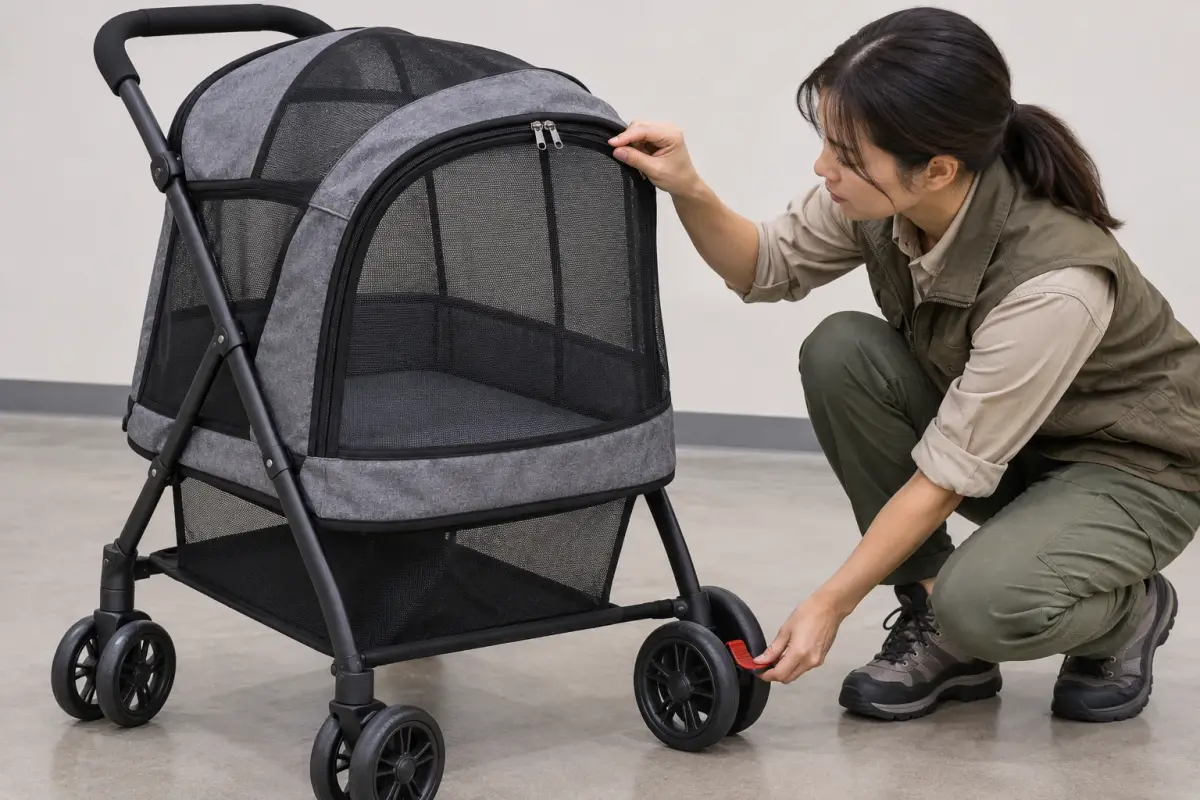
Wash the pad and wipe the cabin after outings. Check zips, mesh and the tether before every use; a torn mesh panel should be repaired or the stroller retired. Keep wheels free of hair and grit, and check that the brake holds on a slope.
A well-made cat stroller lasts years. Store it dry and folded, and look through our cat strollers again when it is time to replace it. Many owners find their cat starts asking for walks once the routine is established, but some cats never enjoy them; for those, a window perch or a catio may suit better.
Stroller cabins and wheel layouts
| Configuration | Physical difference | What to measure or inspect |
|---|---|---|
| Fixed cabin | Cabin remains on the frame | Inside space and closures |
| Detachable cabin | Carrier lifts from the frame | Connection locks and permitted carrying modes |
| Three-wheel | Three points in the wheel layout | Steering,brake and intended terrain |
| Four-wheel | Four points in the wheel layout | Frame and wheel connections |
| Double or two-level | Several resting areas | Each cat’s actual space |
| Umbrella fold | A compact folding structure | Locks and folded size |
Common questions
Are cat strollers safe?
Yes, if the cabin is fully enclosed, the zips lock and your cat is tethered by a harness inside. Avoid heat and busy areas with off-leash dogs, and supervise at all times.
Do cats like strollers?
Many indoor cats enjoy them once introduced slowly at home, and they offer safe outdoor stimulation. Some cats never settle, and that is fine. Let your cat set the pace at every stage.
What is the best stroller for a large cat?
One with a tall, long cabin your cat can stand and stretch out in, and a weight limit well above its weight. Four wheels add stability.
Can two cats share a stroller?
Yes, in an extra-wide cabin rated for their combined weight, if the cats get along. Introduce it with both cats at home first. Tether each cat separately inside the cabin.
Sources we checked
This guide is general information, not veterinary advice. If your pet is unwell or injured, contact your veterinarian.


