






Buying guides
Best Cat Sling: How to Choose One and When to Skip It
The best cat sling is a snug, well-ventilated pouch with a closed or zippered top, an inside tether and a padded strap, sized so your cat can sit or lie comfortably. A sling suits a small, calm cat on short, low-stress outings. For vet visits, cars and any cat that might bolt, a strong hard-sided or soft carrier with secure doors is safer.
By Matt GarnettUpdated November 14, 20265 min read3 sources
What a cat sling is and which cats suit one
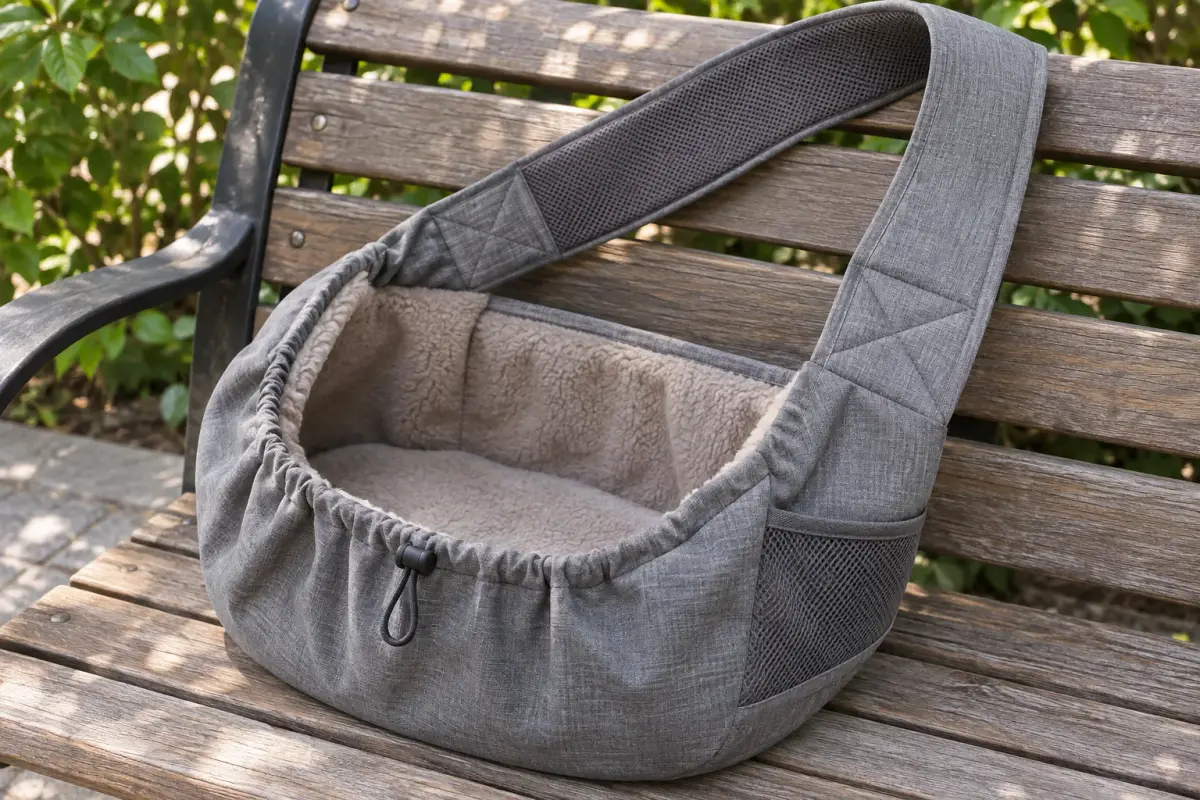
A cat sling is a soft pouch worn across the body, like a messenger bag with a hammock for your cat. Browse our cat sling carriers and you will see the same basic idea in several shapes: a fabric pouch, an adjustable shoulder strap, and an opening at the top. The cat sits tucked against your side, supported by your body as much as by the fabric.
That closeness is why slings suit a narrow group of cats: small, calm, used to being held, and happy to be carried for a short walk to the car, a quiet errand or a trip across a building. A cat that wriggles, panics at noises or tries to climb out should not travel in one. International Cat Care states plainly that carriers should be strong enough to prevent escape, and a soft open-top pouch is the weakest design for that job.
What matters most when choosing
Security comes first. Look for a top that fully closes or zips, mesh that is stitched rather than glued, and a short inside tether that clips to your cat's harness, never to a collar. Check the stitching on the strap and the buckle, because the whole weight of your cat hangs from them. A cat that can push its head through the opening will eventually push out the rest.
Next, check size and comfort. A cat should be able to sit and lie down without being squashed, and the sling should hold it snugly so it does not swing as you walk. Choose a size by your cat's body length and weight, using the maker's listed limits, and pick the larger size if your cat falls between two. A wide, padded strap spreads the load across your shoulder, which matters because a sling pulls to one side. A pouch such as this portable cat shoulder bag shows the typical soft design, and you can compare other soft cat carriers if you prefer a box shape.
Ventilation, heat and stress
Mesh panels matter more than people expect. The AKC notes that mesh panels allow airflow and help prevent heat exhaustion in carriers generally, and International Cat Care warns that carriers with poor ventilation can be unpleasant for a cat and can raise the risk of overheating. A pouch worn against your body adds warmth, so a sling that is fully fabric on every side is a poor choice in summer. A mesh-sided shoulder sling carrier is the kind of airflow design to look for.
Watch your cat's breathing and behavior. Panting, drooling, a very rapid heartbeat or frantic scrabbling means stop, find shade, and let your cat out into a secure space or a more suitable carrier. Never leave a cat in a sling or any carrier in a parked car; International Cat Care points out that heatstroke can be fatal.
Sling versus hard carrier, and when to skip a sling
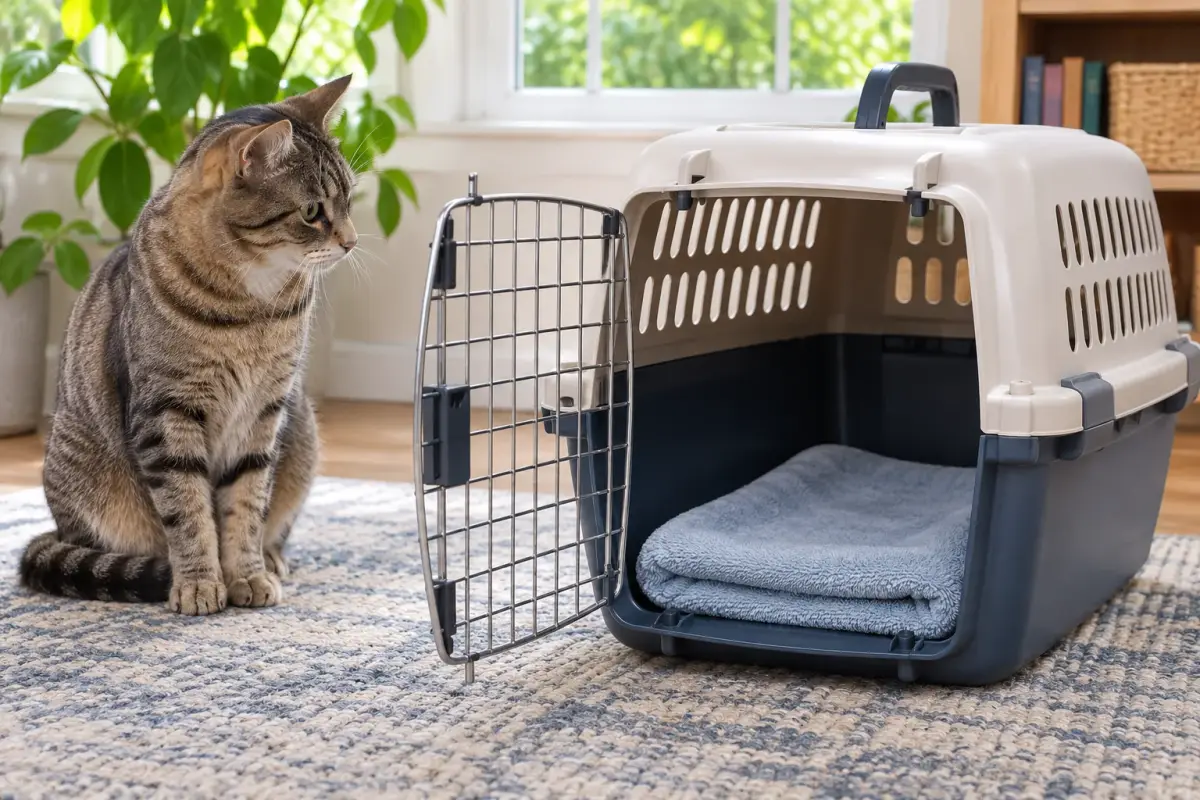
Veterinary guidance leans toward strong carriers. VCA Hospitals lists soft-sided carriers, wire crates and hard plastic carriers among durable options, and favors a large opening with a top that comes off, so a cat can stay in the bottom half during an exam. International Cat Care recommends solid plastic carriers with airflow slats, a secure door and a removable top half, and describes backpack-style carriers as poor for ventilation and movement.
So treat a sling as a short-hop accessory, not your main carrier. Keep a hard or sturdy soft carrier for the vet, car travel and public transit. If you want a second option beyond a sling, see our cat carriers for hard and soft styles. Skip the sling entirely for kittens that squirm, cats that are afraid of handling and any trip where a dropped cat would be at risk, such as near roads.
Getting your cat used to a sling
VCA suggests keeping a carrier out all the time near a favorite resting spot, with a bed, food or treats inside, so it becomes a positive place. The same approach works for a sling. Leave it flat on the floor for a few days, drop treats in, and let your cat step in and out on its own.
Then lift it for a few seconds with your cat inside, using treats, and build up to a few steps indoors. Hold the sling close to your body and avoid swinging it or bumping doorways, as VCA advises for carriers in general. If your cat is frightened, stop and go back a step. A cat that is forced into a sling will associate it with stress, which will make every future carrier harder.
Care, wear and replacement
Most slings are fabric and can be spot-cleaned or hand-washed, but check the label. Line the base with a small towel or blanket, which VCA suggests for comfort and to soak up accidents, and wash it between trips. Fabric carriers are harder to clean if soiled, as International Cat Care notes, so deal with accidents at once.
Check the straps, stitching, zip and tether before each use, and replace the sling the moment you see fraying or a loose buckle; our cat sling carriers page lists the current styles. A sling that fails with a cat inside can mean a fall or an escape. A cat that is limping, unusually quiet, or stressed after travel should be seen by your vet. This page is general information, not veterinary advice, and it cannot replace an examination by the vet who knows your pet.
Common questions
Are cat slings safe?
They can be for a small, calm cat on a short, low-risk outing, provided the top closes securely and your cat is tethered to a harness. For vet trips and car rides, a stronger carrier is the safer choice.
How do I choose the right size cat sling?
Measure your cat's body length, add a few inches so it can sit and lie down, and check the maker's weight limit. If your cat falls between sizes, pick the larger one.
Will my cat like a sling?
Some do, especially cats that enjoy being held. Introduce it slowly with treats and short sessions, and stop if your cat shows fear. Many cats prefer a familiar hard carrier.
Can I take my cat to the vet in a sling?
It is usually better not to. Vets prefer carriers with a large opening or removable top, and a secure, strong carrier lowers the chance of your cat escaping in the waiting room.
Is a cat sling better than a backpack?
Neither is ideal for long trips. International Cat Care says backpack-style carriers can have poor ventilation and movement, so check airflow and room in either design before buying.
Sources we checked
This guide is general information, not veterinary advice. If your pet is unwell or injured, contact your veterinarian.


