






Breeds
Belgian Malinois vs Dutch Shepherd: Which Is Right for You?
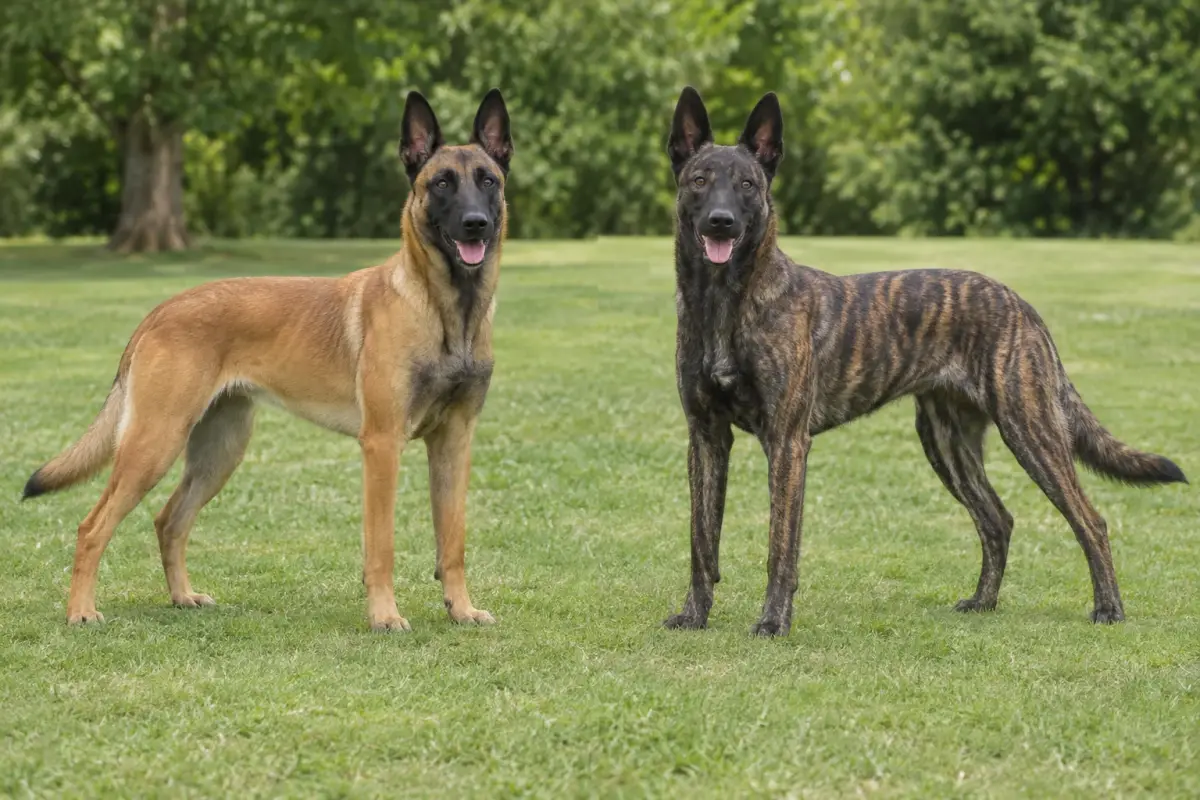
The Belgian Malinois and the Dutch Shepherd are close in size, and both are herding-bred working dogs. On paper the Malinois is the taller and longer-lived of the two: the AKC lists 24 to 26 inches and 14 to 16 years for a male Malinois, against 21.5 to 24.5 inches and 11 to 14 years for the Dutch Shepherd. Either breed needs a job, daily exercise and a consistent, experienced owner.
By Matt GarnettUpdated November 14, 20265 min read3 sources
Belgian Malinois vs Dutch Shepherd at a glance
Here are the AKC's published figures side by side. A Belgian Malinois stands 24 to 26 inches (male) or 22 to 24 inches (female), weighs 60 to 80 pounds (male) or 40 to 60 pounds (female), and has a listed life expectancy of 14 to 16 years. A Dutch Shepherd stands 21.5 to 24.5 inches, weighs 42 to 75 pounds and has a listed life expectancy of 11 to 14 years. The AKC gives the Dutch Shepherd one range for both sexes.
In practice the overlap is large: a big female Malinois and a smaller male Dutch Shepherd can look and weigh much the same. The bigger difference is in how each breed is described. The AKC calls the Malinois smart, confident and versatile, a world-class worker, and calls the Dutch Shepherd lively, athletic, alert and intelligent with an independent streak. Whichever you lean toward, plan the outlets early, from structured training to sturdy chew toys for strong chewers.
Size, weight and build
The AKC breed standard for the Malinois describes a well-balanced, square dog: the length from breastbone to rump is meant to equal the height at the withers. It is strong, agile and well muscled, giving an impression of depth and solidity without bulkiness. That squareness is part of why the breed looks lighter on its feet than a heavier shepherd of the same height. The Dutch Shepherd page on the AKC site gives a wider weight range, 42 to 75 pounds, so individual Dutch Shepherds vary more in build.
Because both breeds sit in the medium-to-large range, never size gear from the breed label alone. Measure your own dog's chest at the widest part of the ribcage and check the size chart for any dog harness before you order, and expect a young dog to outgrow its first one.
Temperament and working drive
The Malinois standard calls for a dog that is alert, intelligent, inquisitive and confident, energetic and ready for action, yet highly responsive to its owner's direction. It describes the breed as an exceptional watchdog that is firmly loyal to the people it loves but may be indifferent with strangers. The AKC adds that denying a Malinois activity and your company deprives him of his reasons for being, which is a polite way of saying a bored Malinois is a problem.
The AKC describes the Dutch Shepherd as having retained the herding instinct it was developed for, with an independent nature that can be slightly obstinate and a mind of its own. Its original job was keeping flocks of sheep in a particular place. In plain terms, the Malinois is described as eager to work with you, while the Dutch Shepherd is described as more likely to weigh up whether an instruction makes sense. Neither description suits an owner who wants an easy first dog.
Which breed suits which home
Choose the Malinois if you want a dog to share structured work, such as obedience, tracking or other dog sports, and you can give it that work every day. Its standard stresses responsiveness to direction, and its longer listed lifespan means a commitment of up to 14 to 16 years. If you are weighing it against another popular shepherd, read our Belgian Malinois vs German Shepherd comparison, and our Belgian Malinois breed page for more detail.
Choose the Dutch Shepherd if you like an athletic dog with some independence and can stay patient and consistent when it tests a rule. Be honest about your time, because a few laps of the block will not meet either breed's needs. If you have never owned a high-drive working dog, talk to a breed rescue or an experienced trainer first, and expect to invest in positive, reward-based training from the first week.
Exercise outlets and gear
Energy that is not spent on purposeful exercise tends to come out as chewing, digging or barking. Mix physical work with mental work: scent games, training sessions and food puzzles. For a strong chewer, a rubber toy such as this rubber squeaky chew toy or a TPR foam ring toy is a type to consider (our guide to choosing toys for aggressive chewers explains what to look for). Supervise play, and retire any toy as soon as it cracks or pieces start to come off.
For walks, a well-fitted harness spreads pressure across the chest while you train loose-leash manners. Browse our toys for aggressive chewers and dog harnesses to see what is available.
Health, lifespan and when to see a vet
The lifespans above are AKC averages for the breed, not predictions for your dog. Ask any breeder for health-screening records on the parents, and book a check-up with your vet soon after the dog comes home. Athletic dogs can strain joints and muscles, so see your vet if you notice limping, stiffness after rest, reluctance to jump, or any sudden change in appetite, energy or behavior.
This page is general information, not veterinary advice, and it cannot replace an examination by the vet who knows your pet.
Common questions
Is a Dutch Shepherd smaller than a Belgian Malinois?
Slightly, on the AKC's figures. A Dutch Shepherd stands 21.5 to 24.5 inches and weighs 42 to 75 pounds, while a male Malinois stands 24 to 26 inches and weighs 60 to 80 pounds. A female Malinois is closer to the Dutch Shepherd, at 22 to 24 inches and 40 to 60 pounds.
Which breed lives longer?
The AKC lists 14 to 16 years for the Belgian Malinois and 11 to 14 years for the Dutch Shepherd. These are breed averages, so an individual dog can live shorter or longer, and good care and regular vet visits matter more than the label.
Is a Dutch Shepherd easier to train than a Malinois?
Neither is easy. The AKC describes the Malinois as highly responsive to its owner's direction, and the Dutch Shepherd as independent and sometimes slightly obstinate. Both need early socialization, consistency and reward-based training from an owner with time.
Do Belgian Malinois need a lot of grooming?
The AKC standard describes a comparatively short, straight, weather-resistant coat with a dense undercoat and says there is no need for excessive grooming. The AKC page for the Dutch Shepherd does not describe its coat, so ask the breeder or rescue what to expect from the individual dog.
Sources we checked
This guide is general information, not veterinary advice. If your pet is unwell or injured, contact your veterinarian.


