






Breeds
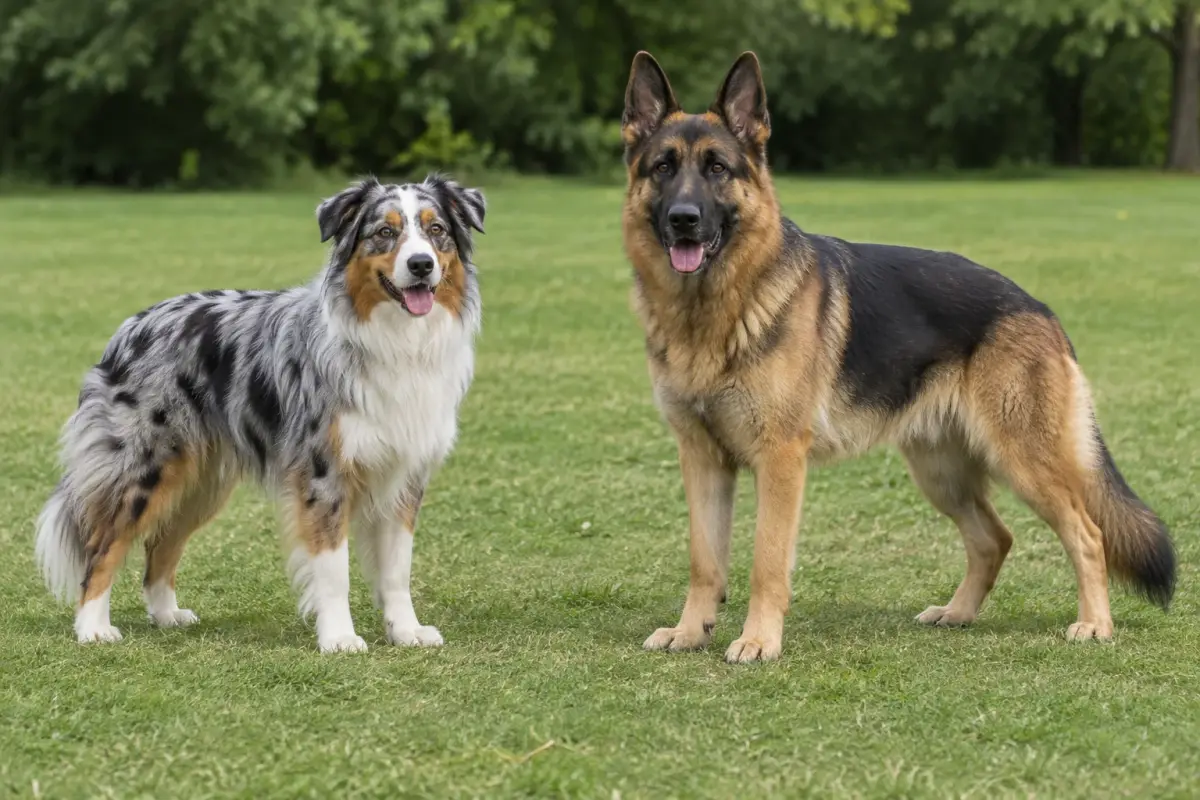
Australian Shepherd vs German Shepherd
The Australian Shepherd is generally smaller than the German Shepherd, but both are active working dogs that need physical activity, mental engagement, and consistent training. Choose around the work you enjoy doing with a dog, not the assumption that the smaller option will be easy. Their individual temperament, health, and experience matter alongside breed tendencies.
By Matt GarnettUpdated November 10, 20263 min read4 sources
Size, energy, grooming, and lifespan side by side
VCA lists Australian Shepherds around 40–65 pounds and German Shepherds around 50–90 pounds. Both are described as high-energy dogs. The Aussie has a medium-length double coat; the German Shepherd also has a double coat and can shed heavily. Neither is a way to avoid regular brushing.
VCA gives a typical lifespan of 12–15 years for the Aussie and 12–14 for the German Shepherd; these are guide ranges, not a promise for an individual. Both are trainable workers. An active, involved household is the starting point for either, with practical arrangements for grooming and daily engagement.
Plan training around cooperation and consistency
Both dogs need more than learning a few puppy cues and then being left to work things out. VCA recommends positive reinforcement and consistent training for German Shepherds and structured activity for Aussies. Decide who will practice daily and how household members will use the same expectations.
Meet the dog in more than one situation when possible. Ask about settling after activity, reactions to strangers, and handling. A quick demonstration of a trick tells you less about everyday compatibility than a clear account of how the dog manages the ordinary situations your home will present.
Look beyond the coat and the size difference
The Aussie’s smaller body still comes with a working dog’s needs. VCA describes limited tolerance for boredom and a preference for engagement. A German Shepherd likewise needs structure and regular activity. A schedule that repeatedly leaves either dog without suitable care may be the deciding issue.
Coat maintenance also belongs on the calendar. Plan regular brushing, extra attention during shedding, and routine nail and ear care. Consider whether each adult household member can safely handle the full-grown dog on a leash and help with grooming or transport when needed.
Review health records before choosing
Ask your veterinarian to review available screening and medical records. VCA identifies inherited joint and eye concerns and MDR1 drug sensitivity among issues relevant to Australian Shepherds; joint disease and later mobility problems are important considerations for German Shepherds. This is a reason for informed veterinary discussion, not a diagnosis.
For either breed, seek veterinary advice about pain, new limping, a change in movement, or an unexpected behavior change. Ask what the individual dog needs now rather than treating a breed’s expected lifespan or exercise reputation as an instruction to push through discomfort.
This page is general information, not veterinary advice, and it cannot replace an examination by the vet who knows your pet.
Common questions
Is an Australian Shepherd smaller than a German Shepherd?
Usually, yes. VCA’s adult weight ranges are about 40–65 pounds for Australian Shepherds and 50–90 pounds for German Shepherds. Individual dogs vary, and the smaller size does not remove the need for training or activity.
Which breed is easier for a busy household?
Neither is an automatic low-effort choice. Both need daily engagement, training, and activity. Compare your actual weekday schedule with the needs of the individual dog before choosing either working breed.
Do both breeds need regular grooming?
Yes. Both have double coats and require regular brushing, with additional attention during shedding. Ask about the adult dog’s coat and handling tolerance so you can plan a routine you can maintain.
Sources we checked
This guide is general information, not veterinary advice. If your pet is unwell or injured, contact your veterinarian.


