






Breeds
Australian Shepherd vs Border Collie: Key Differences
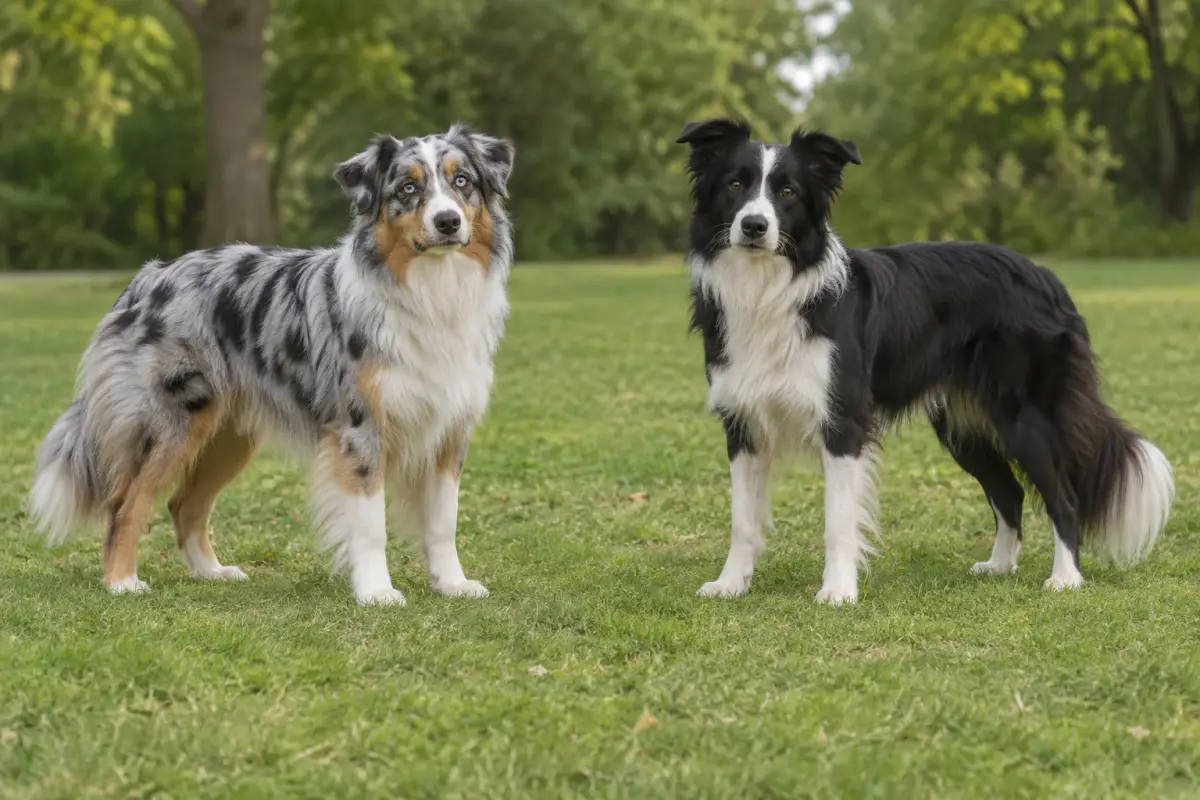
Both are brilliant, tireless herding dogs that need a job, but the Australian Shepherd is a little bigger and stockier, while the Border Collie is lighter, more intense and more single-minded. The AKC lists Aussies at 40 to 65 pounds and Border Collies at 30 to 55. Aussies tend to be more of an all-round ranch and family dog; Border Collies are the specialists, happiest with hours of focused work every day.
By Matt GarnettUpdated November 14, 20265 min read4 sources
Side by side
Size: the AKC gives Australian Shepherd males 20 to 23 inches and 50 to 65 pounds, females 18 to 21 inches and 40 to 55. Border Collie males stand 19 to 22 inches and females 18 to 21, at 30 to 55 pounds. Lifespan: 12 to 15 years for both, per the AKC. Popularity: the Aussie ranks 12th in the AKC list and the Border Collie 30th. Coat: Aussies have a medium-length double coat, often merle; Border Collies have a smooth or rough coat, often black and white.
Energy: VCA rates the Aussie as high and the Border Collie as very high. Training: both are highly intelligent and eager to work, and both need structured, consistent training. Strangers: both can be reserved. Children: both may try to herd kids, and VCA says Border Collies do best with older children. Best for: Aussies suit active families with outdoor space; Border Collies suit experienced, highly active owners or working and sport homes.
Origins and purpose
Despite the name, the Australian Shepherd was developed in the United States for farm and ranch work. The AKC calls it a lean, tough ranch dog and a European breed perfected in California by way of Australia, closely tied to the rodeo circuit and cowboy life. Aussies were bred to be versatile, moving cattle and sheep and doing whatever else the ranch needed.
The Border Collie was developed to herd livestock, and VCA says it thrives on tasks that use both body and mind. The AKC calls it a remarkably bright workaholic, maybe a bit too amazing for owners without the time and energy to keep it occupied, though it will settle for cuddle time when the work is done. That specialized drive is the biggest difference between the two.
Energy and exercise
VCA says both breeds need significant daily exercise combined with mental work, and that without it they are likely to develop behavior problems. For an Aussie, think running, hiking, agility, training sessions and problem-solving games. For a Border Collie, VCA rates activity as very high and recommends access to large outdoor areas: a long walk on its own will not be enough.
Mental exercise matters as much as miles. Teach new tricks, use puzzle feeders, play scent games and try a dog sport such as agility, herding, flyball or disc. Both breeds have limited tolerance for being left alone and can become anxious or destructive when bored. If you work long days away from home, plan for a dog walker or daycare, or choose a calmer breed. For hikes and training walks with either dog, a well-fitted dog harness gives you a clip point that is not the neck; see also our Border Collie harnesses and Australian Shepherd harnesses.
Temperament and training
Both breeds learn fast and want to work with their people. VCA describes the Aussie as driven, responsive and strongly bonded to its family, and notes that herding instincts can show up as nipping or trying to control movement. The Border Collie is described as extremely focused, prone to fixating on tasks or moving objects, and may try to herd people, other animals or objects.
Use positive, reward-based training and start early. Redirect nipping at heels into a game of tug or a cue like sit, and give herding instincts a proper outlet rather than punishing them. Border Collies in particular need training that challenges them; repetitive drills bore them. Both can be wary of strangers, so socialize puppies widely with people, places and sounds.
Grooming and shedding
The Aussie's medium-length double coat needs regular brushing with a good dog brush to control shedding and prevent mats, with more during seasonal sheds. Pay attention to the feathering behind the ears and on the legs, where tangles start. Border Collie coats may be smooth or rough; rough coats need similar attention, smooth coats a little less, and both shed more as the seasons change.
Keep up with nail trims and ear checks for both breeds. VCA lists solar dermatitis among Aussie concerns, so dogs with pink, lightly pigmented noses may need shade on bright days; ask your vet what protection is safe for your dog.
Health and which to choose
VCA lists hip and elbow dysplasia, inherited eye disorders including collie eye anomaly and cataracts, epilepsy, deafness and hypothyroidism among Aussie concerns. It also highlights the MDR1 gene variant, which can cause serious reactions to some common medications, and recommends genetic testing. For Border Collies VCA lists hip dysplasia, osteochondritis dissecans, epilepsy, collie eye anomaly, allergic skin disease and cataracts. Ask breeders for hip and eye screening, and tell your vet about any MDR1 result.
Choose an Australian Shepherd if you want a slightly bigger, versatile dog that fits into an active family's hikes, sports and weekends. Choose a Border Collie if you can offer daily, demanding work, such as herding, agility or long training sessions, and want the most intense working partner there is. Neither suits a quiet household that wants a mostly calm pet.
This page is general information, not veterinary advice, and it cannot replace an examination by the vet who knows your pet.
Common questions
Which is smarter, an Australian Shepherd or a Border Collie?
Both are exceptionally intelligent, and VCA describes both as highly intelligent herding dogs. The Border Collie is usually seen as the more intense and task-focused of the two, which makes it brilliant to train and harder to keep occupied.
Which is bigger, an Aussie or a Border Collie?
The Australian Shepherd. The AKC lists Aussies at 40 to 65 pounds and Border Collies at 30 to 55 pounds. Heights are similar, but Aussies are stockier and heavier-boned.
Are Australian Shepherds or Border Collies good with kids?
Both can be, with supervision. VCA notes both may try to herd children, and suggests Border Collies do best with older kids. Teach children not to run from or chase the dog, which triggers herding.
What is MDR1 in Australian Shepherds?
It is a gene variant that can make some dogs react badly to certain common medications. VCA recommends genetic testing for Aussies; share the result with your vet so they can choose medicines safely.
Sources we checked
This guide is general information, not veterinary advice. If your pet is unwell or injured, contact your veterinarian.


